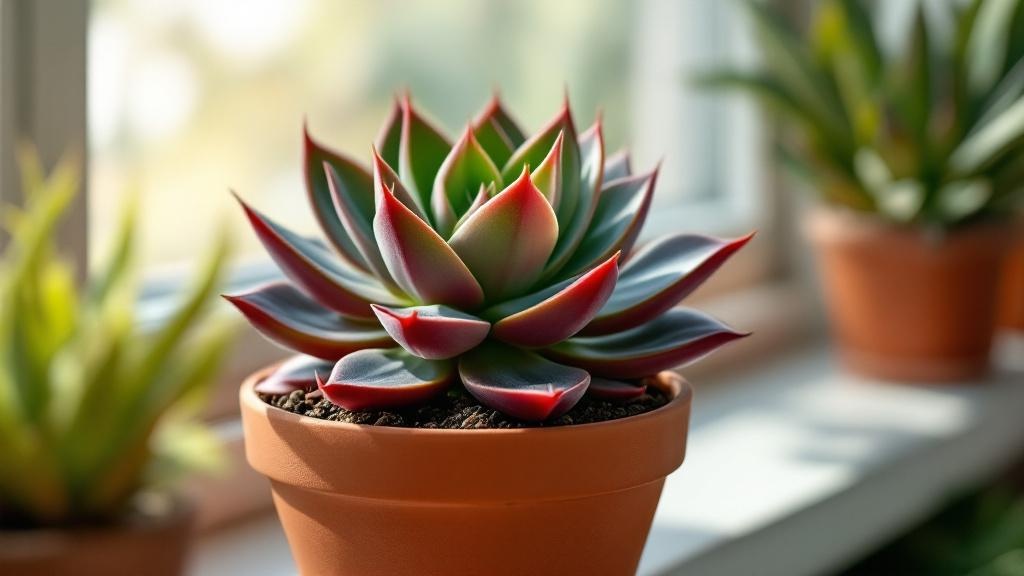
Black Prince Echeveria
Black Prince Echeveria captivates with its dramatic dark rosettes that deepen to near-black in strong sunlight. The most common question gardeners ask is how to keep those deep colors without killing the plant through overwatering. In temperate climates, this Mexican native requires careful attention to seasonal changes — thriving outdoors from late May through September but needing protection from frost and damp winters indoors. With proper care, it rewards you with coral-red flower stalks in late summer.
Watering Your Black Prince Echeveria
Water thoroughly every 10-14 days during the growing season from April to September, allowing soil to dry completely between waterings. In winter, reduce to once monthly or less — overwatering in cold months is the primary killer of this succulent. Always water the soil directly, avoiding the rosette center where trapped moisture causes rot. Use room-temperature water and ensure excess drains freely from the pot.
Light Requirements for Deep Coloration
Black Prince needs 4-6 hours of direct sunlight daily to maintain its signature dark coloration. In temperate climates, place on south or west-facing windowsills from October through April. From late May, you can move plants outdoors to a sunny patio, but introduce gradually over two weeks to prevent sunburn. Insufficient light causes the rosettes to stretch and fade to greenish-brown.
Soil and Repotting Needs
Use a fast-draining succulent mix — combine standard potting soil with 50% perlite or coarse sand. Terracotta pots are ideal as they wick away excess moisture. Repot every 2-3 years in early spring, moving up just one pot size. Black Prince has shallow roots, so wide, shallow containers work better than deep pots.
Temperature and Humidity for Temperate Climates
Black Prince tolerates 10-25°C comfortably but suffers below 5°C. Bring outdoor plants inside by mid-September before first frosts in zones 5-8. Winter placement near a cool, bright window around 12-15°C encourages compact growth. Avoid humid rooms like bathrooms — this succulent prefers dry air below 50% humidity and good ventilation.
Fertilizing Schedule
Feed monthly from April through August with a balanced liquid succulent fertilizer diluted to half strength. Stop feeding entirely from September through March when growth slows. Over-fertilizing causes leggy, weak growth and diminishes the dark coloration. A single spring application of slow-release granules can replace monthly liquid feeding if preferred.
Common Problems and Solutions
Root rot from overwatering is the most frequent issue — if lower leaves turn translucent and mushy, reduce watering immediately and repot into dry soil. Mealybugs appear as white cottony clusters in leaf crevices, common when plants come indoors in autumn; treat with isopropyl alcohol on a cotton swab or neem oil spray. Etiolation (stretching) indicates insufficient light — move to a brighter location and consider a grow light for dark winter months.
Frequently asked questions
How often should I water Black Prince Echeveria?
Water every 10-14 days in summer and once monthly in winter, only when soil is completely dry. Insert a finger 2cm into the soil — if dry, water thoroughly until it drains from the bottom. Overwatering causes more Black Prince deaths than any other issue.
Why is my Black Prince Echeveria turning green?
Your Black Prince is turning green due to insufficient light. The deep burgundy-black coloration requires 4-6 hours of direct sunlight daily. Move to a brighter south-facing window or supplement with a grow light during winter months to restore the dark color.
Is Black Prince Echeveria toxic to cats?
No, Black Prince Echeveria is non-toxic to cats and dogs. The ASPCA lists Echeveria species as safe for pets. While ingestion may cause mild stomach upset, there is no serious toxicity concern if your curious pet nibbles a leaf.
When does Black Prince Echeveria flower?
Black Prince typically flowers in late summer, usually August through September in temperate climates. It produces tall stalks with coral-red, lantern-shaped blooms that attract pollinators. Mature plants aged 2-3 years are most likely to bloom when given adequate sunlight.
Can Black Prince Echeveria survive winter outdoors?
No, Black Prince cannot survive winter outdoors in temperate zones 5-8. It is frost-tender and must be brought indoors when temperatures drop below 5°C, typically by mid-September. Overwinter on a bright, cool windowsill around 12-15°C with minimal watering until spring.