Coffee Plant
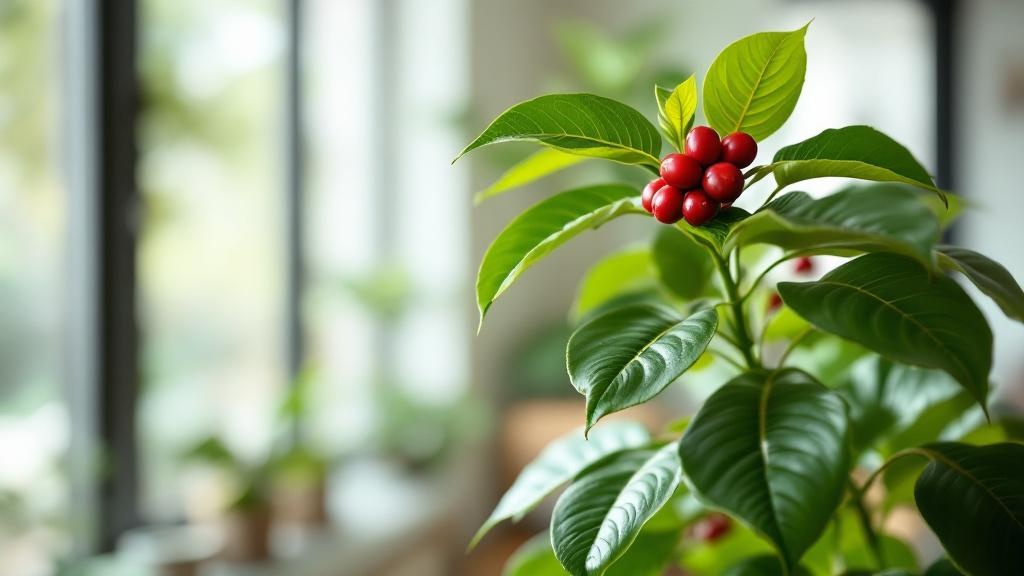
The coffee plant brings tropical elegance into your home, producing small but stunning white blossoms that smell of jasmine. While harvesting beans indoors in zones 5-8 is challenging, growing a healthy plant with attractive dark-green leaves is entirely achievable. The biggest question: how do you recreate the warmth and humidity this tropical understory plant craves in a European or North American home?
Watering Your Coffee Plant
Coffee plants prefer consistently moist (not soggy) soil from spring through autumn. Water when the top 2 cm of soil feels dry to the touch, typically every 7-10 days depending on warmth and pot size. In winter, reduce frequency slightly but do not let soil dry out completely. Use lukewarm, filtered water if possible, as coffee plants are sensitive to chlorine and hard water.
Light Requirements for Healthy Growth
Arabica coffee thrives in bright, filtered light mimicking its natural rainforest understory habitat. Place it near an east- or west-facing window with sheer curtains, providing 4-6 hours of indirect light daily. Avoid harsh direct afternoon sun, which can scorch leaves. In winter, move closer to windows to maximize available daylight in temperate zones.
Soil and Repotting
Use a well-draining, slightly acidic potting mix blended from peat moss, perlite, and compost. Coffee plants appreciate slightly acidic conditions (pH 6.0-6.5). Repot every 12-18 months in spring into a container 5 cm larger than the current pot. Ensure pots have drainage holes to prevent root rot, the most common cause of coffee plant decline.
Temperature and Humidity
Maintain temperatures between 18-24°C year-round; temperatures below 15°C slow growth and may cause leaf drop. High humidity (50-70%) promotes lush foliage and flowering, so mist leaves every 2-3 days or place on a pebble tray filled with water. In dry central heating (winter in temperate climates), a humidifier nearby helps significantly.
Fertilizing Your Coffee Plant
Feed monthly with a balanced, diluted liquid fertilizer (10-10-10 NPK) during the growing season (March to September). Switch to a lower-nitrogen formula in late summer if you hope to encourage flowering. In winter, hold back fertilizer entirely. Avoid over-feeding, which promotes leaf growth at the expense of blooms and can lead to salt buildup in the soil.
Common Problems and Solutions
Yellow leaves often signal overwatering or poor drainage; check roots and repot if soft and mushy. Spider mites and scale insects thrive on coffee plants in dry indoor air, especially in heated winter rooms—spray foliage with water or neem oil if spotted. Brown leaf tips usually indicate low humidity or salt accumulation; increase misting and flush soil with filtered water every 3-4 months.
Frequently asked questions
How often should I water my coffee plant?
Water every 7-10 days during the growing season (spring to autumn) when the top 2 cm of soil feels dry. In winter, reduce slightly but keep soil consistently moist. Never allow it to sit in standing water.
Can you grow coffee beans indoors in temperate climates?
Yes, coffee plants can flower and set fruit indoors, but consistent warmth above 20°C, high humidity, and hand-pollination are needed for reliable bean production. Most gardeners in zones 5-8 grow them as foliage plants instead.
Why are my coffee plant leaves turning yellow?
Yellow leaves typically indicate overwatering or poor drainage causing root rot. Check the roots for softness and repot into fresh, well-draining soil if needed. Ensure your pot has drainage holes and you are not letting water sit on the saucer.
What humidity does a coffee plant need?
Coffee plants prefer 50-70% humidity, which is higher than most temperate homes provide. Mist every 2-3 days, use a pebble tray with water beneath the pot, or run a humidifier nearby to recreate tropical conditions.
Is a coffee plant toxic to cats and dogs?
Coffea arabica leaves contain caffeine, making it mildly toxic to cats and dogs if ingested in large quantities. However, houseplants rarely cause serious poisoning; supervise pets and contact a vet if ingestion is a concern.