Giant White Bird of Paradise
The Giant White Bird of Paradise transforms any room into a tropical retreat with its towering stems and paddle-shaped leaves that can reach over 2 meters indoors. Native to South African coastal forests, this architectural plant has become one of the most sought-after statement houseplants. The most common question growers ask is why their Strelitzia nicolai develops brown leaf edges or fails to grow new leaves — usually caused by insufficient humidity or light during our long temperate winters.
Watering Your Giant White Bird of Paradise
Water thoroughly when the top 5 cm of soil feels dry, typically every 7-10 days in summer and every 14-21 days from November through February. This plant prefers consistent moisture but absolutely cannot tolerate waterlogged roots. Always empty saucers 30 minutes after watering to prevent root rot, which is the leading cause of Strelitzia death in temperate homes.
Light Requirements for Healthy Growth
Position your Giant Bird of Paradise near a south or west-facing window where it receives at least 4-6 hours of bright light daily. In temperate climates, direct winter sun from October to March is actually beneficial and will not burn the leaves. If leaves become pale or stems leggy, supplement with a grow light during the darker months from November through February.
Soil and Repotting Guidelines
Use a well-draining mix of 60% peat-free houseplant compost, 30% perlite, and 10% bark chips. Repot in April or May when roots emerge from drainage holes, typically every 2-3 years for mature plants. Choose a pot only 5 cm larger than the current one — slightly rootbound plants are more stable and may eventually flower. Add a layer of gravel at the pot base to improve drainage.
Temperature and Humidity Needs
Maintain temperatures between 18-27°C during the growing season and never below 10°C in winter. Move plants away from cold windows and radiators from October onwards, as both cold drafts and dry heat cause leaf damage. Increase humidity to 50-60% using a pebble tray or humidifier, especially when central heating runs from November through March.
Fertilizing Schedule
Feed every 2 weeks from April through September with a balanced liquid fertilizer diluted to half strength. Switch to monthly feeding in October and stop entirely from November through February when growth naturally slows. Resume feeding in late March as daylight increases and new leaves emerge. Over-fertilizing causes salt buildup and brown leaf tips.
Common Problems and Solutions
Spider mites thrive in dry heated rooms from November to March — check leaf undersides weekly and treat with insecticidal soap at first sign of webbing. Brown leaf edges typically indicate low humidity or inconsistent watering; trim damaged portions with clean scissors and improve conditions. Fungus gnats in the soil suggest overwatering; allow soil to dry more thoroughly and apply a 1 cm layer of sand on the surface to deter egg-laying.
Frequently asked questions
How often should I water Giant Bird of Paradise?
Water every 7-10 days in summer and every 14-21 days in winter, when the top 5 cm of soil is dry. Always check moisture levels before watering rather than following a strict schedule, as humidity and heating affect soil drying rates significantly in temperate homes.
Why are my Giant Bird of Paradise leaves splitting?
Leaf splitting is completely natural and occurs in mature leaves to reduce wind resistance in their native habitat. Indoor splits often happen from physical damage when moving the plant or from very low humidity below 40%. The splits do not harm the plant and add to its tropical character.
Will Giant Bird of Paradise flower indoors?
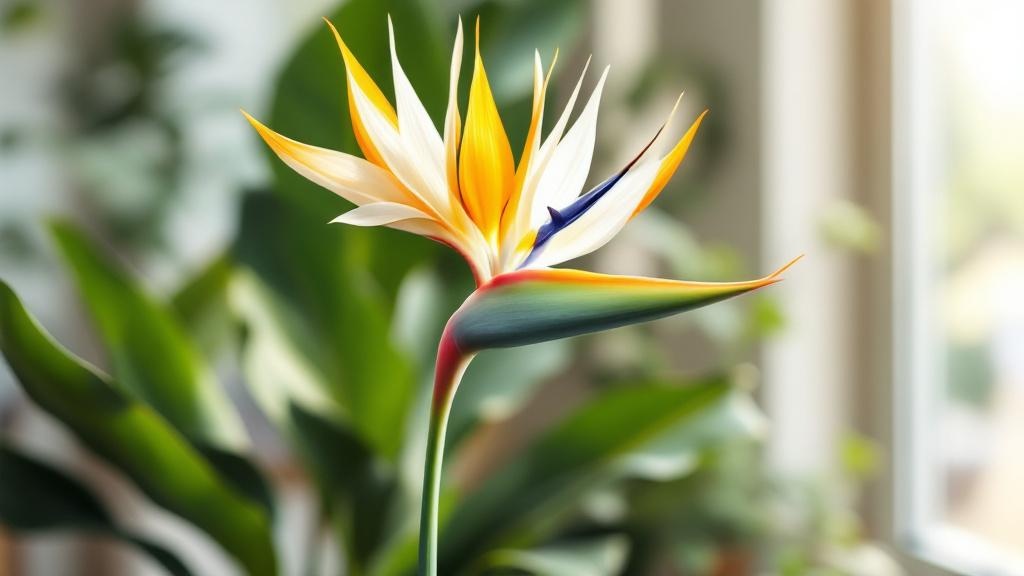
Indoor flowering is rare and typically only occurs in very mature plants over 5-6 years old with exceptional light conditions. The white and blue flowers appear on established plants that receive several hours of direct sunlight daily year-round. Most indoor Strelitzia nicolai are grown primarily for their impressive foliage.
Is Giant Bird of Paradise toxic to cats?
Yes, Strelitzia nicolai is mildly toxic to cats and dogs if ingested. The leaves and flowers contain gastrointestinal irritants that cause nausea, vomiting, and drowsiness. Place the plant out of reach of pets or choose a pet-safe alternative if your animals are prone to chewing plants.
Why is my Giant Bird of Paradise not growing new leaves?
Lack of new growth usually indicates insufficient light, especially during temperate winters from November through February. Move your plant to a brighter location or add supplemental grow lights for 10-12 hours daily. New leaves also stall if the plant is rootbound, pot-shocked after recent repotting, or kept too cold below 15°C.