Plumeria
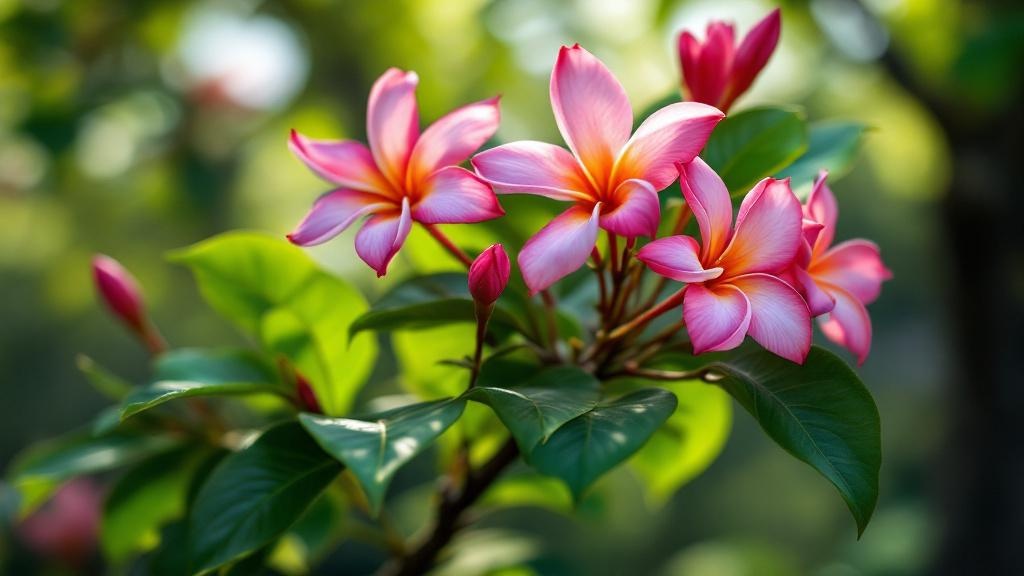
Plumeria, also called Frangipani, brings the intoxicating scent of tropical islands to temperate gardens. These small deciduous trees produce waxy, pinwheel-shaped flowers in shades of white, pink, yellow, and red throughout summer. The most common question gardeners ask is how to get their Plumeria to bloom in cooler climates. Success comes down to providing enough heat, full sun, and a proper winter dormancy period indoors.
Watering Your Plumeria: Less Is More
Water your Plumeria deeply once every 7-10 days during the active growing season from May through September, allowing the soil to dry completely between waterings. These succulent-stemmed trees store water and rot quickly in soggy soil. From October onwards, as leaves drop and dormancy begins, stop watering entirely until new growth emerges in late April or May.
Light Requirements: Maximum Sun Exposure
Plumeria demands at least 6-8 hours of direct sunlight daily to produce flowers. In temperate climates, place your container outdoors in the sunniest spot available from mid-May after the last frost. South-facing patios, against heat-reflecting walls, provide ideal microclimates. Insufficient light results in leggy growth and few or no blooms.
Soil and Repotting for Healthy Roots
Use a fast-draining mix of two parts standard potting soil, one part coarse sand, and one part perlite. Plumeria roots resent sitting in moisture, so terracotta pots with drainage holes work better than plastic. Repot in early May every 2-3 years, moving up just one pot size. Slightly root-bound plants actually bloom more reliably than those in oversized containers.
Temperature and Humidity Needs
Plumeria thrives in daytime temperatures of 21-30°C and tolerates brief dips to 10°C but will suffer damage below 5°C. Move containers outdoors only after mid-May when night temperatures stay above 12°C consistently. In September, before the first frost warnings, bring plants indoors to a cool, dry location around 10-15°C for winter dormancy. Average humidity is fine; these are not humidity-dependent tropicals.
Fertilizing for Maximum Blooms
Feed every 2 weeks from June through August with a high-phosphorus fertilizer (such as 10-30-10) to encourage flowering. Avoid high-nitrogen feeds which promote leaf growth at the expense of blooms. Begin fertilizing only once active growth is well established in late May. Stop all feeding by early September to help the plant prepare for dormancy.
Common Problems and Solutions
Spider mites frequently attack Plumeria during hot, dry summers and indoor overwintering, causing stippled, yellowing leaves. Treat with insecticidal soap or neem oil, ensuring good coverage on leaf undersides. Plumeria rust, a fungal disease showing orange pustules on leaf backs, appears in humid late-summer conditions. Remove affected leaves immediately and improve air circulation. Stem rot from overwatering or cold, wet conditions causes soft, mushy black tissue. Cut well into healthy tissue and allow the wound to dry before replanting.
Frequently asked questions
Why is my Plumeria not blooming?
Your Plumeria likely needs more sun, heat, or maturity to bloom. These trees require at least 6 hours of direct sunlight and warm temperatures above 21°C during the growing season. Young plants or recent cuttings often take 2-3 years before producing their first flowers.
How do I overwinter Plumeria in cold climates?
Bring your Plumeria indoors before temperatures drop below 10°C, typically by late September in temperate zones. Store it in a cool, dry location around 10-15°C with minimal light, and stop watering completely. The plant will drop its leaves and remain dormant until you resume watering in late April.
Why are my Plumeria leaves turning yellow and falling off?
Yellow falling leaves in autumn are completely normal as Plumeria enters dormancy. However, yellowing during summer usually indicates overwatering, poor drainage, or nutrient deficiency. Check that soil dries between waterings and ensure your pot drains freely.
Is Plumeria toxic to cats and dogs?
Yes, Plumeria is toxic to cats and dogs. The milky white sap contains compounds that cause vomiting, diarrhea, and skin irritation upon contact. Keep plants out of reach of pets and wash hands after handling cut stems.
When does Plumeria bloom in temperate climates?
Plumeria typically blooms from July through September in temperate climates when grown outdoors during summer. Flowers appear on new growth at branch tips, and each bloom cluster can last several weeks, filling your garden with its famous sweet fragrance during warm evenings.