Radish
Radishes are the ultimate quick-win vegetable for home gardeners in temperate zones. Whether you're new to growing food or an experienced gardener, radishes deliver crispy, peppery roots in remarkably short time. The most common question growers ask is when and how often to water them—and the answer is simpler than you'd think. Their rapid growth cycle and tolerance for cool weather make them ideal for spring and autumn harvests across zones 5-8.
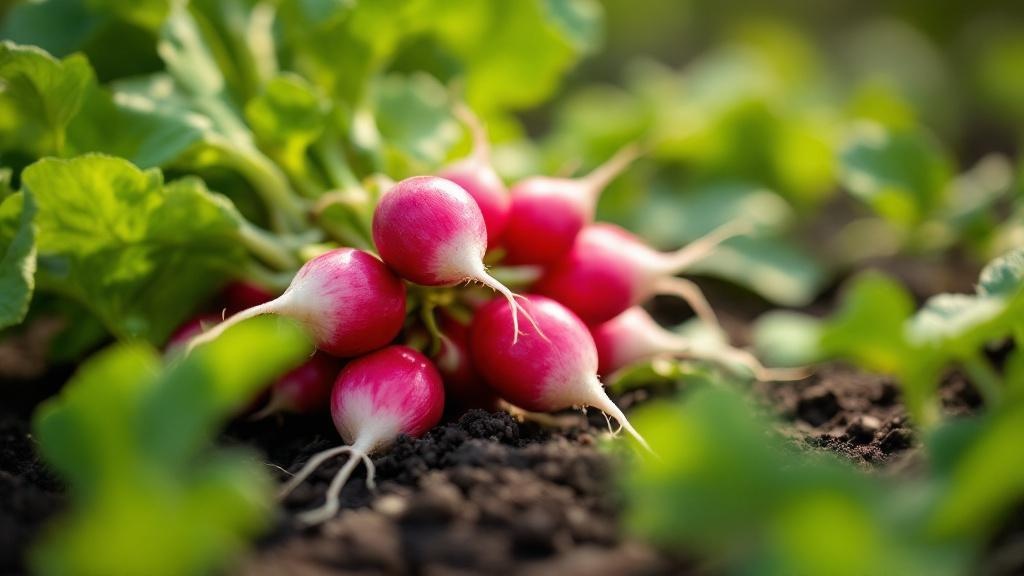
Watering for Crispy Radishes
Radishes need consistent moisture to develop tender, crisp roots without becoming pithy or cracking. Water every 2-3 days, keeping the soil evenly moist but not waterlogged. In temperate spring and autumn weather (March-May, August-October), this typically means light daily watering or every other day depending on rainfall. Too little water causes radishes to become woody and hot-tasting; too much causes them to split or rot.
Light Requirements
Radishes need a minimum of 6 hours of direct sunlight daily and perform best with 8 hours or more. In spring, full sun is ideal as days are lengthening. For autumn sowings (August-September in most temperate zones), partial shade during the hottest afternoon hours can actually improve taste by slowing maturation and reducing bitterness. East-facing or south-facing garden beds are perfect locations.
Soil Preparation and Spacing
Radishes thrive in loose, well-draining loam with pH 6.0-7.0. Break up heavy clay soil or amend with compost and sand before planting. Sow seeds directly outdoors 0.5 inches deep, spacing them 2 inches apart in rows 6 inches apart. Thin seedlings to 2-3 inches apart when they're 1 inch tall—those thinned greens are edible. Avoid transplanting; radishes prefer direct sowing in their final location.
Temperature and Growing Season Timing
Radishes are cool-season crops and germinate best at 60-70°F. In temperate regions, sow in late March through May for spring harvest, then again in July-August for autumn harvest (ready by October-November). They bolt and become bitter in sustained heat above 75°F, so avoid summer sowing. Autumn-sown radishes actually taste sweeter due to slower, cooler growth. Frost-hardy varieties can survive light frosts in October-November.
Fertilizing
Radishes don't require heavy fertilization if soil is pre-amended with compost. A balanced, slow-release organic fertilizer worked into the soil before planting is usually sufficient. Avoid high-nitrogen formulas, which promote excessive leaf growth at the expense of root development. If soil is poor, apply a light liquid fertilizer (such as fish emulsion diluted per label directions) every 2 weeks. Generally, less fertilizer produces better-flavored radishes.
Harvest and Common Problems
Harvest radishes 3-4 weeks after sowing when roots are 0.75-1.5 inches in diameter—pulling them larger makes them tough and woody. Common pests in temperate zones include flea beetles (which chew small holes in leaves) and cabbage root flies (larvae tunnel into roots). Prevent flea beetles with row covers or neem oil spray in April-May. Clubroot disease and powdery mildew can occur in humid summers; ensure good air circulation and avoid planting brassicas repeatedly in the same spot.
Frequently asked questions
How often should I water radishes?
Water radishes every 2-3 days, keeping soil consistently moist but not waterlogged. In spring or autumn rainfall, you may need to water less frequently; always check soil moisture 1 inch below the surface with your finger before watering.
Can I grow radishes in containers?
Yes, radishes grow well in containers 6-8 inches deep and 12 inches wide for 4-5 plants. Use well-draining potting soil, water consistently, and place in full sun. Container radishes may mature slightly slower than in-ground varieties but are convenient for patios or small spaces.
Why are my radishes bitter and hot-tasting?
Bitter flavor is caused by heat stress, irregular watering, or overmature roots left too long in the ground. Harvest radishes at 0.75-1.5 inches diameter, water consistently, and grow them in spring (March-May) or autumn (August-September) rather than summer. Autumn-grown radishes are naturally sweeter.
When do radishes bolt and stop being edible?
Radishes bolt and develop a tough, woody root when temperatures consistently exceed 75°F or after about 6 weeks in the ground. They bolt faster in late spring if sown too late. In temperate zones, sow by May for spring harvest and by early August for autumn harvest to avoid summer heat.
Are radish greens edible?
Yes, radish greens are completely edible and nutritious—use them fresh in salads or cooked like spinach. Thin seedlings and harvest outer leaves as the plant grows, or pick entire greens when the radish root reaches full size. They have a peppery bite similar to the root.
🩺 Common diseases and pests
These problems commonly affect this plant. Click any to see full symptom descriptions, organic and chemical treatment, and prevention.