American Sweetgum
The American Sweetgum is one of the most breathtaking shade trees you can plant for autumn color, displaying leaves in shades of yellow, orange, red, and purple simultaneously. Native to eastern North America, it thrives remarkably well in Central European and UK climates. The most common question gardeners ask is how to deal with its spiky seed balls, but with the right cultivar choice and placement, this tree becomes a stunning long-term investment for any medium to large garden.
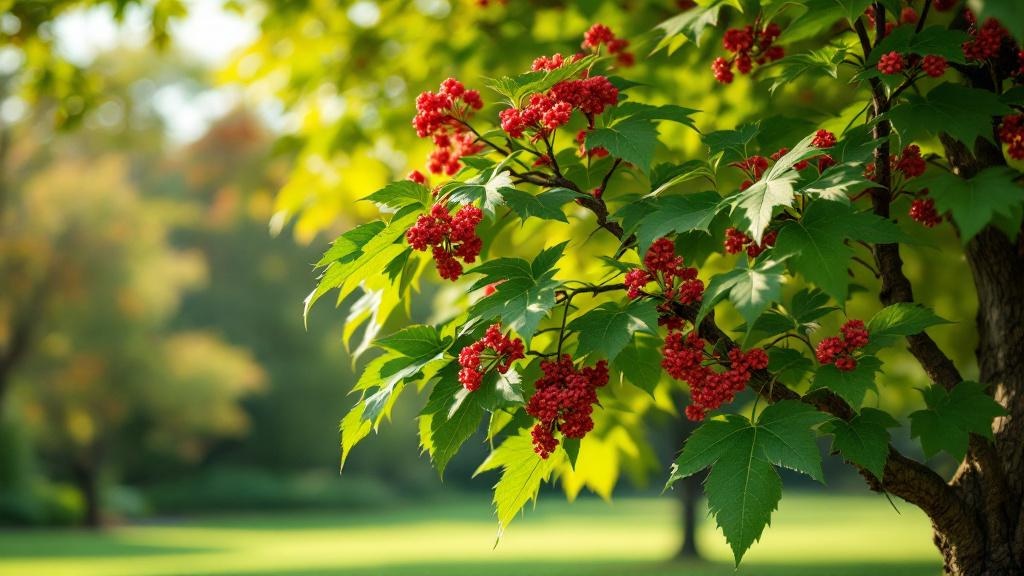
Watering Your American Sweetgum
Young trees need deep watering once weekly during their first two growing seasons to establish strong roots. Water thoroughly in dry spells from April through September, providing about 25 liters per session for newly planted trees. Once established after 3-4 years, Sweetgums become quite drought-tolerant but appreciate supplemental watering during extended dry periods in July and August.
Light Requirements for Optimal Growth
American Sweetgum performs best in full sun, requiring at least 6 hours of direct sunlight daily for the most vibrant autumn coloration. Trees grown in partial shade will survive but produce less spectacular fall colors and may develop a leggier growth habit. In warmer parts of zone 8, light afternoon shade can actually benefit the tree during heat waves.
Soil and Planting Considerations
Plant your Sweetgum in moist, slightly acidic soil with a pH between 5.5 and 6.5 for optimal nutrient uptake. The ideal planting time is late October through March when the tree is dormant, avoiding periods of hard frost. Dig a hole twice the width of the root ball and mulch generously with acidic bark chips, keeping mulch 10 centimeters away from the trunk to prevent rot.
Temperature and Climate Tolerance
American Sweetgum is fully hardy in USDA zones 5-8, tolerating winter temperatures down to minus 25 Celsius once established. Young trees may benefit from frost protection wrapping around the trunk during their first two winters in colder regions. The tree requires a proper cold period to trigger its famous autumn color display, making it perfectly suited to temperate European and Northern US climates.
Fertilizing for Healthy Growth
Apply a balanced slow-release fertilizer in early April as new growth begins, using a formulation for acid-loving trees. Established trees rarely need fertilizing if mulched annually with organic matter. Avoid high-nitrogen feeds after June, as this promotes soft growth vulnerable to early autumn frosts. A light application of ericaceous fertilizer in March helps maintain soil acidity.
Common Problems and Solutions
Honey fungus can affect Sweetgums in poorly drained soils, causing die-back and eventual death, so ensure good drainage at planting. Iron chlorosis appears as yellowing leaves with green veins when soil is too alkaline, treated by applying sequestered iron and acidifying mulches. Aphids occasionally colonize new growth in late spring, but natural predators like ladybirds typically control populations without intervention.
Frequently asked questions
How fast does American Sweetgum grow?
American Sweetgum grows moderately fast at 30-60 centimeters per year once established. Young trees may grow slower in their first two years while developing root systems. Expect a mature height of 15-25 meters after 20-30 years in favorable conditions.
Are American Sweetgum seed balls a problem?
Yes, the spiky seed balls can be messy and uncomfortable to walk on barefoot. They drop from November through winter and require regular raking from lawns. Consider sterile cultivars like Rotundiloba which produce no seed balls if this is a concern.
Why are my Sweetgum leaves turning yellow in summer?
Summer yellowing usually indicates iron chlorosis caused by alkaline soil preventing nutrient uptake. Test your soil pH and apply sequestered iron if it reads above 7.0. Mulching with acidic materials like pine bark and avoiding lime-based fertilizers helps prevent this issue.
When should I prune American Sweetgum?
Prune American Sweetgum during full dormancy from December to February to minimize sap bleeding. Remove dead, crossing, or damaged branches and shape young trees to develop a strong central leader. Avoid heavy pruning as the tree naturally forms an attractive pyramidal shape.
Is American Sweetgum toxic to cats and dogs?
No, American Sweetgum is not toxic to cats or dogs. The tree is considered safe for gardens where pets roam freely. However, the spiky seed balls can be uncomfortable if stepped on by pets with sensitive paws.