Zebra Plant
The Zebra Plant (Calathea zebrina) is prized by houseplant lovers for its dramatic striped foliage and moving leaves that fold at night. If you've purchased one and wondered why the leaf edges are browning or the leaves seem droopy, you're not alone—this Central American native demands consistent care. Our guide walks you through the specific watering, humidity, and light needs to keep your Calathea vibrant year-round in temperate climates.
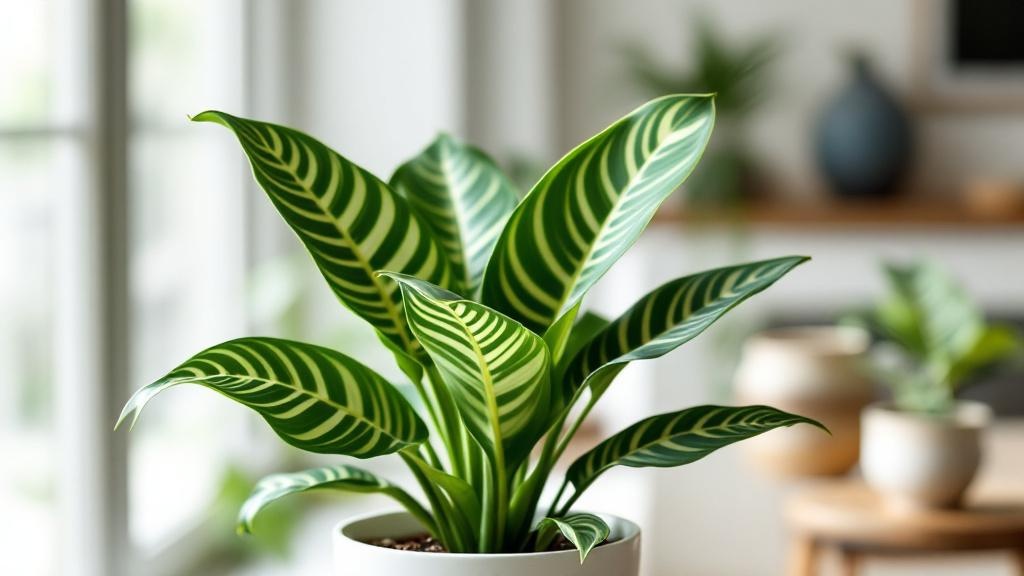
Watering Your Calathea Zebrina
Calathea zebrina needs consistently moist soil during the growing season (spring and summer), typically every 5-7 days depending on humidity and pot size. In autumn and winter, reduce frequency to every 10-14 days as growth slows. Use lukewarm, filtered water or tap water left to stand overnight, as chlorine and cold temperatures stress the plant. Never allow the soil to dry out completely or become waterlogged—both cause leaf curl and browning edges.
Light Requirements for Zebra Plants
Position your Calathea zebrina in bright indirect light, ideally 1-2 metres from an east or west-facing window. Direct sun will fade the striking stripe pattern and scorch leaves, while insufficient light leads to slower growth and loss of variegation. In winter, when natural light is limited in temperate regions, move the plant closer to a window or consider a grow light positioned 30 cm above the plant for 10-12 hours daily.
Soil and Repotting Calathea Zebrina
Use a light, well-draining potting mix—combine equal parts peat moss, perlite, and orchid bark for optimal drainage and aeration. Repot every 12-18 months in late March or early April when new growth begins, moving up just one pot size to avoid waterlogging. Ensure the pot has drainage holes and never use garden soil, which compacts and retains too much moisture for this tropical plant.
Temperature and Humidity for Calathea Zebrina
Maintain temperatures between 18–24°C; Calathea zebrina dislikes cold and drafts, so keep it away from windows during winter and avoid heating vents. Humidity is critical—aim for 50–70% by misting the leaves 2-3 times weekly, grouping plants together, or using a pebble tray filled with water beneath the pot. Low humidity in central heating systems (common in temperate homes during winter) causes brown leaf edges; a room humidifier is worth the investment if you have multiple tropical plants.
Fertilizing Your Zebra Plant
Feed every 4-6 weeks during the growing season (March to September) with a balanced, diluted houseplant fertilizer at half strength. In autumn and winter, reduce to once monthly or stop entirely, as growth slows and over-fertilizing causes salt buildup and brown tips. Flush the soil with distilled water every 6 months to prevent mineral accumulation from tap water and fertiliser residues.
Common Problems and Solutions
Brown or papery leaf edges indicate low humidity or chlorine sensitivity—mist more frequently and use filtered water. Yellow leaves with soft stems suggest overwatering or root rot; allow soil to dry slightly between waterings and repot into fresh soil if root rot is suspected. Spider mites and mealybugs are occasional pests in dry indoor environments; spray affected leaves with insecticidal soap or neem oil every 7-10 days until pests clear, paying special attention to the leaf undersides where spider mites hide.
Frequently asked questions
How often should I water my Calathea zebrina?
Water every 5-7 days during spring and summer to keep the soil consistently moist, and every 10-14 days in autumn and winter. Always use lukewarm filtered water and check the top 2 cm of soil before watering—if it feels dry, it's time to water.
Why are the leaves on my Zebra Plant turning brown at the edges?
Brown leaf edges are caused by low humidity, chlorine in tap water, or inconsistent watering. Increase misting to 2-3 times weekly, use filtered water, and maintain soil moisture without waterlogging. This is the most common complaint among Calathea owners in dry temperate homes.
Can I put my Calathea zebrina in direct sunlight?
No, direct sun will fade the leaf stripes and scorch the foliage. Keep your plant in bright indirect light 1-2 metres from an east or west-facing window for the best colour and growth.
Is Calathea zebrina toxic to cats and dogs?
No, Zebra Plant is completely safe for cats, dogs, and other pets. You can place it anywhere in your home without worry about poisoning.
What temperature does Calathea zebrina prefer?
Calathea zebrina thrives in temperatures between 18–24°C and should never drop below 15°C. Keep it away from cold windows, drafts, and heating vents during winter, as temperature fluctuations stress the plant and cause leaf curl.