Black Currant
Black currant bushes are prized by gardeners in temperate regions for their tart, vitamin C-rich berries and exceptional hardiness. Unlike many fruit plants, they actually prefer cooler climates and can handle harsh winters with ease. The most common question home growers ask is how to encourage consistent fruiting and when to prune for the best harvest.
Watering Black Currant Bushes
Water deeply and consistently during the growing season from April through August, aiming for 2-3 cm of moisture per week if rainfall is insufficient. Black currants have shallow root systems and prefer consistently moist (not waterlogged) soil during fruit development. Reduce watering in autumn and winter when the plant is dormant. During dry spells in June-July when berries are ripening, maintain steady moisture to prevent small or dry fruit.
Light Requirements for Black Currant
Black currant performs best in full sun, requiring at least 6 hours of direct sunlight daily for optimal fruit production and flavour. It tolerates partial shade (4-6 hours of sun), though yields and berry sweetness will be reduced. In very hot temperate zones (southern UK, Central Europe zone 8), afternoon shade helps prevent stress during peak summer heat. Avoid planting in dense shade, as this encourages weak growth and fungal issues.
Soil & Repotting Black Currant
Black currant thrives in fertile, well-draining loam or sandy loam with a pH of 6.0-6.5. Amend planting holes with compost or aged manure before planting in spring or autumn. These plants are typically grown in situ as permanent bushes rather than repotted, but container-grown specimens (20-25 litre pots minimum) can be moved annually in autumn if necessary. Mulch around the base with 5 cm of organic compost each spring to retain moisture and suppress weeds.
Temperature & Humidity for Black Currant
Black currant is exceptionally cold-hardy and actually requires a period of winter chilling (vernalization) to set fruit — it needs 800+ hours below 10°C, making it ideal for zones 5-7 and parts of zone 8. High humidity is beneficial and reduces pest stress; it performs well in cooler, maritime climates. Avoid planting in frost pockets where late spring frosts (May) can damage emerging flowers, but gentle frost will not harm established plants.
Fertilizing Black Currant
Apply a balanced feed (such as a fruit bush fertilizer, NPK 10-10-10) in early March as growth begins, then again in late May. Use approximately 60 grams per mature bush, or follow product instructions. Avoid high-nitrogen feeds in late summer, as these promote soft growth vulnerable to frost. Every 2-3 years, incorporate 2-3 cm of well-rotted compost or manure around the base in autumn to maintain soil fertility.
Common Problems with Black Currant
Big bud mite is a widespread problem in temperate Europe — look for swollen, brown buds in winter; prune out and destroy affected growth. Powdery mildew may occur in humid conditions; improve air circulation by pruning and spray with sulphur in June-July if needed. Blackcurrant gall midge can cause berry drop in June; remove fallen fruit promptly. Most regions have good natural pest control, but check local restrictions on growing black currant where white pine blister rust is a concern.
Frequently asked questions
How often should I water black currant?
Water deeply 2-3 times per week during the growing season (April-August) if rainfall is below 2-3 cm weekly. Once established, black currant is fairly drought-tolerant, but consistent moisture during fruit development (June-July) ensures better yields and sweeter berries. In winter, reduce watering significantly as the plant is dormant.
When do black currants fruit and how do I harvest?
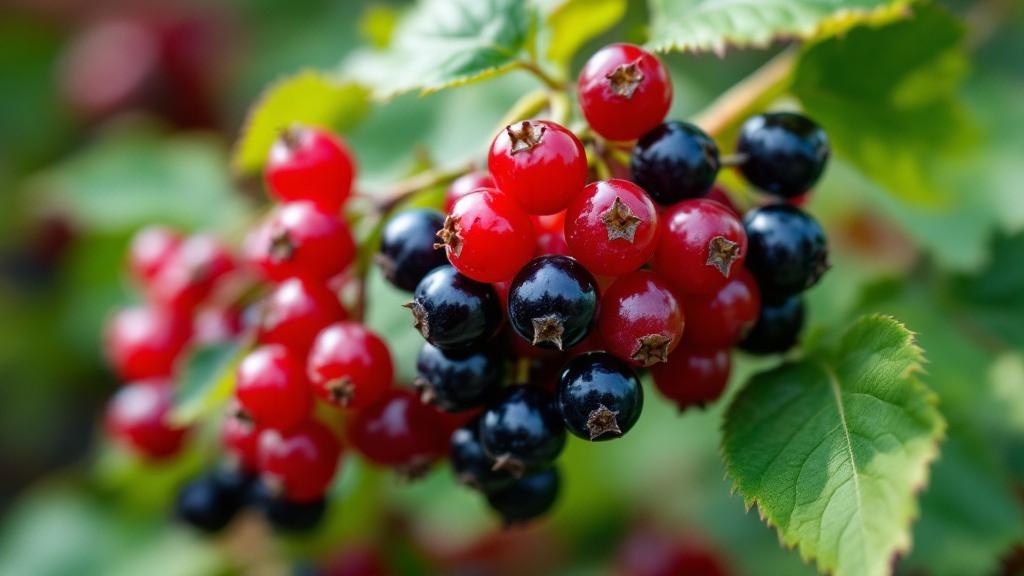
Black currants flower in April-May and fruit ripens in July-August in temperate climates. Pick berries when fully black (slightly soft) by stripping entire bunches from the branch — they won't ripen further after picking. Harvest in the morning when cool, and use or freeze within 2-3 days for best flavour.
How do I prune black currant for better fruiting?
Prune in late autumn (October-November) after harvest while dormant. Remove one-quarter to one-third of the oldest (darkest) stems at ground level to encourage new fruiting wood. In spring (March), remove any dead or damaged branches and thin crowded growth to improve air circulation. Young plants need less aggressive pruning; focus on establishing a balanced framework in the first 2-3 years.
Why are my black currant leaves yellow?
Yellowing leaves in summer typically indicate nitrogen deficiency or inconsistent watering. Check soil moisture first — black currants prefer steady moisture without waterlogging. If soil is moist, apply a balanced fertilizer in May and repeat in late May. Yellowing in autumn is normal as the plant prepares for dormancy.
Can I grow black currant in a pot?
Yes, black currant can be grown in containers, but use a pot at least 20-25 litres with excellent drainage. Use a peat-free, multipurpose compost mixed with compost for fruit. Container plants require more frequent watering and feeding, especially in summer heat, and will produce smaller yields than in-ground plants. Repot every 2-3 years and move to a sheltered location in severe winter weather for protection.