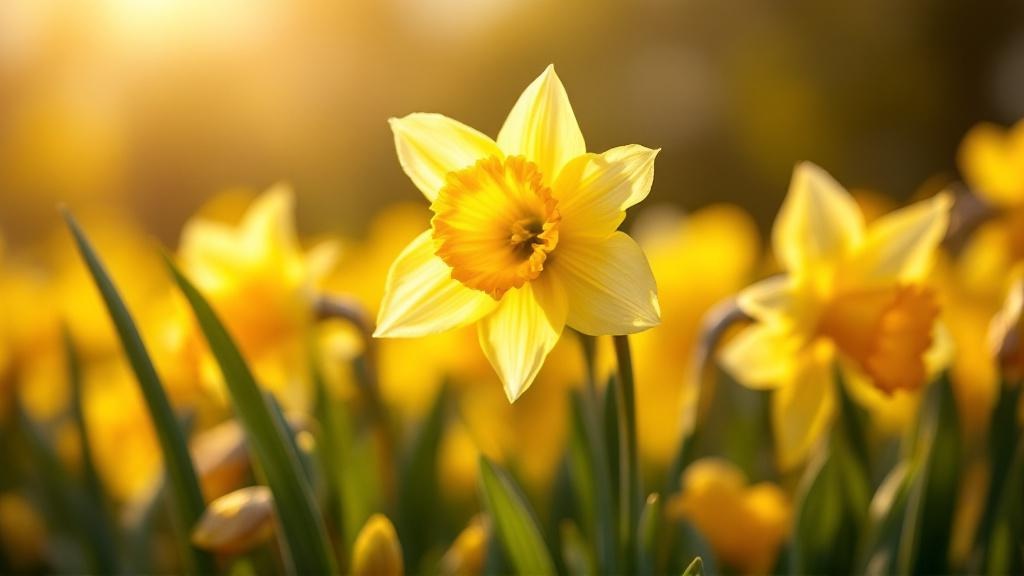
Daffodil
Daffodils are among the easiest spring flowers to grow in temperate climates, naturalizing reliably year after year with almost no fuss. Whether you're planting them in borders, containers, or grass, the main question most gardeners ask is when and how to plant for guaranteed blooms. These hardy bulbs reward careful autumn planting with weeks of vibrant flowers that mark the arrival of spring.
Planting and Watering
Plant daffodil bulbs in late September through November, before soil freezes—aim for mid-October in Central Europe and Northern US zones 5-8 for best results. Water thoroughly after planting to settle soil, then allow autumn and winter rainfall to provide moisture; no additional watering is usually necessary. Once bulbs are established, daffodils are very drought-tolerant and rarely need supplemental watering. After flowering ends in late April, stop watering foliage to allow bulbs to mature and store energy for next season.
Light Requirements
Daffodils flower best in full sun, requiring at least 6 hours of direct sunlight daily, but they also tolerate partial shade—especially useful under deciduous trees where they bloom before leaf canopy closes. In shaded spots, flowering may be delayed by a week or two and flower count may be reduced. If naturalized in grass, ensure the area receives good light; mowing shade from nearby shrubs into daffodil beds will weaken bulbs over time.
Soil and Planting Depth
Daffodils demand well-draining soil to prevent bulb rot during wet winters; amend heavy clay with coarse sand or grit before planting. Plant bulbs at a depth of 15-20 cm (6-8 inches) measured from the bulb's base to soil surface—deeper planting in lighter soils, shallower in heavier clay. Space bulbs 10-15 cm (4-6 inches) apart for natural groupings. In containers, use multipurpose or bulb compost and ensure drainage holes are clear.
Temperature and Cold Dormancy
Daffodils require a cold dormancy period of 12-16 weeks below 13°C (55°F) to bloom; this is why autumn planting in temperate zones (USDA 5-8) works perfectly. The winter cold triggers flower bud initiation in the bulb—skip this chill, and blooms won't appear. Potted daffodils forced indoors for early spring color must be placed in a cool garage or cold frame after planting, or pre-chilled bulbs purchased from garden centers. In mild winters, chill potted bulbs in a refrigerator for 6-8 weeks before bringing them into a warm room in late January for February blooms.
Feeding and Aftercare
Daffodils need minimal feeding if soil is reasonably fertile; apply a balanced bulb fertilizer (such as 5-10-10) in early March as shoots emerge, or a slow-release granular feed at planting time. After flowering fades in late April, remove spent flower heads but leave stems and leaves untouched until they yellow naturally (usually by late May)—foliage feeds the bulb for next year's bloom. Do not tie or braid foliage, as this reduces photosynthesis. Once foliage dies back completely, you can tidy the area.
Common Problems and Solutions
Narcissus bulb fly larvae tunnel into bulbs, causing rot and failure to sprout; prevent by inspecting bulbs at planting and discarding soft or damaged ones, and by ensuring good drainage. Slugs and snails graze on young shoots in mild, wet springs—remove by hand or use organic slug pellets in March. Basal rot fungus causes mushy bulbs in waterlogged soil; cure by improving drainage and avoiding bulb damage during handling. Virus causes mottled, distorted foliage but rarely kills plants; remove affected bulbs to prevent spread.
Frequently asked questions
When should I plant daffodil bulbs?
Plant daffodil bulbs in late September through November, ideally mid-October in temperate zones (5-8). Bulbs need 12-16 weeks of cold soil temperatures to trigger flowering. If you miss autumn, pre-chilled bulbs can be forced indoors in winter, but outdoor planting in autumn is most reliable.
How often should I water daffodils?
Water daffodils thoroughly at planting time, then rely on natural autumn and winter rainfall. Once established, daffodils rarely need additional watering. After flowering, stop watering foliage to allow bulbs to ripen and store energy for next season.
Why are my daffodil foliage yellowing after flowers fade?
Yellowing foliage after blooming is completely normal and necessary—the plant is transferring nutrients back into the bulb for next year's flowers. Leave the dying leaves in place until they are completely brown and pull away easily, usually by late May; removing them early weakens future blooms.
Can I grow daffodils in containers indoors?
Yes, daffodils grow well in pots indoors using pre-chilled bulbs or bulbs you chill in a refrigerator for 6-8 weeks. Plant in bulb compost, keep cool (below 13°C/55°F) in a garage or cool room until shoots appear, then move to a bright windowsill in late January for blooms by February or March.
Are daffodils toxic to pets?
Yes, daffodil bulbs and foliage are toxic to cats, dogs, and horses if ingested, causing digestive upset and potential cardiac issues. Keep bulbs in secure storage and planted beds away from pets; wear gloves when handling bulbs to avoid skin irritation.