Yellow Floating Heart
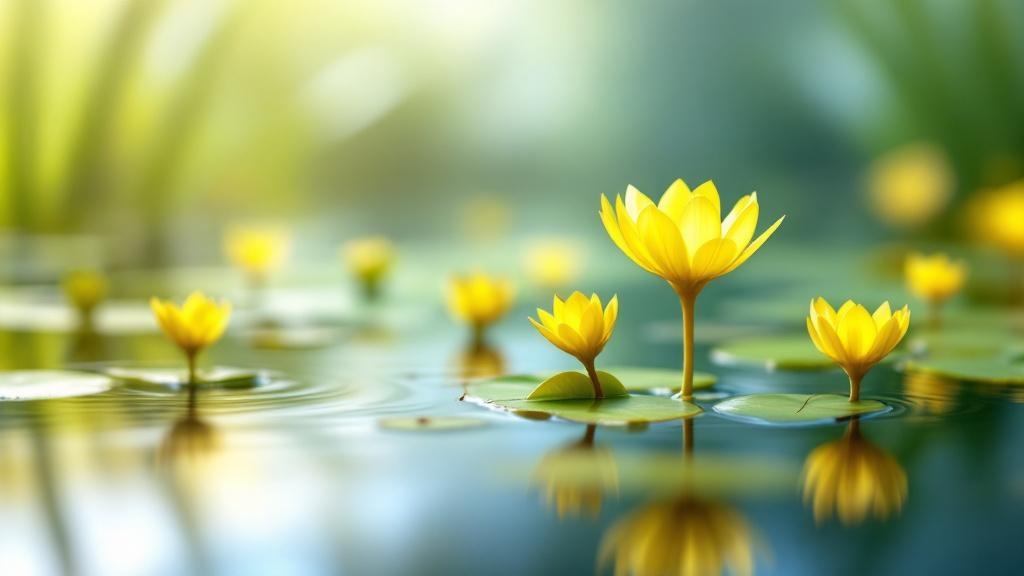
Yellow Floating Heart brings a carpet of golden summer blooms to garden ponds and water features. Native to Europe and naturalized across temperate regions, this floating aquatic plant is often searched for by gardeners asking how to control its spread while enjoying its ornamental beauty. With proper placement and management, it creates a stunning focal point in still or slow-moving water from June through September.
Water Depth and Placement for Yellow Floating Heart
Plant Yellow Floating Heart in water 15-60 cm deep, with 30-45 cm being ideal. Roots anchor in substrate while leaves float on the surface. In garden ponds, use aquatic planting baskets to contain spread. Place away from fountains or waterfalls as it prefers still or gently moving water.
Light Requirements for Healthy Blooms
Full sun produces the most abundant flowering from June to September. The plant tolerates partial shade but will produce fewer blooms and smaller leaves. In temperate climates, the summer sun angle provides ideal conditions. South-facing pond positions work best in UK and Northern European gardens.
Substrate and Container Planting
Use heavy loam or aquatic planting soil in mesh baskets to contain growth. Top with gravel to prevent soil clouding the water. Repot every 2-3 years in early May when growth resumes. Avoid lightweight potting mixes which float out of containers and cloud pond water.
Winter Hardiness and Seasonal Changes
Yellow Floating Heart is fully hardy in zones 5-8, surviving winters under ice. Foliage dies back after first frost, typically late October to November. Remove dead foliage in autumn to prevent pond debris buildup. New growth emerges reliably in late April to early May as water warms above 10C.
Fertilizing Aquatic Plants
Apply slow-release aquatic fertilizer tablets pressed into the substrate in May and again in July. Avoid granular fertilizers which promote algae growth. In established ponds with fish, additional feeding is rarely necessary as fish waste provides nutrients. Over-fertilizing causes excessive leaf growth at the expense of flowers.
Managing Spread and Common Problems
The main challenge is controlling vigorous spread via runners. Trim runners monthly from June to August and remove excess plants. Aphids occasionally colonize floating leaves in late summer, spray off with water or introduce ladybirds. Water lily beetles can skeletonize leaves in July and August, remove affected foliage and hand-pick adults. Brown leaf spots indicate fungal issues from overcrowding, thin plants to improve air circulation.
Frequently asked questions
How do I stop Yellow Floating Heart taking over my pond?
Grow it in submerged planting baskets and trim runners every 3-4 weeks during summer. Physical containment is essential as this plant spreads aggressively via stolons. Remove any runners that escape and root in pond substrate before they establish.
When does Yellow Floating Heart flower?
Yellow Floating Heart blooms from June through September in temperate climates. Each fringed yellow flower lasts just one day, but plants produce many blooms continuously throughout summer. Full sun positions result in the heaviest flowering.
Is Yellow Floating Heart invasive?
Yes, Yellow Floating Heart is considered invasive in some regions including parts of North America. In garden ponds, it spreads vigorously but can be managed with containers and regular trimming. Check local regulations before planting and never release into natural waterways.
Can Yellow Floating Heart survive winter?
Yes, it is fully winter hardy in zones 5-8 and survives under ice. The foliage dies back after autumn frosts, but roots survive in pond substrate. New growth emerges reliably each spring when water temperatures rise above 10C, typically in late April.
Why are my Yellow Floating Heart leaves turning yellow?
Yellowing leaves usually indicate nutrient deficiency or natural autumn dieback. In summer, add aquatic fertilizer tablets to the substrate. If only older leaves yellow while new growth is healthy, this is normal leaf cycling. Crowded plants also yellow from competition, so thin excess growth.