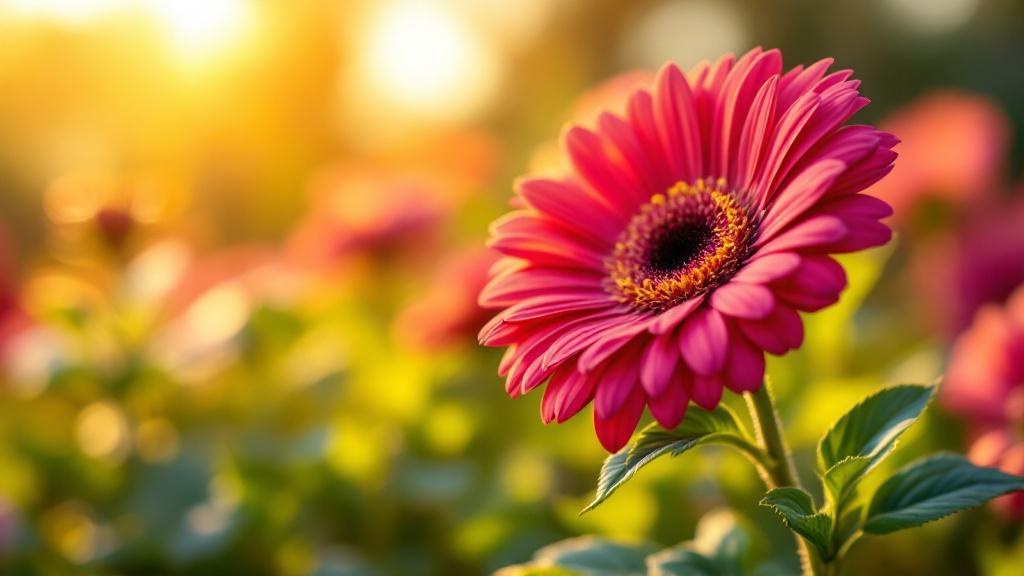
Gerbera Daisy
Gerbera Daisies are among the most popular cut flowers in the world, prized for their vivid colors and long vase life. Home gardeners often search for help when their Gerberas stop blooming or develop crown rot, two common challenges in temperate climates where humidity and cool temperatures can stress these warmth-loving plants. With the right care, you can enjoy continuous blooms from late spring through early autumn.
Watering Your Gerbera Daisy: Avoiding Crown Rot
Water your Gerbera when the top 3-4 cm of soil feels dry, typically every 5-7 days in summer and every 10-14 days in winter. Always water at the base of the plant, never over the crown or leaves, as moisture trapped in the center causes crown rot. In temperate climates, reduce watering significantly from October onwards when growth slows. Use room-temperature water and ensure pots have drainage holes.
Light Requirements for Maximum Blooms
Gerbera Daisies need 6-8 hours of bright light daily to produce flowers. In the UK and Northern Europe, place them in your sunniest south-facing window or grow outdoors from late May through September. During winter months, consider a grow light to supplement the weak natural light. Too little light results in leggy growth and few or no blooms.
Soil and Repotting Essentials
Plant Gerberas in a well-draining, slightly acidic mix with a pH of 5.5-6.5. A blend of peat-free compost, perlite, and coarse sand works well. Repot in early spring, typically late March to April, choosing a pot only slightly larger than the root ball. Ensure the crown sits slightly above soil level to prevent rot. Gerberas prefer being somewhat root-bound, so annual repotting is rarely necessary.
Temperature and Humidity for Temperate Climates
Gerbera Daisies thrive between 15-24°C during the day and no lower than 10°C at night. They cannot survive frost, so in USDA zones 5-8, treat them as annuals outdoors or bring potted plants inside by mid-September. Moderate humidity of 40-60% is ideal. Avoid placing them near radiators in winter, as dry heat causes leaf edges to crisp and increases spider mite risk.
Fertilizing for Continuous Flowering
Feed every two weeks from April through September with a balanced liquid fertilizer diluted to half strength. Switch to a high-potassium fertilizer like tomato feed once buds appear to encourage more blooms. Stop fertilizing entirely from October to February when the plant rests. Over-fertilizing causes salt buildup and leaf burn, so err on the side of less rather than more.
Common Problems and How to Fix Them
Crown rot appears as a mushy, blackened center and is caused by overwatering or water sitting on the crown. Remove affected tissue and improve drainage immediately. Powdery mildew shows as white patches on leaves, common in humid UK summers. Improve air circulation and treat with a fungicide if severe. Aphids and spider mites attack stressed plants, especially indoors during winter. Wipe leaves with soapy water or use neem oil spray.
Frequently asked questions
How often should I water a Gerbera Daisy?
Water your Gerbera every 5-7 days in summer when the top few centimeters of soil are dry. Reduce to every 10-14 days in winter when growth slows. Always water at the soil level to prevent crown rot.
Why are my Gerbera Daisy leaves turning yellow?
Yellow leaves usually indicate overwatering or poor drainage. Check that your pot has drainage holes and the soil is not staying soggy. Other causes include nutrient deficiency, which you can address with a balanced fertilizer during the growing season.
Can Gerbera Daisies survive winter outdoors in the UK?
No, Gerbera Daisies cannot survive frost and must be brought indoors before temperatures drop below 10°C. Move potted plants inside by mid-September and place them in a bright, cool room. Some gardeners treat them as annuals and replace them each spring.
Why has my Gerbera Daisy stopped flowering?
Lack of blooms is usually caused by insufficient light or exhausted soil nutrients. Ensure your plant receives at least 6 hours of direct sunlight daily and feed with a high-potassium fertilizer every two weeks during growing season. Deadheading spent flowers also encourages new blooms.
Is Gerbera Daisy toxic to cats?
No, Gerbera Daisies are non-toxic to cats, dogs, and horses according to the ASPCA. This makes them a safe choice for households with curious pets. However, ingesting large amounts of any plant material may cause mild stomach upset.