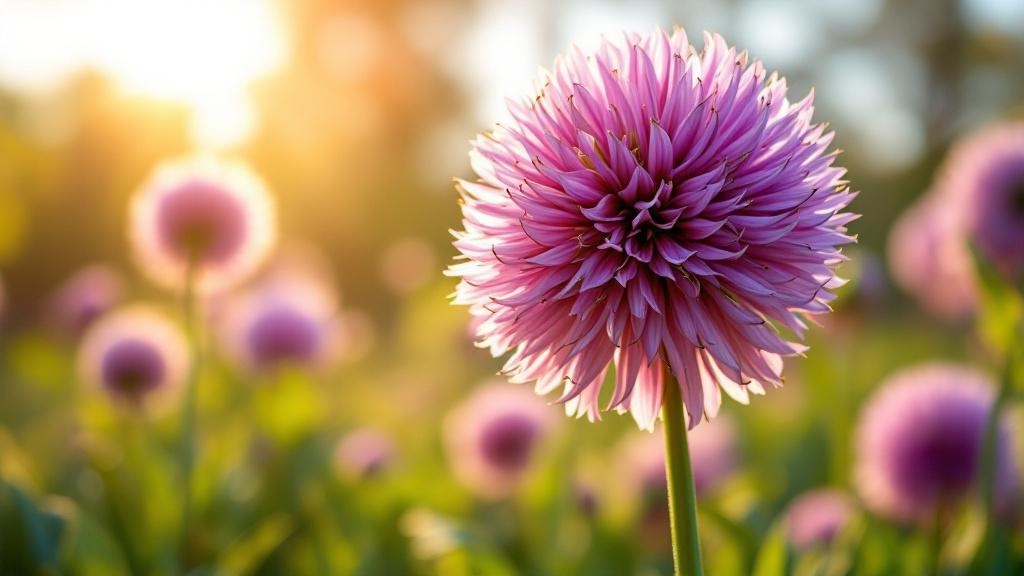
Giant Allium
Giant Allium is the architectural drama queen of the spring garden, sending up 4-6 foot stems topped with dense purple spheres that can reach 6 inches across. The most common question gardeners ask is when and how deep to plant these impressive bulbs. Native to Central Asia, Allium giganteum has become a beloved ornamental across temperate regions, providing reliable blooms in May and June while deterring deer and rabbits with its onion-family scent.
Watering Your Giant Allium Through the Seasons
Water newly planted bulbs thoroughly in autumn to help root establishment before winter. During the active growing season from March through June, provide about 1 inch of water weekly if rainfall is insufficient. Once foliage yellows after flowering, stop watering entirely as the bulbs enter summer dormancy and excess moisture causes rot.
Light Requirements for Maximum Flower Size
Giant Allium demands full sun with at least 6 hours of direct sunlight daily to produce its characteristic large globes. In partial shade, stems become weak and floppy, and flower heads remain undersized. Choose a south or west-facing border position, ideally where the dramatic blooms can be silhouetted against a darker background like hedging or evergreen shrubs.
Soil Preparation and Planting Depth
Plant bulbs in October or November, positioning them 6-8 inches deep and 8-12 inches apart in well-draining soil enriched with compost. Giant Allium despises wet feet, so if you have heavy clay soil, dig in generous amounts of horticultural grit or plant in raised beds. A slightly alkaline pH between 6.5 and 7.5 produces the healthiest growth.
Temperature Tolerance and Winter Care
Hardy to minus 20 degrees Celsius, Giant Allium requires no winter protection in zones 5-8. The bulbs actually need a cold period of 12-14 weeks below 5 degrees Celsius to trigger flowering. Summer dormancy is equally important — these bulbs prefer warm, dry conditions when resting, mimicking their Central Asian mountain origins.
Feeding for Bigger Blooms
Apply a balanced slow-release fertilizer or bone meal when planting in autumn. In early March as shoots emerge, top-dress with a potassium-rich feed to support flower development. Avoid high-nitrogen fertilizers which promote foliage at the expense of blooms. After three to four years, flowering may decline, signaling time to lift and divide crowded bulbs in late summer.
Common Problems and Solutions
Onion white rot appears as yellowing foliage with white fungal growth at the bulb base, often in cool wet springs — remove and destroy affected plants and avoid replanting alliums in that spot for 8 years. Allium leaf miner, increasingly common across the UK and Central Europe, creates distinctive white streaks on leaves in April and May — cover emerging plants with fleece or fine mesh from late March. Narcissus bulb fly occasionally targets giant allium, causing soft, rotting bulbs — firm up soil around bases in June when adults are laying eggs.
Frequently asked questions
When should I plant Giant Allium bulbs?
Plant Giant Allium bulbs in October or November before the ground freezes. This gives the roots 4-6 weeks to establish before winter dormancy. Spring planting is possible but often results in smaller flowers or no blooms the first year.
Why are my Giant Allium leaves turning yellow before flowering?
Yellowing leaves before the flower opens typically indicates overwatering or poor drainage causing bulb rot. Check that soil drains freely and reduce watering immediately. If the bulb feels soft when gently probed, fungal infection has likely set in and the plant may not recover.
How long do Giant Allium flowers last?
Giant Allium flowers last 2-3 weeks in the garden, typically blooming from late May through mid-June in temperate climates. The dried seed heads remain attractive for months afterward and are excellent in flower arrangements. Cut stems when half the florets are open for longest vase life.
Is Giant Allium toxic to cats and dogs?
Yes, Giant Allium is toxic to cats and dogs as all parts contain compounds that damage red blood cells. Ingestion causes vomiting, diarrhea, and potentially anemia. The strong onion smell usually deters pets, but plant away from areas where curious animals dig.
Do Giant Allium bulbs multiply?
Giant Allium bulbs slowly multiply by producing small offset bulbils around the main bulb. Expect one or two offsets per year, which take 2-3 years to reach flowering size. You can also grow new plants from seed, though they require 4-5 years to bloom.