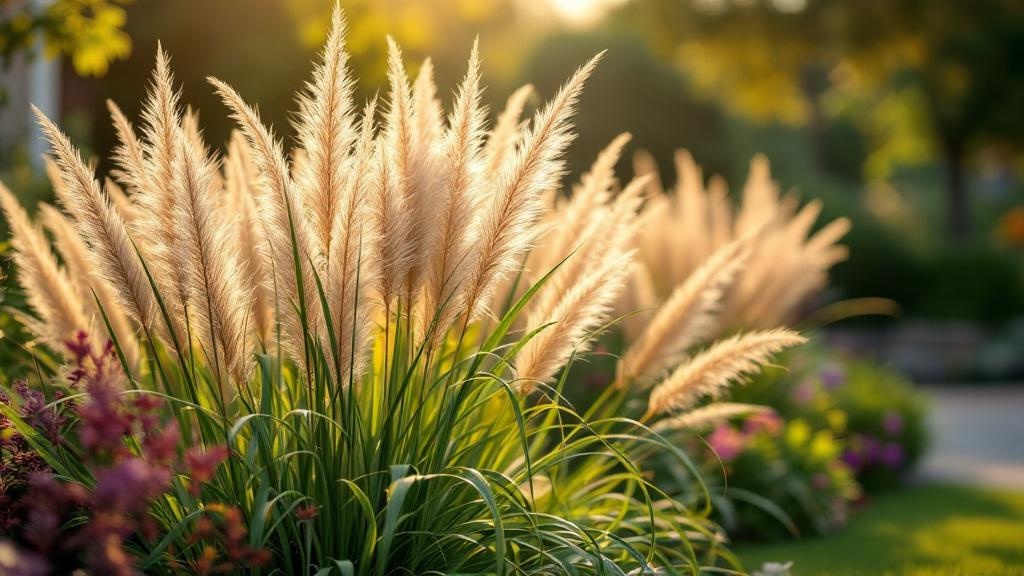
Giant Miscanthus
Giant Miscanthus is the statement piece of ornamental grasses, creating living walls of graceful foliage that sway beautifully in autumn breezes. Native gardeners and landscape designers prize it for screening, windbreaks, and architectural impact. The most common question people search is how fast it grows and whether it will survive harsh winters. Good news: in temperate climates from Central Europe to the Northern US, this sterile hybrid establishes reliably and returns stronger each spring.
Watering Your Giant Miscanthus
Water newly planted rhizomes deeply once or twice weekly during the first growing season (April through September) to establish strong roots. Once mature after the second year, Giant Miscanthus is remarkably drought-tolerant and typically needs supplemental water only during extended dry spells exceeding 2-3 weeks. In average temperate summers with regular rainfall, established clumps rarely need irrigation. Overwatering in heavy clay soils can lead to root rot, so always check that the top 5cm of soil has dried between waterings.
Light Requirements for Optimal Growth
Giant Miscanthus demands full sun to reach its impressive 3-4 meter height. Plant in a location receiving at least 6 hours of direct sunlight daily; 8+ hours produces the densest, most upright growth. In partial shade, stems become floppy and may require staking, and the plant will reach only half its potential height. South or west-facing positions work best in UK and Northern European gardens where maximizing light exposure is essential.
Soil and Planting Giant Miscanthus
This adaptable grass tolerates most soil types from sandy loam to heavy clay, though it performs best in moderately fertile, well-draining soil with a pH between 5.5 and 7.5. Plant rhizomes in late April to early May after the last frost, spacing them 90-120cm apart for a dense screen. Dig holes twice the width of the rhizome and plant with growing points 5-8cm below the surface. Giant Miscanthus rarely needs repotting as it spreads slowly via rhizomes, but container specimens require division every 3-4 years in March.
Temperature and Humidity Needs
Giant Miscanthus is exceptionally cold-hardy, surviving winters down to -20°C (-4°F) without protection in USDA zones 5-8. The foliage dies back after the first hard frosts in late October or November, but the root system remains viable underground. This grass tolerates humidity well and handles the damp winters of the UK and Northern Europe without issue. In zone 5 or colder microclimates, apply a 10cm layer of mulch over the crown in late November for extra insulation during the first two winters.
Fertilizing Giant Miscanthus
Giant Miscanthus has modest fertility needs and excessive nitrogen produces weak, floppy growth. Apply a balanced slow-release fertilizer (10-10-10) once in early April as new shoots emerge, using roughly 50g per square meter around the base. Alternatively, top-dress with 5cm of well-rotted compost in early spring. Avoid fertilizing after July, as late-season growth will not harden off before winter and may suffer frost damage.
Common Problems and Solutions
Miscanthus mealybug can appear in hot, dry summers, clustering at stem bases and causing yellowing; treat with horticultural oil spray in early morning. Rust fungus occasionally appears as orange pustules on leaves during humid late summers, particularly in crowded plantings with poor air circulation; improve spacing and remove affected foliage. Voles and mice may nest in the dry winter foliage and damage rhizomes; cut back dead stems to 15cm in late February before new growth starts to discourage rodent habitation.
Frequently asked questions
How fast does Giant Miscanthus grow?
Giant Miscanthus grows extremely fast, reaching 2-3 meters in its first full growing season and its maximum height of 3-4 meters by year two or three. New shoots emerge in late April and can grow 5-8cm per day during peak summer growth in June and July. This rapid establishment makes it one of the quickest ornamental grasses for creating privacy screens.
How do I overwinter Giant Miscanthus?
Leave the dried foliage standing through winter as it protects the crown from frost and provides winter garden interest. In late February or early March, before new shoots emerge, cut back all dead stems to 10-15cm above ground level using hedge shears or a powered trimmer. First-year plants in exposed locations benefit from a 10cm mulch layer applied in November.
Is Giant Miscanthus invasive?
No, Giant Miscanthus is a sterile hybrid that does not produce viable seeds and spreads only slowly via rhizomes. Unlike some Miscanthus species that self-seed aggressively, this cultivar stays in a slowly expanding clump. It is considered safe to plant in most temperate regions and is actually grown commercially as a biofuel crop due to its non-invasive nature.
Why are my Giant Miscanthus leaves turning yellow?
Yellow leaves typically indicate overwatering, poor drainage, or nutrient deficiency in the soil. Check that the planting site does not collect standing water, especially in heavy clay soils. If drainage is adequate, apply a balanced fertilizer in spring and ensure the plant receives full sun, as shade stress also causes yellowing and weak growth.
When should I divide Giant Miscanthus?
Divide Giant Miscanthus in late March to mid-April when new shoots are just 5-10cm tall. Lift the entire clump with a spade, then use a sharp knife or spade to separate sections with at least 3-5 growing points each. Replant divisions immediately at the same depth and water thoroughly; divisions establish best when temperatures are still cool but frost risk has passed.