Poinsettia
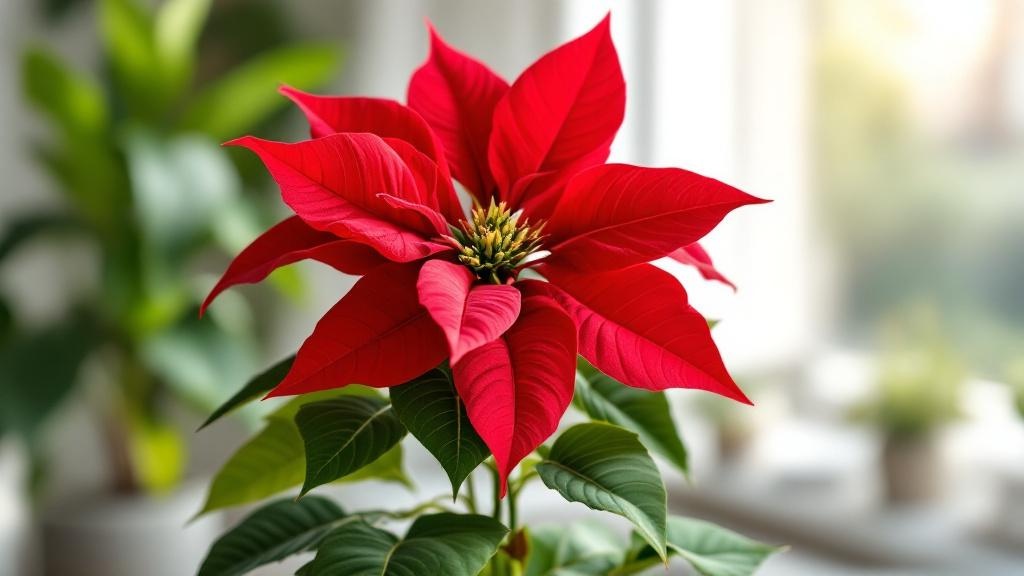
Poinsettias are beloved winter decorations, but keeping them healthy beyond the holiday season requires understanding their tropical origins and seasonal needs. The biggest care challenge most gardeners face is preventing leaf drop and maintaining those stunning coloured bracts throughout winter. In temperate climates, success depends on consistent temperature, proper watering, and respecting their preference for cooler indoor conditions.
Watering Your Poinsettia
Check soil moisture every 2-3 days by pressing your finger 1 inch into the pot; water when the top inch feels dry. During the festive season (November-January), water thoroughly until it drains from the base, then empty the saucer within 15 minutes — poinsettias despise waterlogged roots and will shed leaves rapidly. In spring and summer, reduce watering frequency to every 7-10 days as growth slows. Use room-temperature water and avoid wetting the leaves, which can encourage fungal spots.
Light Requirements
Poinsettias need bright indirect light for at least 6 hours daily to maintain bract colour and leaf health. Position them on a north or east-facing windowsill in temperate climates, or 1-2 metres from a south-facing window to filter harsh afternoon sun. Low light causes leaf yellowing and bract fading. If natural light is limited in your home, supplement with a grow light positioned 30 cm above the plant for 12-14 hours daily during winter months.
Soil and Repotting
Use a high-quality, loose potting mix amended with 20-30% perlite or coarse sand to ensure excellent drainage. Poinsettias are susceptible to root rot in dense, moisture-retaining soils. Repot only in late spring (May-June) if the plant has outgrown its 15-20 cm pot, using a container just 2-3 cm larger in diameter. Never repot during winter or while in bloom, as this stresses the plant and causes bract drop.
Temperature and Humidity
Maintain indoor temperatures between 65-75°F (18-24°C) for optimal health; poinsettias struggle above 75°F and sulk below 60°F (15°C). Place plants away from heating vents, cold windows, and draughts — temperature swings of more than 10°F over 24 hours trigger leaf and bract drop. Moderate humidity (40-50%) is ideal; if your home is very dry in winter, mist the foliage lightly every 2-3 days or group plants together to increase ambient moisture.
Fertilizing Your Poinsettia
Feed poinsettias with a balanced, diluted liquid fertilizer (e.g., 10-10-10 NPK) every 2 weeks from late March through August, when active growth occurs. Stop feeding in September to encourage bract colouration, then resume a light feed (half-strength) in October if the plant is still growing. Do not fertilize during the flowering and bract-display period (November-January) — excess nitrogen delays colour development and promotes leafy growth at the expense of bracts.
Common Problems and Solutions
Leaf yellowing and drop are the most common issues, usually caused by cold draughts, overwatering, or sudden temperature changes; move the plant to a warmer, stable spot and reduce watering immediately. Powdery mildew and whiteflies are regional pests in temperate Europe, especially in humid indoor conditions; improve air circulation, isolate affected plants, and spray with a sulphur-based fungicide or neem oil every 7-10 days. Root rot from waterlogging is fatal — if detected early (soft stems, mushy roots), remove the plant from soil, trim dead roots with sterile scissors, and repot in fresh, dry soil.
Frequently asked questions
How often should I water my poinsettia?
Water every 2-3 days when the top inch of soil feels dry, ensuring thorough drainage. Reduce watering to every 7-10 days in spring and summer as growth slows, and always empty the drainage saucer within 15 minutes to prevent root rot.
Why are the leaves on my poinsettia turning yellow and falling off?
Leaf drop is most often caused by cold draughts, overwatering, or temperature fluctuations below 60°F (15°C). Move your plant away from cold windows and heating vents, allow soil to dry slightly between waterings, and maintain steady indoor warmth above 65°F (18°C).
Can I keep my poinsettia alive after Christmas?
Yes, poinsettias can live for years with proper care. After blooming, prune stems back to 10 cm in late February, then care for foliage growth through spring and summer with regular feeding and watering. Expect red bracts again in November if you reduce light to 12 hours daily starting in October.
Is poinsettia toxic to cats and dogs?
Poinsettias are mildly toxic to pets; ingestion may cause mild stomach upset, drooling, or vomiting, and the sap can irritate skin. Keep plants out of reach of curious pets and seek veterinary advice only if your pet shows severe symptoms.
What temperature does a poinsettia prefer?
Poinsettias thrive between 65-75°F (18-24°C) and become stressed below 60°F (15°C). Avoid placing them near cold windows, heating vents, or draughty doors in winter; even brief exposure to temperatures below 50°F (10°C) can trigger leaf drop within days.