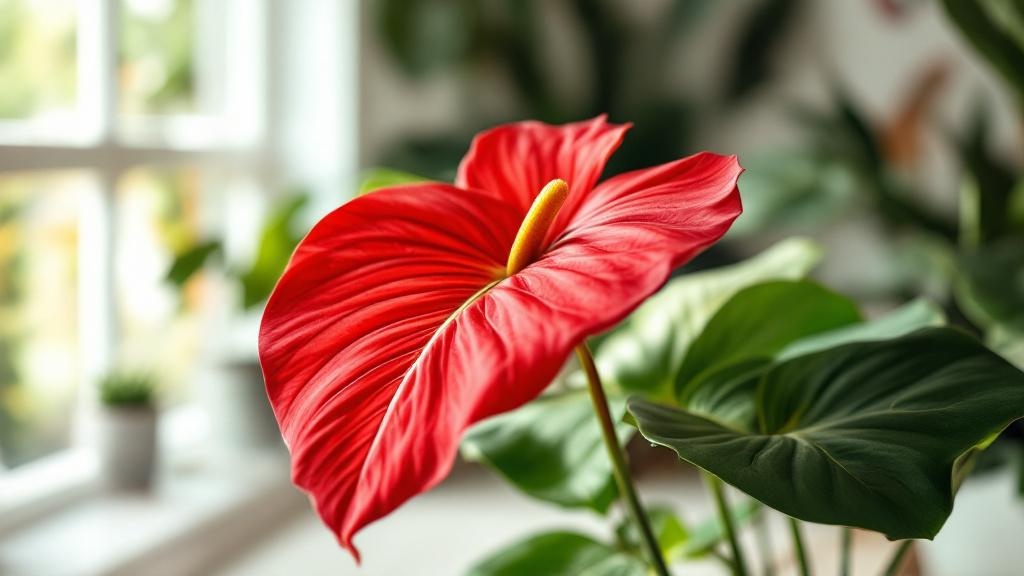
Anthurium
Anthuriums, commonly called flamingo flowers, are among the most rewarding tropical houseplants for temperate climates. Their waxy heart-shaped spathes and velvety texture make them instantly recognizable, and they flower continuously indoors when given proper care. The most common question is how to maintain the humidity and warmth these plants crave, especially during cold European winters.
Watering Your Anthurium
Water your anthurium when the top 2-3 cm of soil feels dry, typically every 7-10 days in spring and summer. In winter, reduce frequency to every 10-14 days as growth slows. Use room-temperature, preferably distilled water, as anthuriums are sensitive to fluoride in tap water. Always ensure pots have drainage holes to prevent root rot, a common killer in temperate homes where air circulation is poor.
Light Requirements for Healthy Growth
Anthuriums need bright, filtered light—place them near an east or west-facing window with a sheer curtain between the plant and direct sun. Direct afternoon sun can scorch the leaves and fade flower colors. If your home lacks bright natural light, anthuriums tolerate lower light but will flower less frequently. In Central European winters with limited daylight, keep plants as close to windows as possible without cold exposure.
Soil and Repotting Care
Use a light, airy mix of orchid bark, peat moss, and perlite in a 2:1:1 ratio—anthuriums hate dense potting soil. Repot every 12-18 months in spring when roots begin to circle the pot. Use a pot only slightly larger than the root ball, as anthuriums prefer snug conditions. Ensure the mix stays moist but never waterlogged, and add bark or sphagnum moss to maintain air pockets around roots.
Temperature and Humidity Control
Anthuriums thrive at 18-28°C and suffer below 15°C; keep them away from cold windows in January-February and heater vents. They need 60-80% humidity, which is challenging in temperate homes. Mist leaves twice weekly, group plants together, or place pots on humidity trays with water and pebbles. In dry winters, a small humidifier near the plant group significantly improves flowering and leaf health.
Feeding and Fertilizing
Feed anthuriums every 4-6 weeks during the growing season (March to October) with a balanced liquid fertilizer diluted to half strength. In winter, reduce feeding to once in December or stop entirely. Excess fertilizer causes salt buildup in the soil, damaging roots and leaf tips. Flush the soil with distilled water monthly to prevent nutrient accumulation.
Common Problems and Solutions
Yellow leaves often signal overwatering or poor drainage—check roots for rot and repot if necessary. Brown leaf tips indicate low humidity or fluoride in tap water; switch to distilled water and increase misting. Spider mites and mealybugs are common pests in warm homes; spray affected plants with a 70% isopropyl alcohol solution every 5-7 days or use neem oil monthly as prevention.
Frequently asked questions
How often should I water my anthurium?
Water every 7-10 days in spring and summer when the top 2-3 cm of soil is dry, and every 10-14 days in winter. Anthuriums prefer slightly moist, not soggy, soil; overwatering causes root rot more often than underwatering.
Why are my anthurium leaves turning yellow?
Yellow leaves usually indicate overwatering or poor drainage. Check the roots for soft, dark spots of rot, and repot into fresh, airy soil mix if needed. Occasionally, yellow lower leaves are natural aging and can be removed.
How do I get my anthurium to flower more?
Ensure bright indirect light, consistent warmth (18-28°C), and high humidity (60-80%). Feed every 4-6 weeks with a balanced fertilizer during growing season, and give plants a drier rest period in winter with less water and no feeding.
Is anthurium toxic to cats and dogs?
Yes, anthuriums contain calcium oxalates and are mildly toxic if ingested, causing mouth irritation and drooling in pets. Keep plants out of reach of curious cats and puppies, especially in households with chewers.
What humidity level do anthuriums need?
Anthuriums thrive at 60-80% humidity, which is difficult in temperate climates. Mist leaves twice weekly, place pots on humidity trays with water and pebbles, or group plants together; a small humidifier in winter is highly effective.