Turnip
Turnips are one of the most rewarding vegetables for temperate gardeners, producing a harvest in as little as six weeks. The most common question home growers ask is when to plant turnips for the sweetest roots. The answer lies in timing: turnips thrive in cool weather, becoming bitter and woody when temperatures climb above 24°C. Plant them in early spring or late summer for the best flavor, and you'll understand why this humble root vegetable deserves a spot in every kitchen garden.
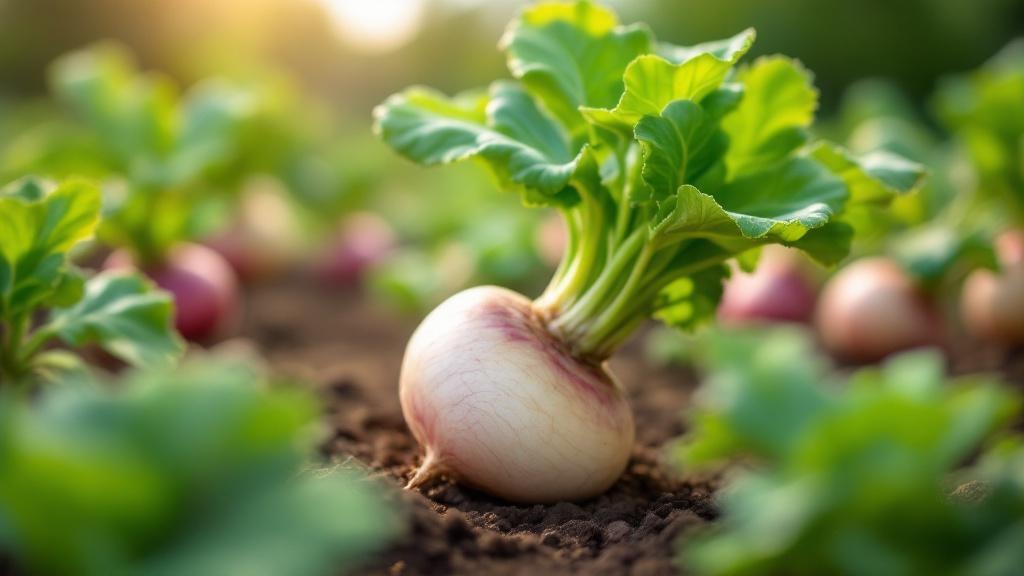
Watering Your Turnips for Tender Roots
Turnips need consistent moisture to develop smooth, mild-flavored roots. Provide 2-3cm of water weekly, either through rainfall or irrigation, keeping the soil evenly moist but never waterlogged. Irregular watering causes roots to crack or become woody and bitter. Mulch around plants in late spring to retain soil moisture as temperatures rise.
Light Requirements for Healthy Growth
Turnips perform best in full sun, receiving at least 6 hours of direct light daily. However, they tolerate partial shade, especially useful for late spring plantings when afternoon shade prevents bolting. In autumn crops sown in August or September, full sun exposure helps roots size up before the first hard frost.
Soil Preparation and Planting
Prepare loose, stone-free soil enriched with well-rotted compost before sowing. Turnips prefer a pH between 6.0 and 7.0. Sow seeds directly outdoors 1cm deep, spacing rows 30cm apart, then thin seedlings to 10-15cm once they reach 5cm tall. Avoid transplanting, as root disturbance causes forked or stunted roots.
Temperature and Growing Season
Turnips are true cool-season crops, germinating in soil as cold as 4°C and growing best between 10-18°C. In temperate zones, sow spring crops from mid-March through April, and autumn crops from late July through early September. Light frost actually improves flavor by converting starches to sugars, so delay autumn harvest until after the first October frosts.
Feeding Your Turnip Crop
Turnips are light feeders that rarely need supplemental fertilizer if planted in compost-amended soil. Avoid high-nitrogen feeds, which promote leafy tops at the expense of root development. If growth stalls, apply a balanced vegetable fertilizer at half strength once, about three weeks after germination.
Common Turnip Problems and Solutions
Flea beetles create tiny holes in leaves during warm, dry spells in May and June. Cover young plants with fleece or fine mesh immediately after sowing. Clubroot, a soil-borne disease common in brassica beds, causes swollen, distorted roots. Prevent it by rotating crops and liming acidic soils. Cabbage root fly larvae tunnel into roots from late April. Fit brassica collars around stems or use insect-proof netting.
Frequently asked questions
How long do turnips take to grow?
Turnips mature in 6-10 weeks depending on variety. Baby turnips can be harvested at golf-ball size after just 5-6 weeks, while larger storage varieties need 8-10 weeks. Check the seed packet for your specific variety's days to maturity.
When should I plant turnips in spring?
Plant spring turnips from mid-March to late April, as soon as soil can be worked. Seeds germinate in cool soil, and early planting ensures harvest before summer heat arrives. For a continuous supply, sow small batches every two weeks until early May.
Why are my turnip roots woody and bitter?
Woody, bitter turnips result from heat stress, drought, or leaving roots in the ground too long. Harvest promptly when roots reach 5-8cm diameter, and ensure consistent watering. Autumn-grown turnips are typically sweeter than spring crops due to cooler maturing temperatures.
Can you eat turnip greens?
Yes, turnip greens are completely edible and highly nutritious. Young leaves can be eaten raw in salads, while mature greens are delicious sautéed with garlic or added to soups. Harvest outer leaves throughout the growing season without harming root development.
Are turnips frost hardy?
Turnips tolerate light frost down to minus 4°C, which actually sweetens their flavor. However, hard freezes below minus 7°C damage roots. In zones 5-8, mulch autumn crops heavily in November for extended harvest, or lift roots before the ground freezes solid for cellar storage.
🩺 Common diseases and pests
These problems commonly affect this plant. Click any to see full symptom descriptions, organic and chemical treatment, and prevention.