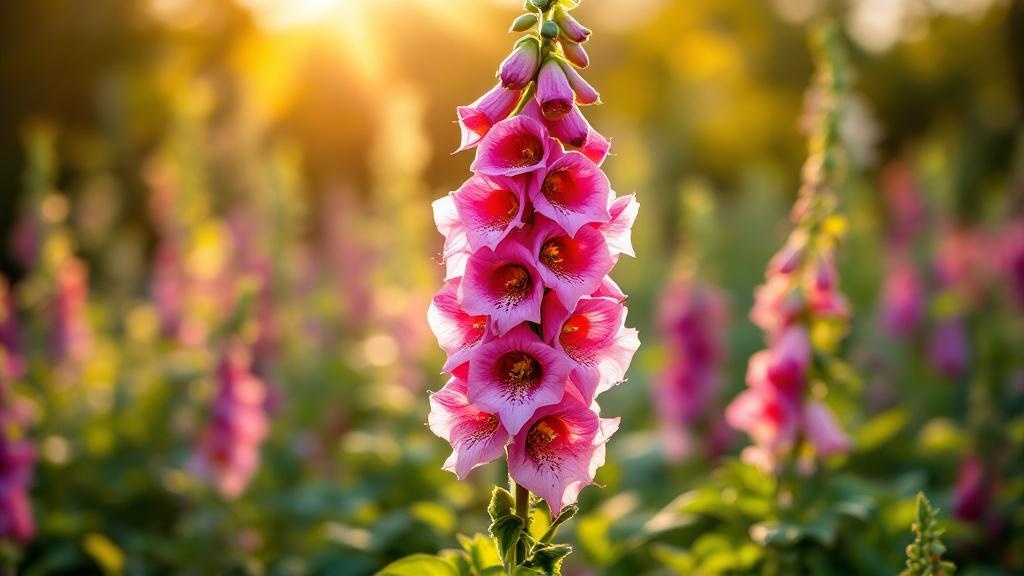
Foxglove
Foxglove is one of the most dramatic vertical accents you can add to a cottage garden or woodland border, with flower spikes reaching 1.5 meters tall in their second year. The most common question gardeners ask is whether foxglove comes back every year. As a biennial, it flowers in its second season then dies, but it self-seeds reliably when conditions are right. Understanding this lifecycle is key to maintaining foxglove in your garden year after year.
Watering Your Foxglove for Healthy Growth
Water foxglove deeply once per week during dry periods, allowing the top 3-5 cm of soil to dry between waterings. In their first year as rosettes, consistent moisture is critical for strong root development. Reduce watering in autumn as plants enter dormancy, but never let the soil become completely parched over winter.
Light Requirements for Foxglove
Foxglove thrives in partial shade to dappled sunlight, mimicking its native woodland edge habitat. In cooler regions of the UK and northern Europe, foxglove tolerates more sun, but in warmer Zone 7-8 areas, afternoon shade prevents leaf scorch. Avoid deep shade, which produces leggy plants with fewer flowers.
Soil and Repotting Needs
Plant foxglove in humus-rich, slightly acidic to neutral soil with excellent drainage. Work in plenty of compost or well-rotted leaf mould before planting in autumn or early spring. Foxglove rarely needs repotting as it completes its lifecycle within two years, but container-grown plants require a pot at least 30 cm deep to accommodate the taproot.
Temperature and Humidity Preferences
Foxglove is fully hardy through harsh temperate winters, tolerating temperatures down to minus 20C without protection. High humidity suits this plant well, making it ideal for British and northern European gardens. In continental climates with dry winters, a light mulch of straw applied in late November protects first-year rosettes from desiccating winds.
Fertilizing Schedule for Foxglove
Apply a balanced slow-release fertilizer in early April as growth resumes, and again when flower spikes begin forming in late May. Avoid high-nitrogen feeds which encourage foliage at the expense of blooms. A side-dressing of compost in autumn provides gentle nutrition for overwintering rosettes.
Common Problems and Solutions
Powdery mildew appears in late summer when airflow is poor, showing as white patches on leaves. Improve spacing and remove affected foliage promptly. Aphids cluster on young flower stems in May and June, easily controlled with a strong water spray or insecticidal soap. Crown rot occurs in waterlogged soil, so ensure good drainage and avoid overwatering during wet autumn months.
Frequently asked questions
Is foxglove toxic to cats and dogs?
Yes, foxglove is extremely toxic to cats, dogs, and humans. All parts contain cardiac glycosides that can cause fatal heart irregularities if ingested. Keep foxglove in areas inaccessible to pets and teach children never to touch or taste any part of the plant.
Does foxglove come back every year?
No, foxglove is a biennial that dies after flowering in its second year. However, it self-seeds prolifically when happy, creating the illusion of a perennial presence. Allow some seed pods to mature and scatter naturally in late summer to maintain your foxglove population.
When does foxglove bloom?
Foxglove blooms from late May through July in its second year of growth. The tall spikes open from the bottom upward over several weeks, extending the flowering display. In cooler northern areas, flowering may extend into early August.
Why are my foxglove leaves turning yellow?
Yellow foxglove leaves typically indicate overwatering or poor drainage causing root stress. Check soil moisture before watering and ensure the planting site drains well. Yellowing lower leaves on second-year plants during flowering is normal as the plant redirects energy to seed production.
Can I grow foxglove in full sun?
Foxglove tolerates full sun in cooler climates like Scotland or northern Germany, but prefers partial shade in warmer Zone 7-8 areas. Too much direct sun in hot summers causes leaf scorch and shortened bloom time. Morning sun with afternoon shade provides ideal conditions in most temperate gardens.