Onion
Onions are a gardener's staple—affordable to grow, deeply rewarding, and essential in any kitchen. Whether you're starting from seed indoors in late February or planting sets in March, the main question most growers ask is when to harvest and how to know if bulbs are ready. This guide covers soil prep, watering rhythms, and common storage mistakes so you get crisp, long-keeping onions every time.
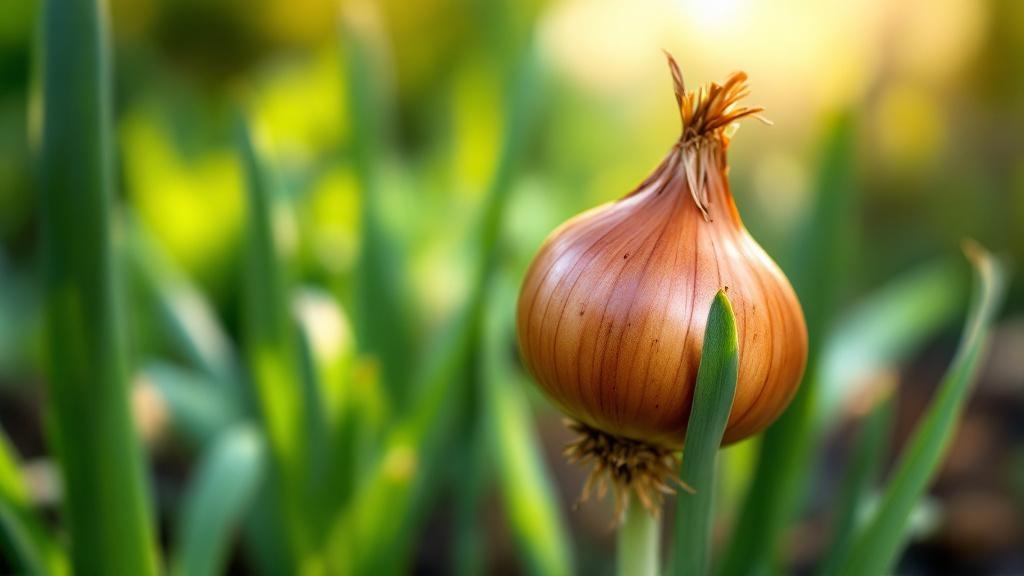
Watering for Healthy Bulb Development
Onions need consistent soil moisture from spring through mid-summer; aim for 1 inch per week (including rainfall) via drip irrigation or soaker hoses to avoid leaf disease. Reduce watering in late July and August as bulbs mature—drier soil encourages dormancy and better storage. Check soil 2 inches deep; water when it feels dry. Overwatering weakens bulbs and invites fungal issues like downy mildew, common in damp UK and Central European springs.
Light Requirements for Bulb Sizing
Onions demand full sun—at least 6 hours daily, ideally 8+—to develop large, well-formed bulbs. In temperate zones (USDA 5-8), direct morning sun is especially valuable in spring to dry foliage after rain and prevent leaf diseases. If planted in partial shade, expect smaller bulbs and slower growth. Choose the sunniest bed in your garden for best yields.
Soil Preparation and Spacing
Onions thrive in well-draining, fertile soil rich in organic matter; amend with compost or aged manure in autumn for spring planting. Target pH 6.0-7.5 and avoid clay-heavy soils that compact and rot bulbs. Space sets 4-6 inches apart (narrow for small bulbs, wider for large ones) and plant so the tip just peeks above soil. Thin seedlings to 3-4 inches once they're 2 inches tall to prevent crowding.
Temperature and Seasonal Timing
Onions are cool-season crops best planted in early spring (late March to April in UK/Northern Europe) or autumn (August-September for overwintering varieties). They tolerate frost and actually prefer temperatures between 50-75°F; they'll bolt or produce poorly in intense summer heat above 80°F. In temperate climates, spring-planted onions mature by August; autumn-planted types overwinter and harvest in June-July.
Feeding for Vigorous Growth
Apply a balanced, nitrogen-rich fertilizer (e.g., 10-10-10) every 3-4 weeks from March through June to support leaf growth, which drives bulb size. In July, switch to potassium-rich fertilizer or stop feeding to redirect energy to bulb maturation rather than foliage. Avoid fresh manure (causes splitting and disease); use well-aged compost or commercial organic onion fertilizer instead.
Common Problems and Pest Management
Onion fly larvae tunnel into bulbs (March-May); prevent by covering seedlings with fleece and rotating crops yearly. Powdery mildew and downy mildew thrive in damp springs—space plants well for airflow and water at soil level only. Root rot (Fusarium) occurs in poorly drained soil; improve drainage and choose resistant varieties like 'Sturon' or 'Ailsa Craig'. Scout for aphids in April-May and treat with neem oil if needed.
Frequently asked questions
How often should I water onions?
Water onions consistently to supply 1 inch per week (rainfall included) until mid-July, then reduce watering as bulbs mature. Use drip irrigation or soaker hoses at soil level to prevent fungal leaf diseases common in damp springs. Once foliage yellows in late July, stop watering to trigger dormancy and improve storage life.
When do onions stop growing and when do I harvest?
Onions stop growing and are ready to harvest when foliage falls over and yellows, typically late August for spring-planted sets in temperate zones. Gently pull a few bulbs to check size; they're mature when the neck (where stem meets bulb) feels papery and thin. Allow 1-2 weeks of dry weather before pulling for best storage.
Can I grow onions from seed indoors?
Yes, sow seeds indoors in late February under grow lights, keeping soil at 65-70°F; transplant seedlings outdoors in April when they're pencil-thick and 6-8 inches tall. Seed-grown onions take 120-150 days to mature, so they're ideal if you want specific varieties or many plants cheaply. Sets (small dry bulbs) are faster and more forgiving for beginners.
Why are my onion leaves yellowing before harvest?
Early yellowing (before late July) indicates overwatering, poor drainage, or disease like downy mildew—improve drainage, space plants wider, and water only at soil level. Natural yellowing in late summer is a sign bulbs are maturing and ready to harvest. If yellowing spreads up the leaf quickly with fuzzy gray mold, cut infected foliage and increase airflow.
How do I store onions long-term after harvest?
Cure onions in a warm, dry, well-ventilated spot (70-75°F, low humidity) for 2-3 weeks until skins papery and tails completely dry. Store in mesh bags or crates in a cool (50°F), dark garage or cellar; check monthly and discard any soft or sprouting bulbs. Properly cured onions keep 4-6 months.
🩺 Common diseases and pests
These problems commonly affect this plant. Click any to see full symptom descriptions, organic and chemical treatment, and prevention.