Giant Starfish Flower
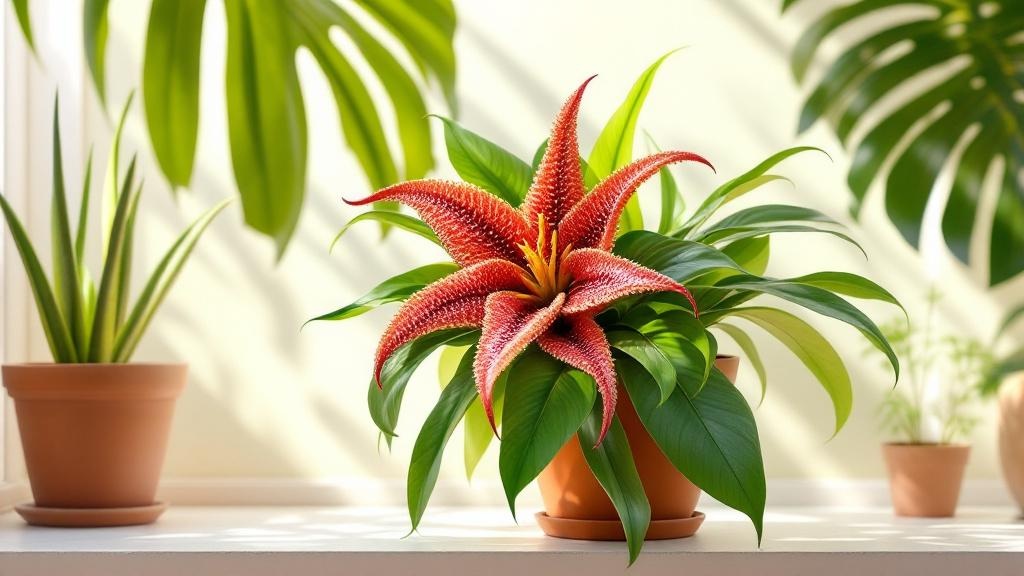
The Giant Starfish Flower captures attention with its massive, leathery blooms covered in fine hairs — flowers so remarkable they stop visitors in their tracks. The catch? Those stunning blooms smell like rotting meat to attract fly pollinators. The most common question growers ask is how to get this reluctant bloomer to flower indoors. With proper light, a cool winter rest, and restrained watering, you can coax spectacular autumn blooms from this South African native even in temperate climates.
Watering Your Giant Starfish Flower Correctly
Water thoroughly every 2-3 weeks during the growing season (April through September), allowing soil to dry completely between waterings. In winter, reduce to once monthly or less — Stapelia gigantea is far more likely to die from overwatering than underwatering. Always empty saucers after 30 minutes to prevent root rot. The stems should feel firm; wrinkling indicates thirst, while soft mushy stems signal overwatering.
Light Requirements for Strong Growth and Blooming
Provide bright indirect light with 2-4 hours of direct morning sun for best results. In temperate climates, a south or west-facing windowsill works well from October through April. During summer, protect from intense midday sun which can scorch the stems. Insufficient light is the primary reason Stapelia fails to bloom — move to a brighter spot if stems become pale and elongated.
Soil and Repotting Stapelia gigantea
Use a fast-draining mix of 50% cactus compost and 50% perlite or coarse sand. Repot every 2-3 years in spring, moving up only one pot size — Stapelia blooms better when slightly rootbound. Choose shallow, wide pots with drainage holes, as the root system spreads horizontally. Handle stems carefully during repotting as they snap easily.
Temperature and Humidity Needs
Normal room temperatures of 18-24°C suit this plant perfectly during the growing season. Crucially, provide a cool winter rest at 10-15°C from November through February to trigger blooming — an unheated spare room or cool conservatory is ideal. Avoid temperatures below 10°C which can cause cold damage. Average household humidity is fine; this succulent does not require misting.
Feeding for Healthy Growth
Feed monthly from April through August with a diluted cactus fertilizer at half strength. Stop feeding entirely from September onwards to prepare the plant for winter dormancy. Overfertilizing produces leggy growth at the expense of flowers. Resume feeding in spring when new growth appears, typically around late March to early April in temperate regions.
Common Problems and Solutions
Mealybugs are the most frequent pest, appearing as white cottony masses in stem joints — remove with a cotton bud dipped in rubbing alcohol and treat with neem oil. Root rot from overwatering causes stems to turn brown and mushy at the base; cut away affected parts with a sterile blade and let wounds dry before replanting in fresh soil. Failure to bloom usually indicates insufficient light or lack of winter cool period — ensure temperatures drop to 10-15°C for 8-10 weeks.
Frequently asked questions
How often should I water Stapelia gigantea?
Water every 2-3 weeks in summer and once monthly or less in winter. Always let the soil dry completely between waterings. Overwatering is the most common killer of this succulent, so when in doubt, wait another week.
Why is my Stapelia gigantea not flowering?
Insufficient light or lack of winter dormancy are the most common reasons. This plant needs bright light and a cool rest period at 10-15°C for 8-10 weeks during winter to set flower buds. Move to a brighter location and ensure cool winter temperatures for blooms the following autumn.
Why does my Starfish Flower smell bad?
The rotting meat odor attracts flies, which are the natural pollinators of Stapelia gigantea in its native South African habitat. The smell is only noticeable when flowers are open, typically lasting 2-4 days per bloom. If the scent bothers you, move the plant outdoors or to a well-ventilated room during flowering.
Is Stapelia gigantea toxic to cats?
No, Stapelia gigantea is non-toxic to cats, dogs, and humans. This makes it a safe choice for households with curious pets. However, the stems contain a milky sap that may cause mild stomach upset if consumed in large quantities, so its best kept out of reach of persistent chewers.
When does Giant Starfish Flower bloom?
Stapelia gigantea typically blooms in late summer to autumn, usually August through October in temperate climates. Each spectacular flower lasts 3-5 days, and mature plants may produce several blooms in succession. Plants usually need to be 2-3 years old before flowering for the first time.