Quince
Quince trees have graced European gardens for centuries, offering stunning pale pink spring blossoms and intensely aromatic autumn fruit. The most common question gardeners ask is whether quince can grow in cooler climates — and the answer is a resounding yes. Thriving in USDA zones 5-8, quince is surprisingly cold-hardy and drought-tolerant once established, making it ideal for Central European, UK, and Northern US gardens where apples and pears flourish.
Watering Your Quince Tree Through the Seasons
Water newly planted quince trees deeply once per week during their first two growing seasons, from April through September. Established trees rarely need supplemental watering except during prolonged drought — give them a deep soaking every 2-3 weeks if rainfall is absent for more than 14 days. Reduce watering significantly from October onward as the tree prepares for dormancy. Overwatering is the most common mistake; quince roots are susceptible to rot in waterlogged soil.
Light Requirements for Optimal Fruit Production
Quince trees require full sun — at least 6 hours of direct sunlight daily — to produce abundant fruit and maintain good health. In partial shade, trees will grow but fruit production drops dramatically and disease susceptibility increases. When selecting a planting site, choose a south or southwest-facing location sheltered from cold north winds. Avoid frost pockets where cold air settles, as late spring frosts can damage the beautiful May blossoms.
Soil Preparation and Transplanting
Quince tolerates a wider range of soils than most fruit trees, including heavy clay and moderately alkaline conditions with pH up to 7.5. However, good drainage remains essential — amend heavy soils with organic matter before planting. Plant bare-root trees between November and March while dormant, or container-grown trees any time the ground is not frozen. Dig a hole twice the root ball width, position the graft union 10cm above soil level, and stake for the first two years.
Temperature and Humidity Needs
Quince is remarkably cold-hardy, surviving winters down to minus 25 degrees Celsius once established. The tree actually requires 300-500 chill hours below 7C to fruit properly, making temperate climates ideal. Spring frosts pose the main risk — blossoms appearing in May can be damaged by late cold snaps common in Northern Europe and the Northern US. Good air circulation reduces humidity-related diseases, so avoid planting in enclosed, damp corners of the garden.
Feeding Your Quince for Healthy Growth
Apply a balanced fertilizer such as 10-10-10 in early March before bud break, using roughly 200g per year of tree age up to a maximum of 2kg. Spread fertilizer in a ring under the canopy drip line, not against the trunk. A 5-8cm layer of well-rotted compost or manure applied each autumn provides slow-release nutrients and improves soil structure. Avoid high-nitrogen feeds after June, as this promotes soft growth vulnerable to winter damage.
Common Problems: Pests and Diseases
Quince leaf blight (Diplocarpon mespili) is the most serious disease in damp temperate climates — brown spots appear on leaves from June onward, causing early defoliation. Remove fallen leaves promptly and apply copper fungicide in early spring. Fire blight, a bacterial infection causing blackened shoots, requires immediate pruning of affected branches 30cm below visible damage. Codling moth larvae may tunnel into fruit; pheromone traps hung in May help monitor and reduce populations.
Frequently asked questions
How often should I water a quince tree?
Water young quince trees once weekly during the growing season from April to September. Established trees over 3 years old are drought-tolerant and only need deep watering during extended dry spells lasting more than two weeks. Always reduce watering from October onward as the tree enters dormancy.
When does quince fruit ripen and how do I harvest it?
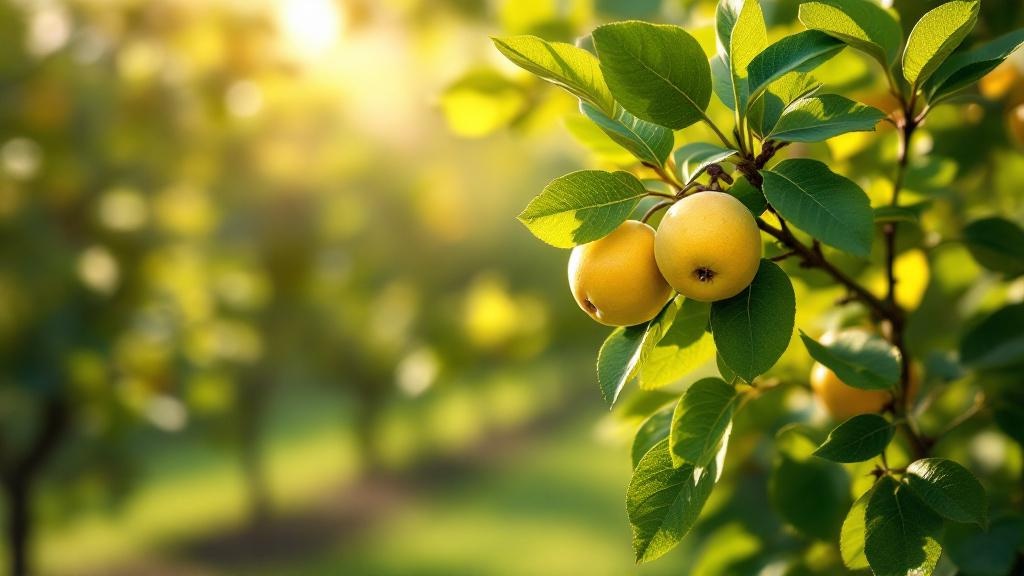
Quince fruit ripens in October to November in temperate climates, turning from green to golden yellow with an intense fragrance. Harvest when the fruit detaches easily with a gentle twist and the skin has lost its fuzzy coating. Unlike apples, quince is too hard and astringent to eat raw — cook it into jams, jellies, or the traditional Spanish membrillo.
Why are my quince tree leaves turning brown and falling off?
Brown spots followed by leaf drop usually indicate quince leaf blight, a fungal disease common in humid temperate summers. Remove and destroy all fallen leaves to break the disease cycle. Preventive copper fungicide sprays applied in early spring before bud break significantly reduce infection rates the following season.
Is quince self-pollinating or do I need two trees?
Quince is self-fertile and a single tree will produce fruit without a pollination partner. However, planting two different varieties can increase fruit set and yield. Bees are the primary pollinators, so avoid spraying insecticides during the May flowering period when the pale pink blossoms are open.
Can I grow quince in a container or small garden?
Yes, quince can be grown in large containers of at least 50 liters or trained as an espalier against a sunny wall. Choose a dwarfing rootstock like Quince C for restricted spaces, which limits mature height to around 3 meters. Container-grown trees need more frequent watering and annual repotting or root pruning to remain productive.
🩺 Common diseases and pests
These problems commonly affect this plant. Click any to see full symptom descriptions, organic and chemical treatment, and prevention.