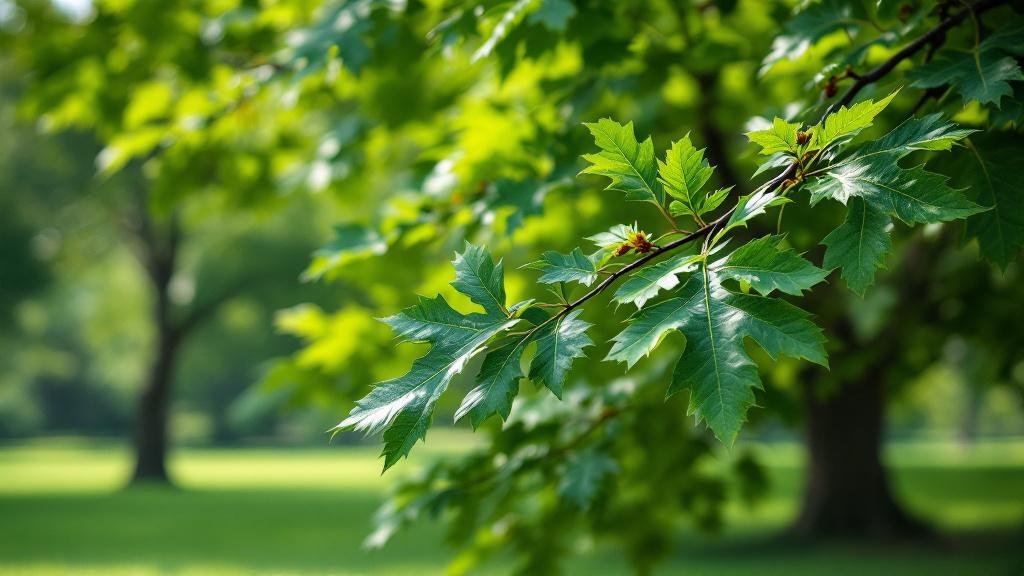
Northern Red Oak
The Northern Red Oak is one of the most popular landscape trees in temperate regions, beloved for its fast growth rate and spectacular scarlet-red fall foliage. Native to North America but thriving across Central Europe and the UK, this stately tree can live for 300 years and reach heights of 25 meters. The most common question gardeners ask is whether their property has enough space for this magnificent tree and how to establish it successfully in the first critical years.
Watering Your Northern Red Oak
Young Northern Red Oaks need consistent moisture during their first 2-3 years of establishment. Water deeply once weekly from April through October, providing about 25-40 liters per watering session for saplings. Established trees rarely need supplemental watering except during extended drought periods lasting more than 3 weeks in summer. Always water at the drip line rather than directly at the trunk to encourage outward root growth.
Light Requirements for Optimal Growth
Northern Red Oaks perform best in full sun, receiving at least 6 hours of direct sunlight daily. They tolerate partial shade, especially in their youth when growing under a forest canopy, but develop the best crown shape and autumn color in open, sunny locations. Avoid planting on the north side of buildings where winter shade is prolonged. Trees in too much shade grow leggy and produce fewer acorns.
Soil and Planting Considerations
Plant Northern Red Oaks in acidic to slightly acidic soil with a pH between 4.5 and 6.5. They prefer deep, well-draining loamy or sandy-loam soils but adapt to clay if drainage is adequate. The best planting time is late October through November or early March before bud break. Dig a hole twice the width of the root ball but no deeper, and avoid amending backfill soil excessively as this discourages roots from spreading into native soil.
Temperature and Climate Tolerance
This remarkably hardy tree thrives in USDA zones 4-8, tolerating winter temperatures down to minus 30 Celsius. It handles the temperature fluctuations common in Central European and Northern US climates without issue. Northern Red Oaks require a cold dormancy period and will not perform well in consistently warm climates. Late spring frosts rarely damage established trees, though newly planted saplings benefit from wind protection in exposed sites during their first winter.
Fertilizing Your Oak Tree
Mature Northern Red Oaks rarely need fertilization if growing in reasonably fertile soil. For young trees showing slow growth or pale leaves, apply a balanced slow-release fertilizer in early April before new growth begins. Use approximately 500 grams per 2.5 centimeters of trunk diameter, scattered at the drip line. Avoid high-nitrogen fertilizers in late summer as this promotes tender growth vulnerable to early autumn frosts.
Common Problems and Solutions
Oak powdery mildew appears as white patches on leaves during humid summers, especially in August and September. While unsightly, it rarely harms established trees and requires no treatment. Oak processionary moth, increasingly common in Central Europe and the UK, creates silken nests in late spring and can defoliate branches. Report infestations to local authorities as the caterpillar hairs cause skin irritation. Chlorosis with yellowing leaves indicates soil that is too alkaline. Apply sulfur or ferrous sulfate in early spring to lower pH gradually.
Frequently asked questions
How fast does a Northern Red Oak grow?
Northern Red Oak grows 30-60 centimeters per year under good conditions, making it one of the fastest-growing oak species. Young trees in optimal sites can add up to 75 centimeters annually. Growth slows as trees mature but remains steady for decades.
Why are my Northern Red Oak leaves turning brown in summer?
Brown leaf edges in summer typically indicate drought stress or bacterial leaf scorch. Water deeply during dry spells and check that soil drainage is adequate. If browning progresses along leaf veins despite adequate water, consult an arborist as bacterial leaf scorch requires professional diagnosis.
When should I plant a Northern Red Oak?
The best planting time is during dormancy from late October through November, or in early March before buds swell. Autumn planting allows roots to establish before summer heat arrives. Avoid planting in frozen ground or during the active growing season from May through August.
How much space does a Northern Red Oak need?
Allow at least 15-20 meters from buildings and 12-15 meters from other large trees. The mature crown spreads 12-18 meters wide, and roots extend well beyond. Avoid planting near foundations, septic systems, or underground utilities as the extensive root system can cause damage.
Is Northern Red Oak toxic to horses or livestock?
Northern Red Oak leaves and acorns contain tannins that can be toxic to horses and cattle if consumed in large quantities. Fallen acorns in autumn pose the greatest risk. Fence livestock away from oak trees or promptly remove fallen acorns from pastures during September and October.