Sand Dollar Cactus
The Sand Dollar Cactus, named for its flattened, coin-like shape and distinctive white-dotted ribs, is one of the most sought-after cacti among collectors. Native to Texas and Mexico, this slow-growing beauty thrives as a windowsill plant in temperate climates. The most common question growers ask is how to water it without causing rot — a real concern given our humid European and Northern US winters. With proper care, this compact cactus rewards patience with stunning yellow flowers in summer.
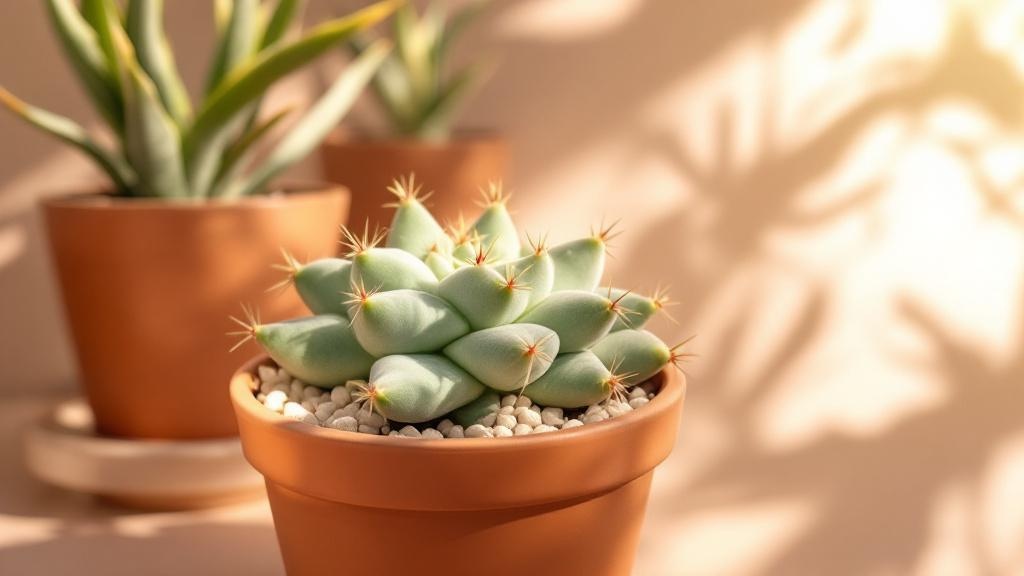
Watering Your Sand Dollar Cactus Without Causing Root Rot
Water thoroughly every 3-4 weeks during the growing season (April through September), allowing the soil to dry completely between waterings. In winter, reduce watering to once every 6-8 weeks or stop entirely if kept cool. Always water the soil directly, avoiding the plant body, and never let water pool in the pot. The most common cause of death in temperate climates is overwatering during our damp autumn and winter months.
Light Requirements for Healthy Growth
Place your Sand Dollar Cactus in the brightest spot available — a south or west-facing windowsill is ideal in the UK and Northern Europe. It tolerates 4-6 hours of direct morning sun but appreciates protection from intense afternoon rays in midsummer. Insufficient light causes etiolation, where the plant stretches unnaturally and loses its compact shape. If you notice pale, elongated growth by February, consider supplementing with a grow light until April.
Soil and Repotting for Optimal Drainage
Use a very gritty, fast-draining mix: combine standard cactus compost with 50% perlite, coarse sand, or pumice. Terracotta pots are strongly recommended as they wick away excess moisture. Repot only every 3-4 years in early spring (late March to April) since this cactus grows extremely slowly. Choose a pot only slightly larger than the root ball — excess soil holds moisture and invites rot.
Temperature and Humidity Through the Seasons
Sand Dollar Cactus thrives at normal room temperatures of 18-25°C during the growing season. In winter, a cooler rest period of 10-15°C encourages spring flowering — an unheated but frost-free room or cool windowsill works well from November to February. Avoid humidity above 50% where possible; good air circulation is essential in our damp temperate autumns. Never expose to frost or temperatures below 5°C.
Fertilizing for Flowers and Steady Growth
Feed monthly from May through August with a diluted cactus fertilizer at half the recommended strength. Avoid high-nitrogen feeds which cause soft, vulnerable growth — choose a balanced or low-nitrogen formula instead. Stop feeding entirely from September through March during the dormant period. Overfertilizing is a common mistake; this slow-growing cactus needs far less nutrition than leafy houseplants.
Common Problems: Pests, Rot, and Environmental Stress
Root rot from overwatering is the leading killer — if the base turns brown and mushy, remove affected tissue immediately and let the plant dry for a week before repotting in fresh, dry soil. Mealybugs often hide in the woolly areoles; inspect regularly and treat with isopropyl alcohol on a cotton bud. In poorly ventilated conditions common during UK winters, watch for fungal infections appearing as brown or black spots — improve airflow and reduce watering immediately if spotted.
Frequently asked questions
How often should I water a Sand Dollar Cactus?
Water every 3-4 weeks in spring and summer, allowing soil to dry completely between waterings. Reduce to every 6-8 weeks in winter, or withhold water entirely if keeping the plant cool. Overwatering is the most common cause of death in temperate climates.
Why is my Sand Dollar Cactus turning yellow?
Yellowing usually indicates overwatering or root rot, especially during autumn and winter. Check the roots for mushiness and repot in dry, gritty soil if damage is found. Less commonly, intense direct sun can cause yellowing or bleaching in summer.
When does Sand Dollar Cactus bloom?
Sand Dollar Cactus typically blooms in late spring to midsummer, usually May through July in temperate climates. Flowers are bright yellow with orange-red centers and last 2-3 days. A cool winter rest period of 10-15°C significantly improves flowering chances.
Is Sand Dollar Cactus toxic to cats?
No, Sand Dollar Cactus is non-toxic to cats and dogs. It is considered safe for households with pets. However, ingestion may still cause mild stomach upset, so it is best to keep plants out of reach of curious animals.
How fast does Astrophytum asterias grow?
Sand Dollar Cactus grows very slowly, typically adding only 1-2 centimetres per year under optimal conditions. A mature specimen of 8-10 centimetres diameter may be 10-15 years old. Patience is essential with this collector's cactus.