String of Buttons
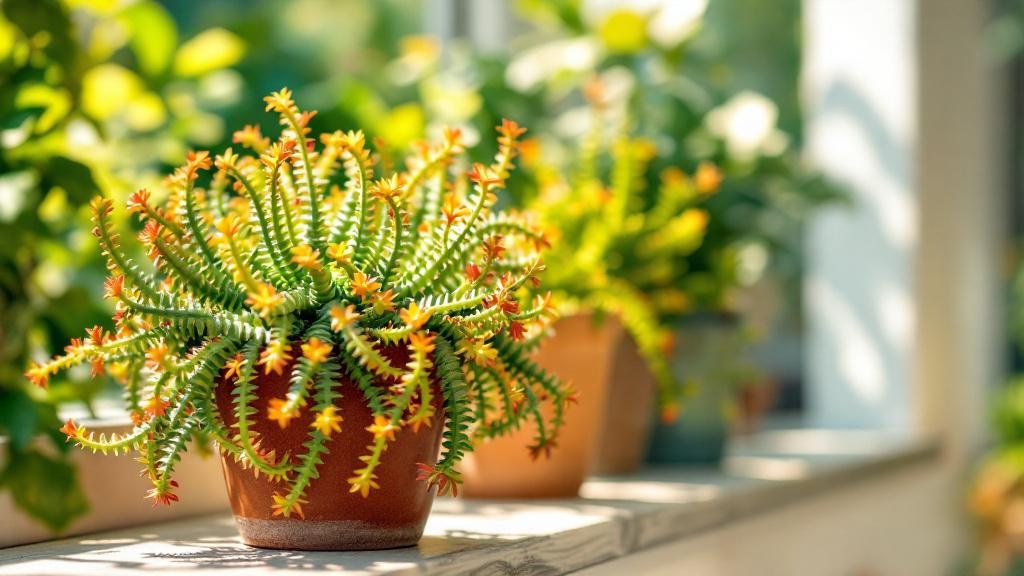
String of Buttons (Crassula perforata) captivates plant lovers with its geometric, stacked leaves that appear threaded along the stem like buttons on a string. Native to South Africa, this succulent has become a favourite windowsill plant across temperate regions. The most common question new owners ask is how to prevent the characteristic stretching and leggy growth that occurs in low light conditions during grey winter months.
Watering Your String of Buttons
Water thoroughly every 10-14 days during the growing season from April to September, allowing soil to dry completely between waterings. In winter, reduce to once every 3-4 weeks as growth slows. Always empty saucers after 30 minutes to prevent root rot. The leaves will appear slightly wrinkled when the plant needs water, which is your most reliable indicator.
Light Requirements for Healthy Growth
String of Buttons needs at least 4-6 hours of bright light daily to maintain its compact, stacked growth habit. A south or west-facing windowsill works well in the UK and Northern Europe. During the darker months from November to February, consider a grow light to prevent etiolation. The leaf edges develop attractive pink-red margins when given adequate sun exposure.
Soil and Repotting Essentials
Use a well-draining cactus and succulent mix, or create your own by mixing standard potting compost with perlite and coarse sand in equal parts. Repot every 2-3 years in spring, moving up just one pot size. Terracotta pots are ideal as they wick away excess moisture. Ensure any container has drainage holes at the bottom.
Temperature and Humidity Preferences
This succulent thrives in typical room temperatures between 15-24°C during the growing season. It tolerates cooler conditions down to 10°C in winter but must be kept away from frost. Bring outdoor plants inside by late September in temperate zones. Average household humidity is perfect; avoid bathrooms or kitchens where moisture levels are high.
Feeding for Optimal Growth
Apply a diluted liquid succulent fertilizer at half strength once monthly from April through August. Do not feed during autumn and winter when the plant enters dormancy. Over-fertilizing causes weak, leggy growth and can burn the roots. A single spring feed with slow-release granules is an effective low-maintenance alternative.
Common Problems and Solutions
Mealybugs are the most frequent pest, appearing as white cottony clusters in leaf joints; treat with isopropyl alcohol on a cotton bud or neem oil spray. Root rot from overwatering causes mushy stems at soil level; remove affected parts and let the soil dry completely before watering again. Stretched, pale growth indicates insufficient light; move to a brighter location and trim leggy stems to encourage bushier growth.
Frequently asked questions
How often should I water String of Buttons?
Water your String of Buttons every 10-14 days in summer and every 3-4 weeks in winter. Always wait until the soil is completely dry before watering again. Wrinkled leaves indicate the plant is ready for a drink.
Why is my String of Buttons stretching and leggy?
Leggy growth happens when your plant does not receive enough light. Move it to a brighter spot with direct morning sun or supplement with a grow light during winter. You can trim stretched stems and propagate the cuttings to create bushier plants.
Is String of Buttons toxic to cats?
No, String of Buttons is considered non-toxic to cats and dogs. While it is not meant for consumption, it poses no serious risk if a curious pet nibbles a leaf. It makes a safe choice for households with animals.
How do I propagate String of Buttons?
Propagate by taking 5-8cm stem cuttings in late spring or early summer. Let cuttings dry for 2-3 days until the cut end calluses over, then place in dry succulent soil. Roots typically develop within 3-4 weeks with minimal watering.
Why are my String of Buttons leaves falling off?
Leaf drop usually indicates overwatering or root rot. Check the soil moisture and inspect roots for mushiness. If rot is present, trim affected roots, let the plant dry out, and repot in fresh, dry soil. Occasional lower leaf loss is normal as the plant matures.