Esca / grapevine trunk disease
📖 Overview
Esca, or grapevine trunk disease, is a serious fungal infection caused by Phaeomoniella chlamydospora and Phaeoacremonium species that colonize the woody tissues of grapevines. Once inside the vine, these pathogens spread slowly through the vascular system, weakening the plant from within over several years before symptoms suddenly appear. This disease represents one of the greatest long-term threats to viticulture worldwide, causing economic losses of 10–20% annually in affected regions like Hungary's Tokaj wine country.
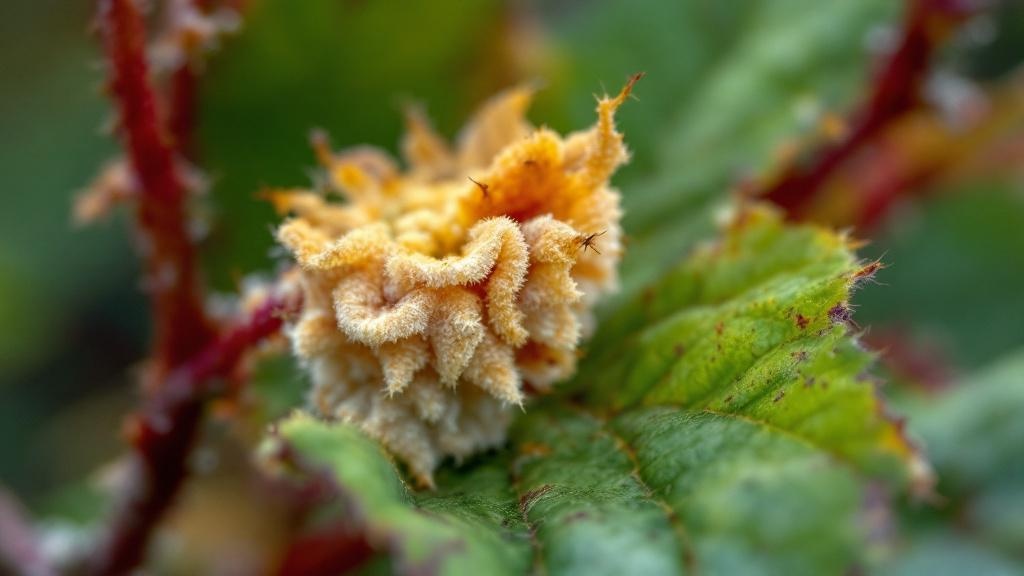
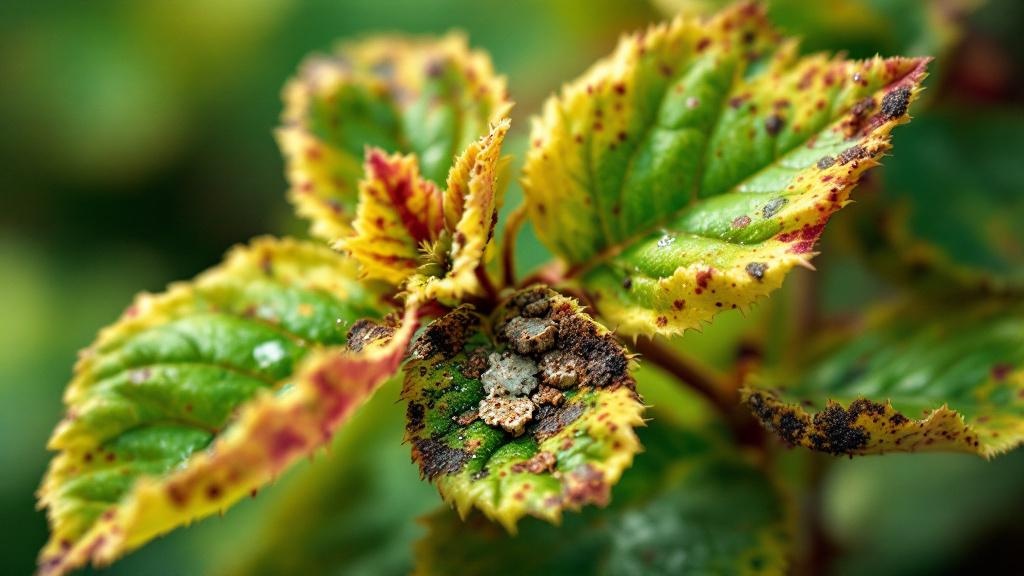
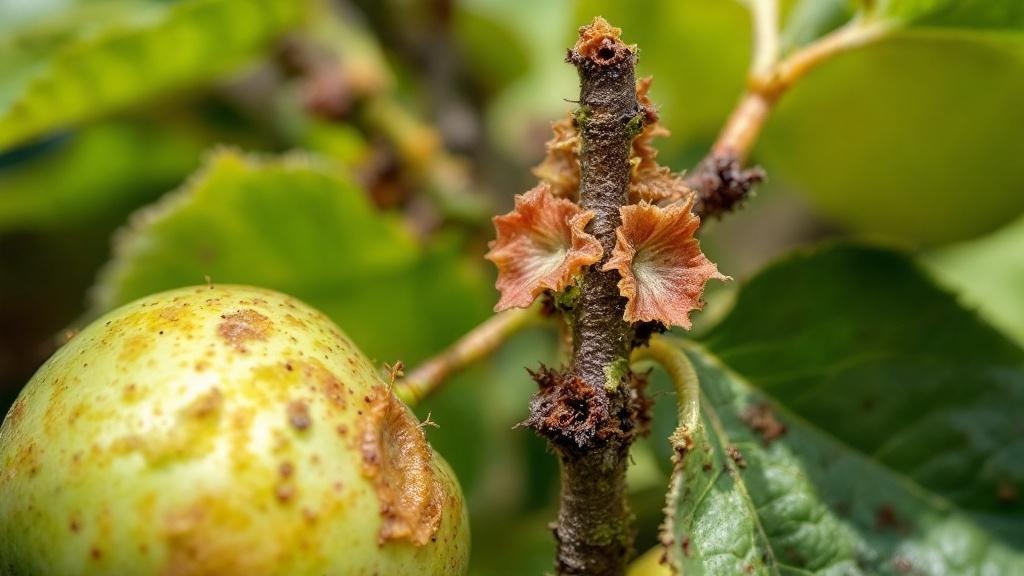
The disease typically declares itself in mid-to-late summer, usually starting in July or August, when stressed vines first show the characteristic symptoms. The first sign to watch for is a distinctive tiger-striping pattern on the leaves: the veins remain green while the tissue between them turns yellow, then progresses to red or purple discoloration and necrosis in the leaf's center. On grape berries, look for small round black spots, a symptom called "black measles." In severe cases, an entire vine may suddenly collapse and dry completely within just a few days—a catastrophic stage called apoplexy.
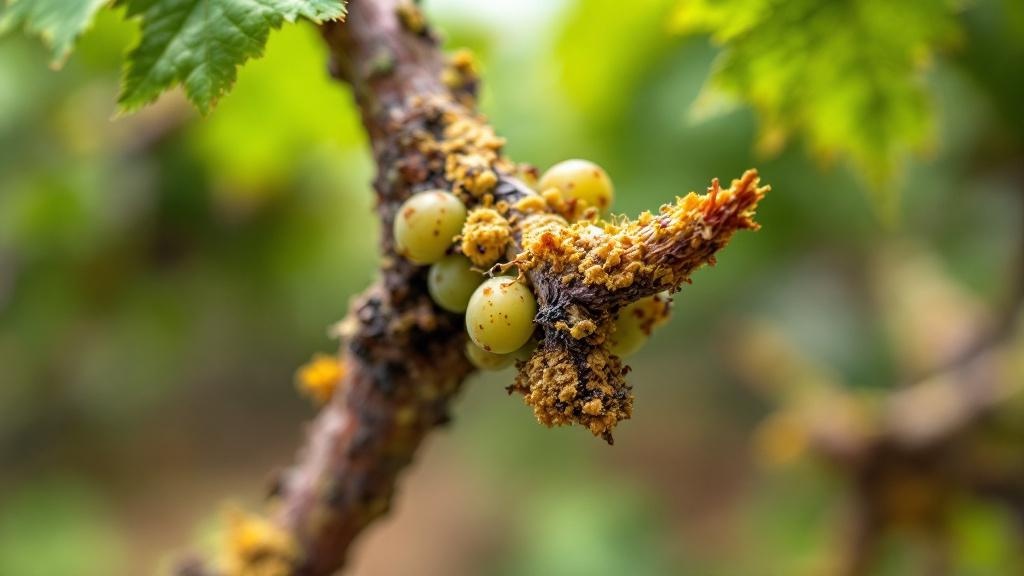
Unlike many vine diseases, esca cannot be cured once it takes hold. The fungal spores enter exclusively through fresh pruning wounds, which is why prevention at pruning time is absolutely critical. The disease differs from other trunk disorders by the sudden, dramatic leaf symptoms and the presence of black speckling on fruit; other wood diseases tend to show cankers or gradual decline without this characteristic striping. Once you see tiger-striped leaves and black measles on the same vine, the diagnosis is nearly certain, and the infected plant will eventually have to be removed and burned—never composted.
🔍 How to identify
Tigriscsíkos levél — sárga sávok között zöld marad az erek mellett, később piros-bíbor. A levél középső része nekrózisos. Bogyón: kerek fekete pontok ("black measles"). Hirtelen apoplexia: a tőke pár nap alatt teljesen leszárad.
🌿 Common host plants
💊 Treatment
Trichoderma-alapú sebzárás metszéskor (Vinevax, Esquive). Halálos tőke kivágása + égetése (NEM komposzt!). Késői, "szárazon" metszés (március vége).
Az engedélyezett szerek (pl. korábban arsenit) már EU-tilosak. Megelőzés és sebzárás az egyetlen út.
🛡️ Prevention
Friss metszéssebek azonnali kezelése (Trichoderma vagy sebzáró paszta). 8-10 mm-nél nagyobb seb kerülése. Egészséges szaporítóanyag választása (Phyto-cert.).
💡 Notes
A globális szőlészet legnagyobb hosszú-távú fenyegetése. Magyarországon Tokaj-Hegyalján 10-20% éves veszteség. Hatékony szer NINCS.
Frequently asked questions
How does esca actually infect my grapevines?
The fungal spores only enter through open pruning wounds, settling into the freshly cut surface and gradually colonizing the wood. Larger wounds (over 8–10 mm) carry higher infection risk, so minimizing wound size through careful pruning technique and timing is your first line of defense.
When should I prune my grapes to minimize esca risk?
Prune in late March or early April when the vine is actively growing and can seal wounds quickly; avoid dormant-season pruning in winter when wound healing is slowest. Always apply a Trichoderma-based wound sealant (such as Vinevax or Esquive) immediately after cutting, before spores have any chance to enter.
My vine is showing tiger-striped leaves and black spots on the fruit—is it definitely esca, and can I save it?
Those symptoms are highly characteristic of esca, and unfortunately, once symptoms appear, the vine cannot be saved. You must remove the entire plant, including roots, and burn all material—never compost it, as the fungal spores will survive and spread. Plan the removal for late autumn or winter.
Which organic treatments actually work against esca?
There is no cure for an infected vine, so treatment focuses entirely on prevention through proper wound management. Apply Trichoderma-based sealants (registered products like Vinevax) or certified wound-protection paste immediately after every pruning cut, and select only healthy, phytocertified rootstocks and scion material when planting new vines.
How long can esca stay hidden in my vine before I notice symptoms?
Infected vines may show no symptoms for three to five years or even longer while the fungus slowly spreads through the wood, making early detection impossible. This hidden phase is why prevention through careful wound management at pruning time is so essential—you cannot detect the disease until it is already well established and incurable.
Not sure what's wrong? Take a photo!
Plantora's AI Plant Doctor identifies the issue from a single photo in seconds and gives you a tailored treatment guide.
Try AI diagnosis (free) →