Monstera
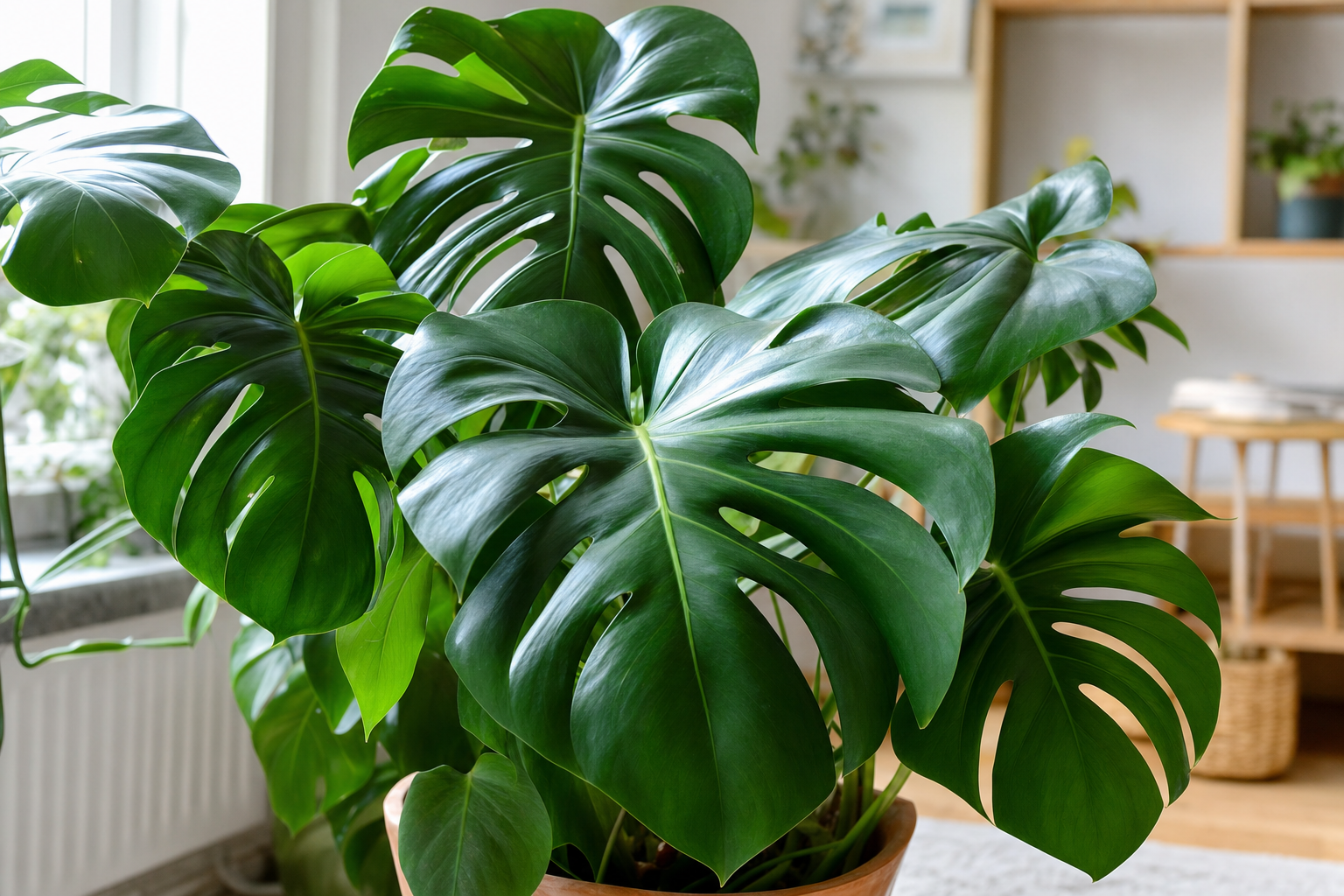
Monstera deliciosa has become the houseplant icon of the last decade, and for good reason. Its massive, naturally perforated leaves bring drama and tropical vibes to any room. The most common question Monstera owners ask: why isn't my plant developing those beautiful split leaves? The answer lies in providing enough bright, indirect light and patience—fenestration typically appears once the plant matures and grows larger.
Watering your Monstera
Water every 7-10 days during the growing season (April to September), allowing the top 2-3 cm of soil to dry between waterings. In autumn and winter, reduce frequency to every 10-14 days as growth slows and evaporation decreases. Always use room-temperature water and check soil moisture with your finger before watering—overwatering is the leading cause of root rot. Yellow leaves combined with soft stems usually signal waterlogging; repot into fresh soil immediately if roots smell musty.
Light requirements for fenestration
Monstera thrives in bright, indirect light and will tolerate partial shade, but won't develop characteristic leaf splits without sufficient brightness. Place it near an east- or west-facing window where it receives 3-4 hours of filtered light daily. Direct afternoon sun through unshaded south-facing windows can scorch leaves in summer, so use a sheer curtain if needed. Pale, small new leaves indicate insufficient light—move the plant closer to a window or rotate it monthly for even growth.
Soil and repotting needs
Use a rich, well-draining mix containing peat moss or coco coir, perlite, and orchid bark in a 2:1:1 ratio to mimic its natural epiphytic habitat. Repot every 18-24 months in spring or early summer when roots begin emerging from drainage holes or growth noticeably slows. Choose a pot only 5 cm larger in diameter than the previous one; oversized pots retain too much moisture. Monstera benefits from adding moss poles or a climbing support as it matures, encouraging upright growth and larger leaf development.
Temperature and humidity control
Monstera prefers temperatures between 16-24°C and will struggle below 10°C, so keep it away from cold drafts and heating vents in winter. Humidity of 50-70% is ideal; in temperate homes with dry winters (especially near radiators), mist the leaves every 2-3 days or group plants together to raise ambient humidity. A pebble tray with water beneath the pot also helps, though avoid waterlogging the roots. In summer, moving Monstera to a sheltered outdoor location (after May frost risk) can boost humidity and growth.
Fertilizing for growth
Feed with a balanced, liquid houseplant fertilizer (NPK 10-10-10 or similar) every 3-4 weeks from April through August during active growth. Reduce feeding in autumn and stop entirely in winter when growth slows. Alternatively, use a slow-release granular fertilizer applied once in early spring. Overfertilizing causes salt buildup and brown leaf tips; if this occurs, flush the soil with distilled water and repot if necessary.
Common Monstera problems and solutions
Yellow or brown leaves often signal overwatering, poor drainage, or low humidity—check soil moisture and adjust watering accordingly. Spider mites and mealybugs are common indoors in temperate climates, especially in dry winter air; spray affected plants with a solution of water and mild dish soap weekly until pests disappear, and isolate from other plants. Slow or stunted growth usually means insufficient light or the plant is rootbound; move it brighter and repot if roots are circling the pot. Brown leaf tips indicate either low humidity, salt from hard water, or underwatering; use distilled water, mist regularly, and ensure consistent soil moisture during growing season.
Frequently asked questions
How often should I water my Monstera?
Water every 7-10 days in spring and summer, and every 10-14 days in autumn and winter. Always check that the top 2-3 cm of soil is dry before watering to prevent root rot, which is the most common Monstera killer.
Why isn't my Monstera developing split leaves?
Fenestrated leaves only appear on mature, healthy plants with sufficient bright, indirect light and stable growing conditions. Young Monsteras produce whole leaves for the first 1-2 years; once the plant is established and grows larger, new leaves will develop the signature perforations if light levels are adequate (3-4 hours daily near a window).
Is Monstera toxic to cats and dogs?
Yes, Monstera is toxic to pets because it contains calcium oxalates, which cause mouth and throat irritation, drooling, and difficulty swallowing if chewed. Keep it out of reach of cats and dogs, and contact a vet if your pet ingests plant material.
What temperature does Monstera need?
Monstera prefers temperatures between 16-24°C and will suffer if exposed to temperatures below 10°C or near cold drafts. In temperate climates, keep it away from windows in winter and never place it directly beside heating radiators, which cause dry air stress.
How do I fix yellowing Monstera leaves?
Yellow leaves are usually caused by overwatering, poor drainage, or insufficient humidity. Check that the soil isn't soggy and that the pot has drainage holes; repot into fresh, well-draining mix if roots smell musty. If the plant is in good drainage, increase humidity by misting or using a pebble tray, and ensure you're watering only when the top of the soil is dry.
🩺 Common diseases and pests
These problems commonly affect this plant. Click any to see full symptom descriptions, organic and chemical treatment, and prevention.