Root-bound (pot-bound)
📖 Overview
Root-bound (or pot-bound) occurs when a houseplant's roots have completely filled its container and have nowhere left to grow. You'll notice the plant starts to slow down—leaves fade, growth stalls, and oddly, the plant seems to need watering more frequently even though the pot looks moist. This happens because the dense root mass can't absorb water efficiently anymore, and there's no fresh soil left to hold nutrients. While it's not a disease, root-bound stress weakens your plant and can eventually lead to root rot if you keep watering on the old schedule.
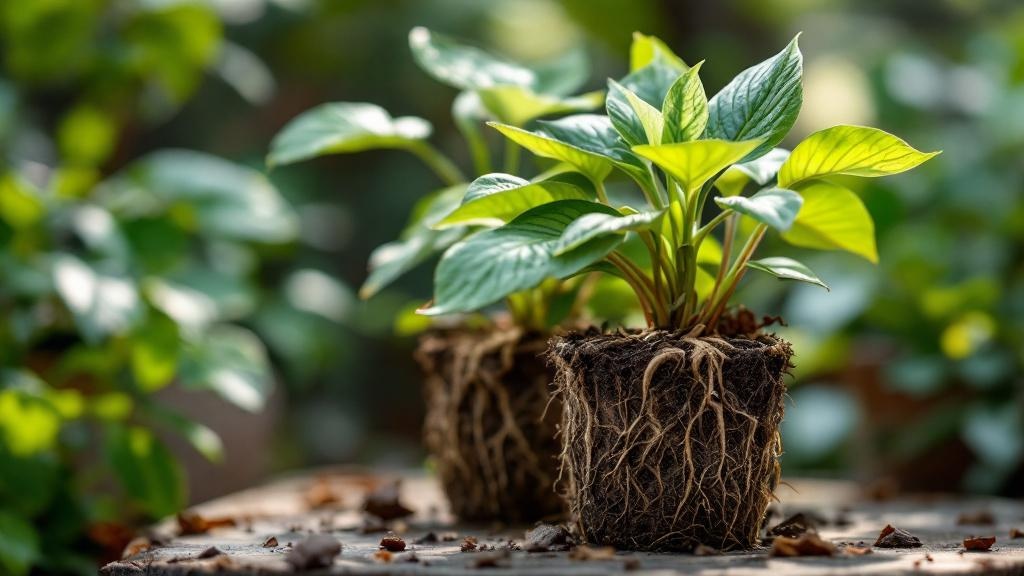
This problem typically creeps up on houseplants that have been in the same pot for two or more years—popular culprits include Monstera, Sansevieria, Ficus, and other vigorous indoor species. The telltale sign is roots poking out from the drainage holes at the bottom of the pot, or when you gently slip the plant out, you see a solid mat of tangled roots with almost no visible soil in between. The good news is that root-bound stress is easily reversible with a simple repotting.
You can tell root-bound stress apart from other problems by the combination of slow growth, pale leaves, and that distinctive dense root ball. Nutrient deficiency or pest damage might cause similar leaf symptoms, but you won't see roots escaping the pot or that tight, soil-free root mass. Over-watering also slows growth, but in that case the soil stays soggy and the roots smell foul; with root-bound plants, the soil dries out faster and the roots are healthy and firm, just overcrowded.
🔍 How to identify
A növény gyengén nő, levelek halványulnak, gyakoribb öntözést igényel (mert a gyökér a cserép minden helyét megtöltötte). A cserép aljából GYÖKEREK lógnak ki. Kihúzva: tömör gyökér-labda, szinte talaj sem látszik.
🌿 Common host plants
💊 Treatment
Átültetés egy számmal nagyobb cserépbe (NE két számmal — túl sok talajban a gyökér rothadhat). Az átültetésnél a gyökér-labda külső 1-2 cm-jét megvágni vagy szétlazítani (a gyökerek új irányba nőjenek).
Nem releváns.
🛡️ Prevention
Évente vagy két-évente ellenőrzés. Friss talaj felülről 2-3 cm cserehez nem kell teljes átültetés (top-dressing).
Frequently asked questions
How do I know if my plant is actually root-bound?
The clearest sign is roots protruding from drainage holes. Also gently slide the plant out of its pot—if you see a solid, circling mass of roots with little or no soil visible, and the plant has been in that pot for 2+ years, it's root-bound. Slow growth and pale leaves combined with unusually fast soil drying are also strong indicators.
Should I repot into a much larger pot to give the roots plenty of room?
No—go up only one pot size larger. Jumping two or more sizes adds too much unused soil around the roots, which stays wet and leads to root rot. A one-size increase gives the roots room to expand while keeping the soil-to-root ratio healthy.
How do I repot a root-bound plant?
Choose a pot one size larger and use fresh potting mix. When you remove the plant, gently tease apart or lightly cut away the outer 1-2 cm of the root ball to loosen the circling roots so they can grow outward into the new soil. This interrupts the compacted root spiral and encourages roots to explore fresh territory.
Do I have to repot the entire plant every time, or is there a quicker option?
If you just want to refresh the plant without full repotting, you can do a top-dressing by carefully removing the top 2-3 cm of old soil and replacing it with fresh mix. This buys you another season or two, though eventually a full repot becomes necessary when roots are severely crowded.
How often should I check my houseplants to prevent root-bound stress?
Inspect every year or every two years by gently tipping the plant out to peek at the roots. Vigorous growers like Monstera may need repotting annually; slower plants might go two years. Spring is the best time, as plants are entering their active growth phase.
Not sure what's wrong? Take a photo!
Plantora's AI Plant Doctor identifies the issue from a single photo in seconds and gives you a tailored treatment guide.
Try AI diagnosis (free) →