Colorado potato beetle
📖 Overview
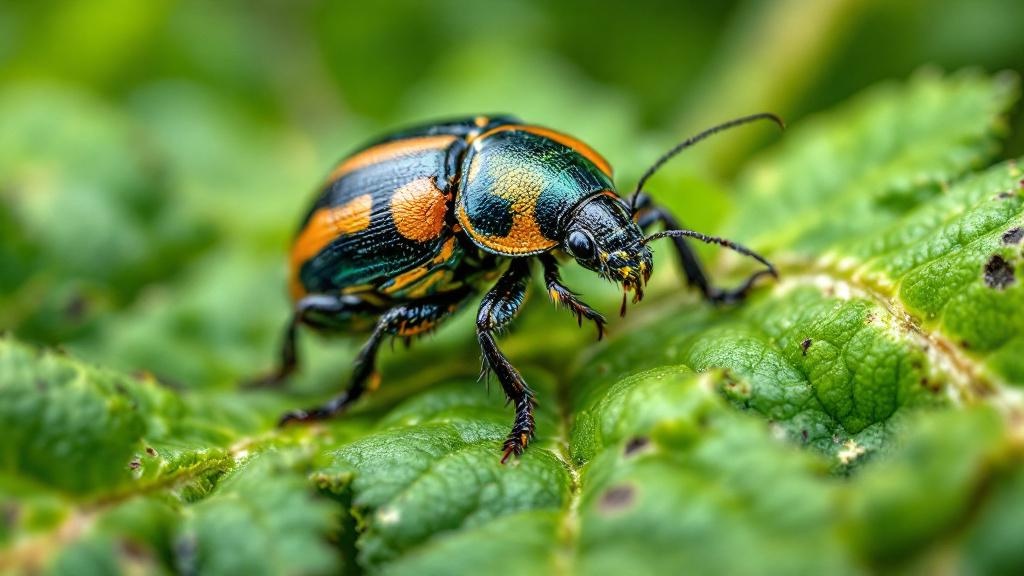
The Colorado potato beetle is one of the most destructive pests of potatoes, tomatoes, and aubergines in temperate gardens. This distinctive yellow-and-black striped beetle, about the size of your thumbnail, can strip the foliage off a plant in just days if left unchecked. The real damage comes not from the adults alone, but from their bright orange-red, hump-backed larvae, which emerge in waves throughout the growing season and feed voraciously on leaf tissue, sometimes reducing plants to bare skeletons by mid-summer.
Why this matters: a heavily defoliated plant cannot photosynthesize effectively, so yields collapse and tubers stay small. Potatoes dug from infested plants often show reduced quality and storage life. The beetle overwinters in soil as adult beetles up to 30 cm deep, so once established in your garden, it can return year after year unless you break the cycle through careful rotation and early detection.
The main window of danger runs from late May through August in temperate zones. Adults emerge when soil warms to around 15°C and begin laying eggs immediately on the undersides of potato leaves. The first sign to watch for is clusters of golden-yellow eggs on the underside of foliage in late May to early June. If you spot these egg clusters and act within 7-10 days, you can prevent an entire generation from developing. Later, you may see chewed leaf margins or skeletonized leaves—damage that tells you larvae are already feeding. The beetle is unmistakable once you know what to look for: no other common garden pest on potatoes has that bold 10-stripe yellow-and-black pattern or those orange spiky larvae, so confusion with other pests is rare.
🔍 How to identify
Felnőtt bogár: 1 cm-es, sárga-fekete sávos szárnyfedő (10 csík). Lárva: piros-narancs, fekete pöttyökkel, görnyedt. Tömeges levélrágás, a levelek csontvázra koppasztva. Tojás: aranysárga csomókban a levél fonákán.
🌿 Common host plants
💊 Treatment
Kézi gyűjtés (kis táblán hatékony). Bacillus thuringiensis tenebrionis (Novodor) a fiatal lárva ellen. Spinosad. Vetésforgás.
Acetamiprid, klórantraniliprol, indoxakarb. Az imágórajzás idején (június eleje).
🛡️ Prevention
Vetésforgás (legalább 3 év, nem burgonyaféle utáni). Természetes ellenségek (poloskák, betegségek) támogatása. Korai-burgonya választása (mielőtt a 2. nemzedék felnő).
Frequently asked questions
When exactly should I start scouting my potato patch for Colorado beetles?
Begin weekly checks in late May, as soon as potato plants are 15-20 cm tall and soil temperature stays above 12°C. This is when overwintering adults emerge and start laying eggs—catching them at egg or early-larva stage (before they reach full size and are harder to kill) makes control far easier.
If I see just a few beetles in early June, can I hand-pick them instead of spraying?
Yes, hand-picking is highly effective on small plots with fewer than 20 plants. Drop adult beetles and egg clusters into a bucket of soapy water every 3-4 days from late May through July, checking both leaf surfaces. Once larvae appear in late June, pick them off as well—the key is consistency and catching them before they multiply.
Is Bacillus thuringiensis (Bt) the best organic option if hand-picking gets overwhelming?
Bt strain tenebrionis (such as Novodor) works very well on young larvae up to 2 weeks old, killing them within 3-5 days. Spray every 7-10 days starting in late June when egg-hatch peaks, and always aim for the undersides of leaves where larvae feed. It is safe for children and pets once dry, making it ideal for family gardens.
Do I have to rotate away from potatoes for a full three years to eliminate the beetle?
Three-year rotation is the gold standard, but two years often works if you also clean up plant debris thoroughly in autumn and never compost infected leaves. The adults burrow 20-30 cm into soil to overwinter, so moving your potato bed to a completely different spot breaks the cycle faster than trying to treat the same patch.
Can I still eat potatoes or tomatoes if beetles have chewed the leaves badly?
Yes, the tubers and fruits themselves are safe to eat—the beetle does not poison them. However, heavily defoliated plants produce smaller yields because the plant cannot make enough energy through photosynthesis to fill out the tubers or ripen fruit fully, so you lose quantity rather than food safety.
Not sure what's wrong? Take a photo!
Plantora's AI Plant Doctor identifies the issue from a single photo in seconds and gives you a tailored treatment guide.
Try AI diagnosis (free) →