Fruit flies
📖 Overview
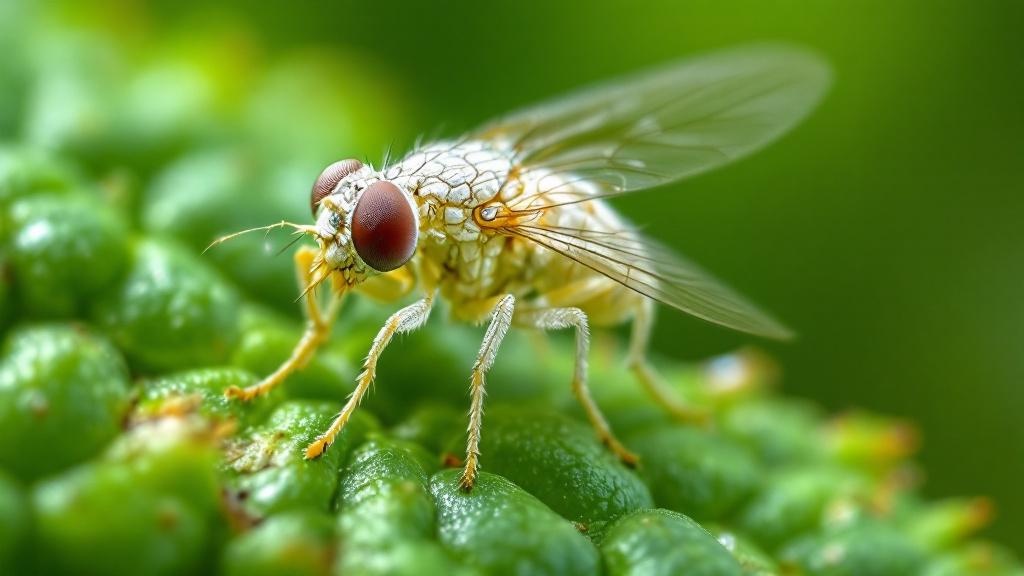
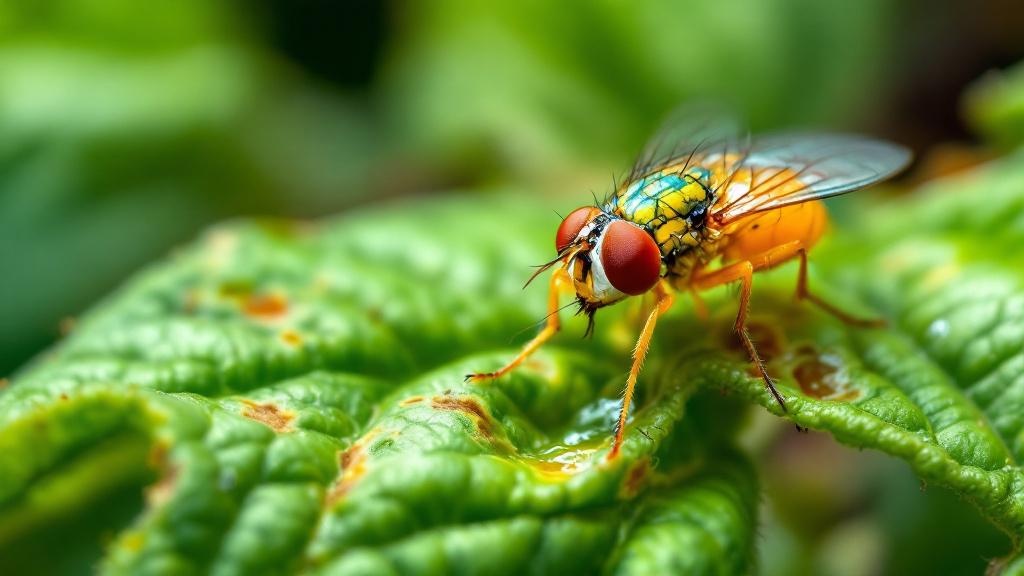
Fruit flies are tiny, yellowish-brown insects just 2 millimeters long that seem to appear from nowhere around overripe fruit and fermenting organic matter. They're one of the most common indoor pests in temperate kitchens, especially during late summer and autumn when tomatoes ripen quickly and fruit sits on counters. While a single fruit fly causes no real damage, a population can explode from dozens to thousands within a week or two, contaminating stored fruit and making your kitchen feel genuinely unpleasant. They lay their eggs on the skin of soft, overripe fruit—those small black puncture marks you might notice on a cherry tomato are often the feeding sites of females boring in to lay eggs.
Fruit flies matter most if you grow or buy cherry tomatoes, figs, berries, or keep a compost bin indoors or near your kitchen. They don't transmit serious diseases to plants outdoors, but they're a quality-of-life nuisance and can make harvested fruit unmarketable. The real danger window runs from July through October in most of Central Europe and the UK, peaking in August and September when warm weather and abundant soft fruit coincide. The first sign is always a fly or two near your fruit bowl or compost; catching the problem at this stage makes control almost effortless.
Fruit flies are easy to confuse with fungus gnats, which are slightly smaller, darker, and hover around soil rather than fruit. Fungus gnats breed in moist potting soil; fruit flies breed only in fermenting fruit or sugary liquids. If you see insects swarming around your compost bin or a soft tomato, and they're attracted to vinegar, you almost certainly have fruit flies. The good news is that they're weak fliers, don't bite, and are completely harmless to eat (though unappetizing); you can solve most infestations with simple traps and basic fruit hygiene in just 7 to 10 days.
🔍 How to identify
Apró (~2 mm) sárga-barna legyek, főleg túlérett gyümölcs vagy beltéri kompost körül. A frissen szedett paradicsomban — a kis fekete pötty a héjon a peteétkezés helye.
🌿 Common host plants
💊 Treatment
Apple-cider ecet csapda (1 csésze ecet + 2-3 csepp folyékony szappan, lefedve fóliával + 6-8 lyukacskákkal). A felszínen elsüllyednek.
Otthon nem ajánlott.
🛡️ Prevention
Túlérett gyümölcs gyors leszedése. Kompost fedéllel lefedve. Hűtőben tárolás amikor lehet.
Frequently asked questions
How fast do fruit flies multiply and when is the danger window?
Under warm conditions (above 20°C), a single female can lay up to 500 eggs in her lifetime, and the entire life cycle from egg to adult takes just 8 to 10 days, so populations can explode exponentially. The peak danger window in your climate is July through September, with August being the worst month; by October, as nights cool, reproduction slows dramatically and infestations naturally decline.
Can I save fruit already infested with fruit fly eggs, or should I throw it away?
Fruit with visible egg punctures or active flies is safe to eat—the eggs and larvae are harmless if swallowed—but most people find it unappealing and prefer to discard it or cook it immediately into jam or sauce, which kills any larvae. If the fruit is only lightly spotted and you're comfortable with it, refrigeration stops eggs and larvae dead within hours.
What's the safest organic trap method for a kitchen with children and pets?
The apple-cider vinegar trap is entirely non-toxic: fill a small bowl with one cup of apple-cider vinegar, add two to three drops of liquid dish soap (which breaks the surface tension), cover the bowl tightly with plastic wrap, and poke six to eight small holes in the top. Flies enter, can't escape, and drown. Place traps near fruit bowls and compost; replace vinegar every 3 to 4 days until you see no more flies.
Do fruit flies overwinter in my compost or garden, or do they disappear in winter?
In temperate climates, adult fruit flies cannot survive frost and die off when night temperatures drop below 10°C (usually by November). However, if your compost bin or kitchen stays warm year-round, a few adults may survive and breed sporadically indoors. Outdoor compost becomes harmless once it freezes; cover your bin in autumn to prevent autumn fruit flies from colonizing it in September and October.
What weather or conditions trigger a fruit fly outbreak?
Warm, humid conditions above 20°C combined with overripe fruit or fermenting organic matter are the perfect storm. A spell of hot, still weather in August, especially if you have unrefrigerated tomatoes or an uncovered compost bin, can trigger an outbreak within 5 to 7 days. Cool, dry storage and prompt removal of soft fruit are your strongest defenses.
Not sure what's wrong? Take a photo!
Plantora's AI Plant Doctor identifies the issue from a single photo in seconds and gives you a tailored treatment guide.
Try AI diagnosis (free) →