Sweet Cherry
Sweet cherry trees are a beloved choice for home gardeners across temperate regions, producing abundant harvests of juicy fruit each June through August. The main challenge for new growers is understanding pollination needs—most sweet cherry varieties require a compatible pollinator nearby. Beyond that, these trees are surprisingly low-maintenance once established, though proper pruning and pest management keep them healthy and productive year after year.
Watering Your Sweet Cherry Tree
Sweet cherry trees need consistent moisture during the growing season (April through September), roughly 25-40mm per week depending on rainfall and soil drainage. Young trees planted in spring or early autumn require more frequent watering—every 5-7 days if there's no rain—until they're 2-3 years old. Once established, they're fairly drought-tolerant, but stress during fruit development in June-July can reduce yields. During winter dormancy (November to February), water only if the soil is completely dry.
Light Requirements for Sweet Cherries
Sweet cherry trees must have full sun exposure—at least 6-8 hours of direct sunlight daily—to produce abundant fruit and develop good flavour. In temperate climates, south or west-facing positions are ideal; afternoon shade in very hot regions (zone 8) can prevent sunscald on trunk and branches. Insufficient light leads to sparse flowering, poor fruit set, and increased susceptibility to fungal diseases. If your garden is partly shaded, sweet cherries are not the best choice; they need maximum light to thrive.
Soil & Repotting for Sweet Cherries
Sweet cherry trees prefer well-draining, slightly alkaline to neutral loam soil (pH 6.5-7.5). In acidic soils common across northern Europe and the UK, add lime in autumn to raise pH. Avoid heavy clay or waterlogged sites, which cause root rot and canker disease. Container-grown trees can remain in large pots (60L+) but are not ideal; field planting in autumn (October-November) or early spring (February-March) is recommended. Mulch with 5-7cm of compost around the base, keeping it clear of the trunk.
Temperature & Humidity for Sweet Cherries
Sweet cherry trees are winter-hardy to approximately -15°C (USDA zones 5-8) and actually require 800-1000 hours below 7°C during dormancy (November-February) to set fruit. In warmer zones, they may fail to flower reliably. Humidity is generally not limiting in temperate climates, but poor air circulation can encourage fungal diseases like leaf spot and brown rot; space trees at least 4-5 metres apart or thin branches to improve airflow.
Fertilizing Sweet Cherry Trees
Newly planted sweet cherries need balanced fertilizer (NPK 10-10-10) applied in early March and mid-May for the first 2-3 years. Mature fruiting trees (4+ years old) require modest nitrogen—excessive feeding causes excessive leaf growth at the expense of fruit. Apply sulphate of potash in early September to strengthen branches before winter and improve fruit flavour. Avoid nitrogen fertilizers after July, as this promotes soft new growth vulnerable to frost damage in October.
Common Problems & Solutions
Black knot canker is the most serious disease in temperate regions—prune out affected branches 30cm below visible damage and burn the wood immediately. Cherry slug sawfly larvae skeletonize leaves in July-August; spray with neem oil or pyrethrin-based insecticides when damage first appears. Blossom wilt (Monilinia cinerea) kills flowers and young shoots in wet springs—thin branches to improve air circulation and remove affected growth before May. Bird netting over ripening fruit in June is essential to prevent complete crop loss.
Frequently asked questions
How often should I water a sweet cherry tree?
During the growing season (April-September), water sweet cherries deeply every 5-7 days if no rain falls, aiming for 25-40mm per week. Established trees are more drought-tolerant, but consistent moisture in June-July during fruit development improves yield and flavour. Reduce watering in winter to only when soil is dry.
Why aren't my sweet cherry trees producing fruit?
The most common reason is lack of cross-pollination—most sweet cherry varieties are self-sterile and need a compatible pollinator planted nearby (within 20-30 metres). Insufficient sunlight, late frost damaging buds in April, and excessive nitrogen fertilizer also reduce fruiting. Check that you have at least two compatible varieties if planting multiple trees.
When do sweet cherry trees bloom and fruit in temperate climates?
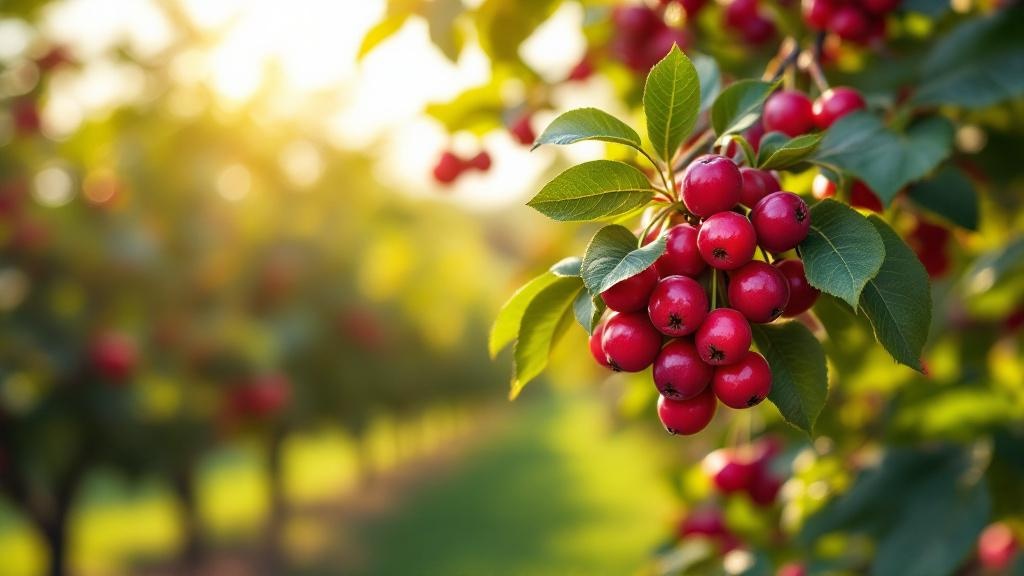
Sweet cherries flower in April-May (depending on spring weather and your zone) and ripen fruit in June-August, with most varieties ready mid-July. Ripening dates vary by cultivar—early types like 'Sunrise' fruit in early July, while 'Lambert' and 'Stella' peak in late July-August. Cold springs delay flowering by 1-2 weeks.
What is the best time to prune a sweet cherry tree?
Prune sweet cherries in late July-August when the tree is in full leaf and wounds heal fastest, avoiding bacterial canker infection. Remove dead, crossing, or diseased wood first, then thin to an open centre to improve light and air circulation. Never prune in winter or early spring, when cold wounds invite canker disease.
Do I need two sweet cherry trees for cross-pollination?
Most sweet cherry varieties are self-sterile, so yes—you need at least two compatible cultivars flowering at the same time for good fruit set. Self-fertile varieties like 'Stella' and 'Lapins' can self-pollinate, but yield is still better with a second variety nearby. Check pollination groups when buying; group 2 and group 3 varieties pollinate each other effectively.
🩺 Common diseases and pests
These problems commonly affect this plant. Click any to see full symptom descriptions, organic and chemical treatment, and prevention.