Leaf-eating caterpillars
📖 Overview
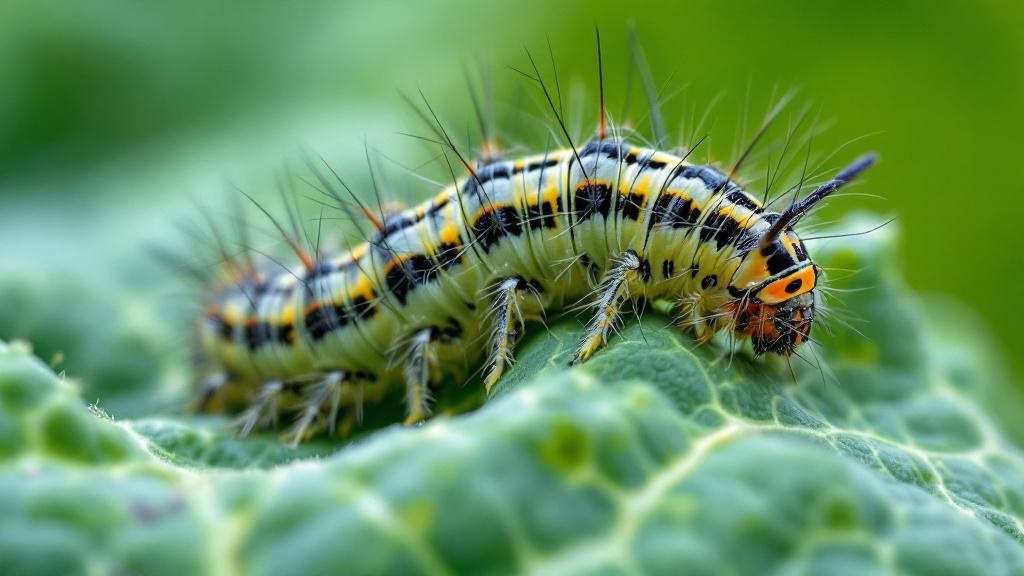
Leaf-eating caterpillars are the larvae of moths and butterflies, and they're one of the most visible garden pests you'll encounter in temperate zones. You'll recognize them by the irregular holes they chew in leaves, often starting at the edges and working inward, combined with small dark droppings (frass) scattered on the leaf surface. These caterpillars come in many forms—smooth green types, hairy varieties, or boldly striped specimens—depending on which moth or butterfly species laid the eggs on your plants.
They matter because they can rapidly defoliate vegetables like cabbage, kale, spinach, and tomato seedlings, as well as ornamentals such as roses and herbs. A few caterpillars can strip a young transplant in days, and large infestations can reduce a mature plant to skeletal stems. In temperate climates, the main danger window runs from May through September, with peak activity in June and again in August-September when a second or third generation emerges. Young plants are most vulnerable; mature plants often tolerate moderate damage.
The first sign you'll spot is usually the feeding damage itself—those telltale round or ragged holes—before you see the caterpillar. Look on the undersides of leaves and along stem bases in early morning or at dusk, when many species feed most actively. To distinguish from other damage, check for fresh frass and the caterpillar itself; slugs and sawfly larvae leave similar holes but produce different droppings, and spider mite stippling looks like tiny pinpricks rather than bite marks. Hand-picking in the evening with a headlamp, or using the biological insecticide Bacillus thuringiensis, will control most infestations without harming beneficial insects or soil health.
🔍 How to identify
Szabálytalan, KEREK lyukak vagy SZÉLEK megrágva a leveleken. Apró fekete-zöld POPÓK (ürülék) a levél felszínén vagy alatta. A hernyó látható (zöld, csíkos, szőrös, stb. fajtól függő).
🌿 Common host plants
💊 Treatment
Manuális gyűjtés (esti járat fej-fény mellett). Bacillus thuringiensis kurstaki — biológiai (specifikus a lepke-larvákra, nem árt a katicának/méheknek). Neem-olaj. Diatómaföld.
Spinosad. Pyrethrin csak este (ne ártson a méheknek).
🛡️ Prevention
Fátyolfólia a fiatal káposztákon (megakadályozza a peteétkezést). Tarkamadarak vonzása (etető, fészkelőhely).
Frequently asked questions
How fast do caterpillar infestations spread, and when should I act?
Most leaf-eating caterpillars can consume 20-30 times their own body weight as they grow, so a few larvae can become dozens within a week. The danger window is widest in June (first generation) and August-September (second or third generation); act as soon as you see fresh feeding damage or frass, before populations double. Weekly scouting in May onward catches early infestations when hand-picking or a single Bacillus thuringiensis spray stops them cold.
Can I save a heavily infested plant, or should I pull it out?
Most plants can tolerate losing 20-30 percent of leaf area without permanent harm, especially if they're mature. Even a badly chewed plant usually recovers if you remove the caterpillars quickly—hand-pick them or spray Bacillus thuringiensis immediately. Pull only if the plant is a seedling, already stressed, or past harvest; otherwise, the cost of replanting usually exceeds the benefit of removal.
What's the safest organic approach if I have young children or pets in the garden?
Hand-picking caterpillars by torchlight in the evening is completely safe and often sufficient for light infestations; wear gloves if any caterpillars are hairy, as skin contact can cause mild irritation. For heavier pressure, Bacillus thuringiensis (sold as Dipel or similar) is non-toxic to humans, pets, and beneficial insects—spray it in early morning or late evening so it dries before bees forage. Diatomaceous earth (food-grade, not pool-grade) is another low-risk option if you're careful not to inhale it during application.
Do caterpillars overwinter in my soil or leaf litter, and will they return next year?
Many species pupate in the soil or in leaf litter where they overwinter as pupae, ready to emerge as adults in May-June. Removing fallen leaves in autumn and removing the top 2-3 inches of soil around vulnerable beds reduces next year's population significantly. In temperate zones, most common leaf-eating caterpillars produce two or three generations per season, so managing them now also reduces autumn pressure.
Will my caterpillar problem spread to my other plants?
Yes, if the caterpillars are still present on your garden—most species are generalists that feed on cabbage family plants, tomatoes, spinach, and many ornamentals. Isolate heavily infested plants if possible, and prioritize removing caterpillars from young seedlings (which can be killed by a handful of larvae) before they crawl to nearby plants. Floating row covers on young brassicas prevent eggs from being laid in the first place.
Not sure what's wrong? Take a photo!
Plantora's AI Plant Doctor identifies the issue from a single photo in seconds and gives you a tailored treatment guide.
Try AI diagnosis (free) →