Earwigs
📖 Overview
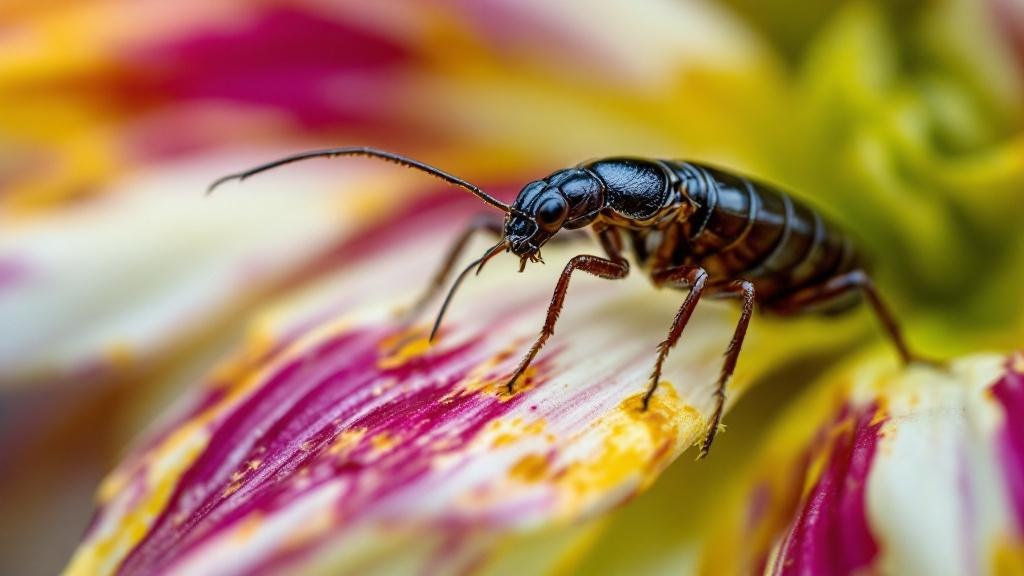
Earwigs are nocturnal insects you've probably noticed around your garden—dark brown, elongated creatures with distinctive pincers at their rear end. While they look alarming, they're actually more of a nuisance than a serious threat in most home gardens. They feed at night on flower petals, leaf edges, and soft plant tissue, leaving behind ragged holes in dahlia and chrysanthemum blooms or irregular tears in foliage that can make your plants look shabby by morning. The damage is mainly cosmetic, affecting the appearance of ornamentals and occasionally reducing strawberry quality, though the harvested fruit itself remains safe to eat.
Earwigs become active as soon as temperatures warm in spring and remain a concern through autumn, with peak feeding occurring from June through September in temperate regions. They hide during the day in soil crevices, leaf folds, and flower centers, emerging to feed after sunset. The telltale signs are jagged holes in flower petals—especially noticeable on dahlias and roses—and torn leaf margins that lack the clean cuts you'd see from larger pests like caterpillars.
Before you panic and reach for chemicals, know that earwig damage, while unsightly, rarely kills plants or significantly reduces yields. The key to management is prevention: keeping the area around your plants dry and free of organic debris where earwigs shelter. Since earwigs prefer damp, protected spots, removing fallen leaves, rotting fruit, and dense mulch near vulnerable plants makes your garden less inviting to them. Simple traps using rolled newspaper or oil-baited containers, set out overnight in spring and early summer, can capture hundreds of earwigs before they cause noticeable damage—and you won't need any chemicals at all.
🔍 How to identify
Éjszakai rágásnyomok a leveleken és VIRÁGSZIRMOKON (Dahlia, krizantém). A levelekben szabálytalan lyukak, a sziromban "tépett" megjelenés. Nappal a virágokban, levél-tölcsérekben, vagy talaj-repedésekben rejtőznek. Sötét-barna, hosszúkás test, hátsó "csíptetők".
🌿 Common host plants
💊 Treatment
CSAPDÁK: papírtekercs (újság vagy WC-papír mag) éjjelre a növény mellé, reggel az összegyűlt fülbemászókat ki lehet rázni szappanos vízbe. Olajos csapda (4 cm-es üvegben 1 cm halolaj + növényi olaj — éjjelre).
Csak nagy károknál: pyrethrin permet.
🛡️ Prevention
A növények körül NE legyen szervi nedvesség (avar, tönkrement gyümölcs). Csapdák egész tavasszal.
Frequently asked questions
How can I tell if earwig damage is the problem and not something else?
Earwig damage has a distinctive ragged, torn appearance—especially on flower petals that look almost shredded—while the holes in leaves are irregular and often follow the leaf edge. Look for the earwigs themselves at night with a flashlight hidden in flower centers, leaf folds, or under nearby debris; their distinctive pincers at the rear are unmistakable. If you see clean, round holes or sawfly-like damage, you're likely dealing with a different pest.
What's the best organic trap for catching earwigs without chemicals?
A rolled newspaper or toilet paper tube placed near affected plants overnight is your simplest option—earwigs crawl in to hide, and you can shake them into soapy water in the morning. For a more effective oil trap, fill a shallow container (like a 4 cm glass jar) with 1 cm of fish oil topped with vegetable oil; earwigs are attracted to the fish oil and drown. Set traps around the base of vulnerable plants like dahlias and chrysanthemums from April through June, when populations are building.
Do earwigs overwinter in my soil and garden debris?
Yes, earwigs overwinter as adults and nymphs in soil and leaf litter, which is why removing fallen leaves, dropped fruit, and dense mulch around plants in autumn and early spring is so effective at breaking their cycle. They emerge and become active as soon as soil temperatures reach around 10–12°C in spring, making spring cleanup crucial for prevention.
Will earwigs spread to my vegetable garden and ruin my crops?
Earwigs occasionally damage soft vegetables like corn silk and cabbage seedlings, but they're far more of a threat to ornamental flowers than food crops. If you see damage on vegetables, the same traps and debris removal work—only resort to pyrethrin spray if damage becomes severe, which is rare in home gardens.
Is the fruit and produce damaged by earwigs still safe to eat?
Yes, earwig-damaged strawberries and vegetables are perfectly safe to eat; you can simply cut away the damaged areas before eating. Earwigs don't carry diseases or leave toxins, so cosmetic damage is your only concern—which is why prevention of damage matters more for ornamentals like dahlias than for food crops.
Not sure what's wrong? Take a photo!
Plantora's AI Plant Doctor identifies the issue from a single photo in seconds and gives you a tailored treatment guide.
Try AI diagnosis (free) →