Shothole disease
📖 Overview
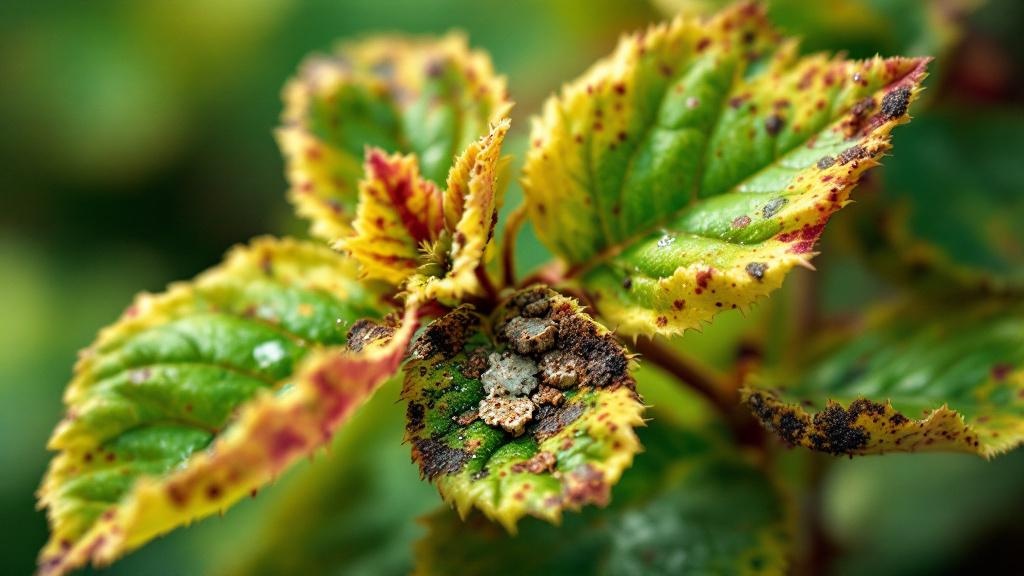
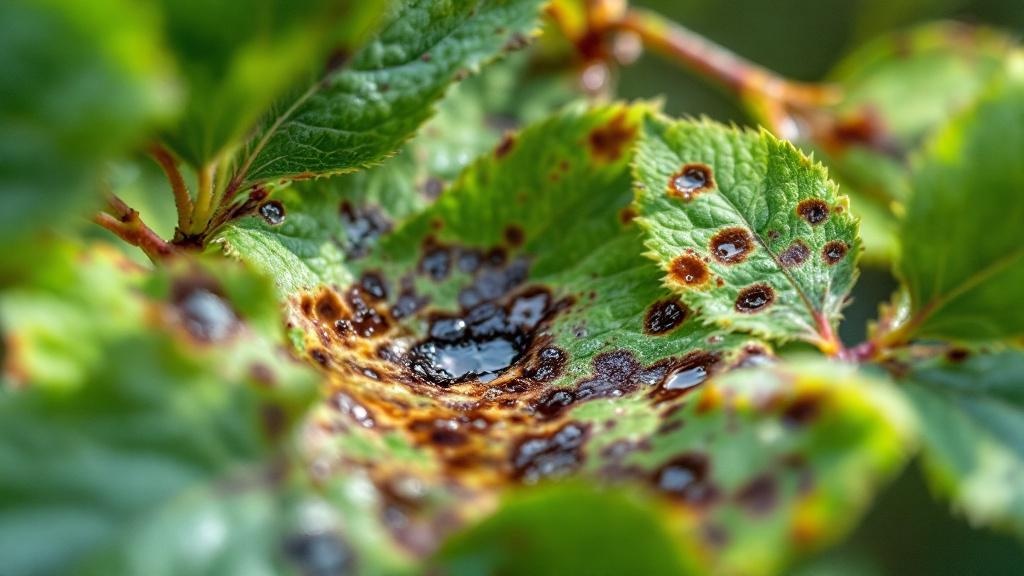
Shothole disease is a fungal infection caused by Wilsonomyces carpophilus that affects stone fruits—peaches, apricots, cherries, and plums are its favourite targets. The name describes the disease perfectly: leaves develop small, circular holes with purple-red borders that give the foliage a shot-through appearance, as if riddled with buckshot. In severe cases, entire leaves may drop prematurely, weakening the tree's ability to photosynthesize and produce quality fruit.
This disease matters because it strikes during the growing season when your trees need healthy canopy coverage most. An infected peach or apricot can lose significant leaf area by mid-summer, reducing fruit size and sweetness, and in some cases causing premature fruit drop. Young trees are particularly vulnerable, as heavy defoliation can stunt growth and delay cropping. The problem is most active from late spring through early autumn in temperate climates, typically appearing first in May or June when conditions favour the fungus.
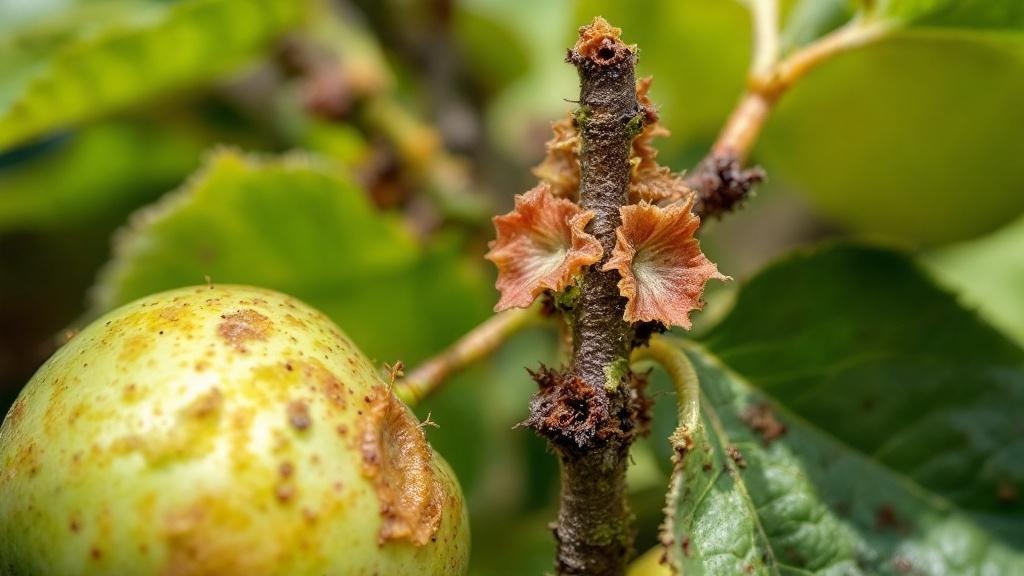
You'll spot it first as tiny, dark-edged spots on leaves—often smaller than a grain of rice. Within a week or two, the centre of each spot dries out and falls away, leaving the characteristic hole. The purple or reddish border around each lesion is the key telltale; it distinguishes shothole disease from simple leaf scorch or mechanical damage. On fruit, you may see small, corky patches or sunken lesions that can spread outward.
The fungus overwinters in fallen leaves and twig bark, waiting to infect new foliage in spring. Unlike some fungal diseases, shothole disease is not spread by splash between plants—it moves by wind-borne spores. This means it spreads steadily through the season but typically affects individual trees rather than jumping rapidly across your garden.
🔍 How to identify
A leveleken kerek, 2-5 mm-es bíborszegélyű foltok, melyek középrésze kihullik — "puskahordó-lyuk" mintázat. Súlyos esetben a levél is lehullhat. Gyümölcsön is bekorhad.
🌿 Common host plants
💊 Treatment
Lombhullás után + tavaszi rügyfakadás előtt rézoxiklorid (Bordói lé 1%). Levél eltávolítása + égetése.
Kaptán, dodine virágzás után. Tebukonazol kombinálva.
🛡️ Prevention
Téli rézpermet a vesszőkön áttelelő spórák ellen. Túlságosan árnyékos hely kerülése. Rezisztens fajták (őszibarack: Cresthaven).
Frequently asked questions
When is the danger window for shothole disease, and how fast does it spread?
The disease typically erupts between May and early July in temperate zones, once new leaves have unfurled and daytime temperatures reach 15–22°C with high humidity. Spread is gradual rather than explosive; you may see fresh lesions appearing every 7–10 days during wet spells, but the fungus does not cause overnight defoliation. By mid-August, if left unchecked, a heavily infected tree can lose 50–70% of its leaf cover.
Can I save a heavily infected peach or apricot tree, or do I need to cut it down?
Even a heavily defoliated tree can recover if you act promptly. Remove all fallen leaves and diseased leaf material immediately, then prune away badly affected branches. Apply a copper fungicide (Bordeaux mixture at 1%) to remaining foliage and bare wood in late summer. Most trees will leaf out again and respond well to this combination of removal and chemical support; you only need to destroy the tree if it has been girdled by disease or is clearly dying back.
What is the safest organic option if I have children or pets in the garden?
Copper-based fungicides like Bordeaux mixture or copper oxychloride are considered low-toxicity when used as directed and are approved for organic gardening. Apply only to dormant wood in late autumn (after leaf fall) and early spring (before bud break) to minimize contact with living foliage and reduce drift risk. The most powerful non-chemical tactic is strict sanitation: collect and burn all fallen leaves and pruned branches each autumn—this alone can reduce disease pressure by 60–80% in the following year.
Does the fungus overwinter in the soil, and what should I do with infected leaves?
No, it does not survive in soil; instead, the fungus overwinters in fallen leaves and in dormant cankers on twigs and branches. You must collect and burn all infected leaf litter in autumn, or seal it in a hot compost bin (above 60°C for at least four weeks)—do not leave it lying under the tree. In late autumn, also prune out any visibly damaged branches and treat the bare wood with a copper spray to kill overwintering spores on the bark.
Are resistant peach and apricot varieties worth planting, and which ones should I choose?
Yes—resistant varieties dramatically reduce your workload and chemical inputs. Peaches like Cresthaven and Reliance show good resistance to shothole disease, as do apricot varieties such as Goldrich and Earligold. If you are replanting or establishing a new stone fruit bed, choosing a resistant cultivar is one of the most cost-effective long-term strategies. That said, resistance is not immunity; even resistant trees benefit from the sanitation and dormant copper spray routine, especially in wet years.
Not sure what's wrong? Take a photo!
Plantora's AI Plant Doctor identifies the issue from a single photo in seconds and gives you a tailored treatment guide.
Try AI diagnosis (free) →