Tobacco hornworm
📖 Overview
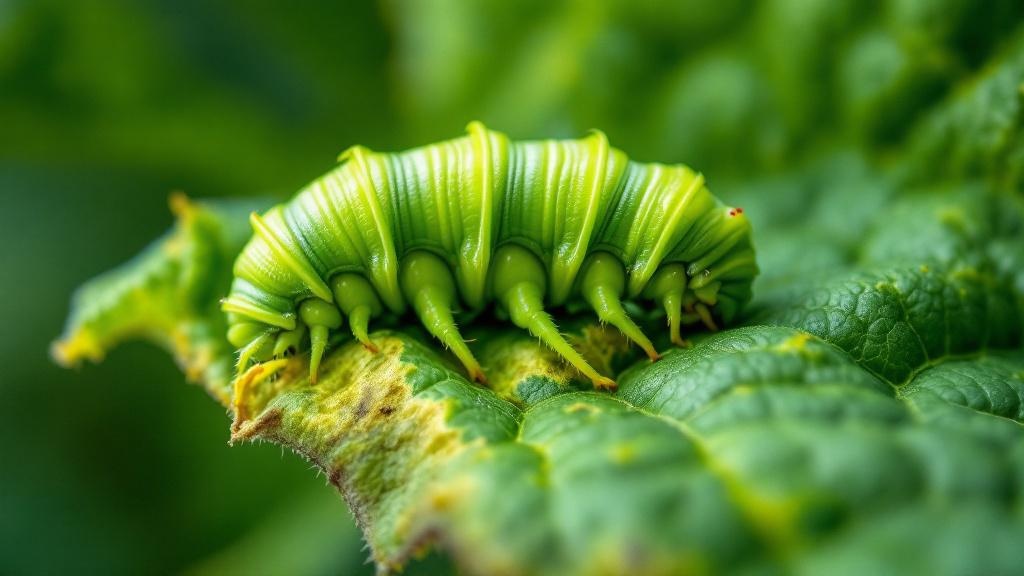
The tobacco hornworm is one of the most destructive pests you can encounter in a tomato, pepper, or eggplant garden during summer. This large green caterpillar, reaching 5-10 centimeters in length and marked with distinctive black and white stripes and a characteristic tail spike, can devour half a plant's foliage and fruit in a single night—often before you even realize it's there. The damage is unmistakable: ragged holes in leaves, gouged fruit, and dark green droppings scattered on the upper leaf surface like pellets. What makes this pest so dangerous is its rapid consumption rate and the fact that each caterpillar can cause severe damage in just 24 to 48 hours.
In temperate climates across Central Europe and the northern United States, tobacco hornworms arrive as soon as nighttime temperatures consistently stay above 15°C, typically from late May through August. The adult moth is nocturnal and attracted to lights, which is why you'll rarely see the problem until the damage is obvious. The first sign to watch for is fresh, large irregular holes appearing overnight on leaves, especially on the lower and mid-canopy sections where caterpillars hide during the day. Look for the dark droppings on leaf surfaces—this telltale sign often appears before you spot the caterpillar itself.
Distinguishing tobacco hornworms from other caterpillar pests is straightforward once you know what to look for. Unlike smaller tent caterpillars or cutworms, hornworms are solitary feeders, meaning you typically find one or two per plant rather than colonies. The combination of their large size, prominent tail spike, and the characteristic white diagonal stripes running along their sides makes them unmistakable. Other green caterpillars on tomatoes tend to be smaller and less voracious, and they lack the distinctive tail projection.
🔍 How to identify
Hatalmas (5-10 cm), zöld hernyó, fekete-fehér csíkokkal és FARKI TÜSKÉVEL. Tömeges leveles- és gyümölcsrágás 1-2 éjszaka alatt. Sötét zöld ürülék-pelletek a levél tetején. Gyakran a paradicsom-növény fele megsemmisül, mire észreveszed.
🌿 Common host plants
💊 Treatment
Kézi gyűjtés esténként (UV-lámpával jól látható). Bacillus thuringiensis kurstaki (Dipel). Trichogramma kibocsátás. Madarak (kék cinege) odacsalogatása.
Indoxakarb (Steward), spinosad (Spintor), klórantraniliprol (Coragen). Karenciális idő!
🛡️ Prevention
Sötét UV-csapda (a felnőtt lepke éjjeli). Vetésforgás (a báb a talajban telel). Tagetes köztes szignalizáláshoz.
Frequently asked questions
How fast does a tobacco hornworm destroy a plant?
A single large caterpillar can consume 20-30% of a plant's foliage in one night and severely damage fruit in 24-48 hours. Once you spot the droppings or fresh damage, check immediately—by the next evening, an undetected caterpillar can render half the plant unusable.
What's the safest organic option if I have children or pets around?
Hand-picking in the early evening with a headlamp or UV light is the safest method—the caterpillars are active at dusk and glow under UV light, making them easy to spot and remove by hand. Bacillus thuringiensis subspecies kurstaki (Bt) is also extremely safe for children and pets as it targets only specific caterpillar species and breaks down quickly in sunlight.
Does the hornworm overwinter in my garden soil?
Yes, the pupae overwinter 10-15 centimeters deep in the soil and emerge when soil temperatures reach 15-18°C in late spring. Crop rotation to a different plant family (not tomatoes, peppers, eggplants, or potatoes) in the same bed for at least one season significantly reduces next year's population.
Can I save a badly infested tomato plant or should I remove it?
Even heavily damaged plants can recover if the growing tip is intact—remove the caterpillars, apply Bt or spinosad to prevent re-infestation, and the plant will produce new leaves over 2-3 weeks. Only remove the plant entirely if the main stem is severed or if damage is so extensive that ripening becomes impossible.
How do I know if it's a tobacco hornworm and not a different caterpillar?
Tobacco hornworms are large (5-10 cm), bright green with white diagonal stripes, and have a distinctive black spike protruding from the rear end—no other common tomato caterpillar has this combination. Smaller caterpillars, cutworms, or tent caterpillars lack the size, stripe pattern, and tail spike entirely.
Not sure what's wrong? Take a photo!
Plantora's AI Plant Doctor identifies the issue from a single photo in seconds and gives you a tailored treatment guide.
Try AI diagnosis (free) →