Vine weevil
📖 Overview
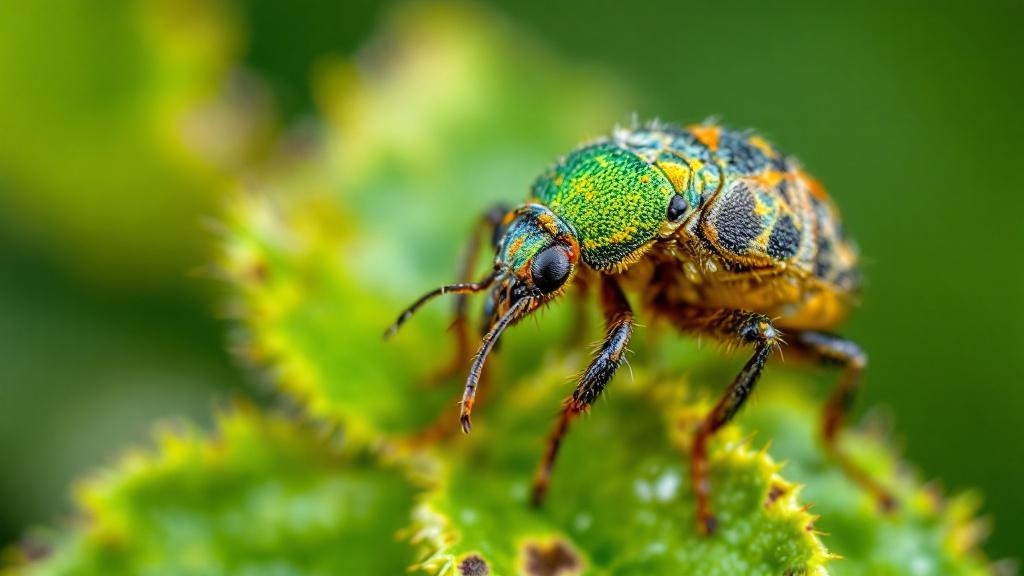
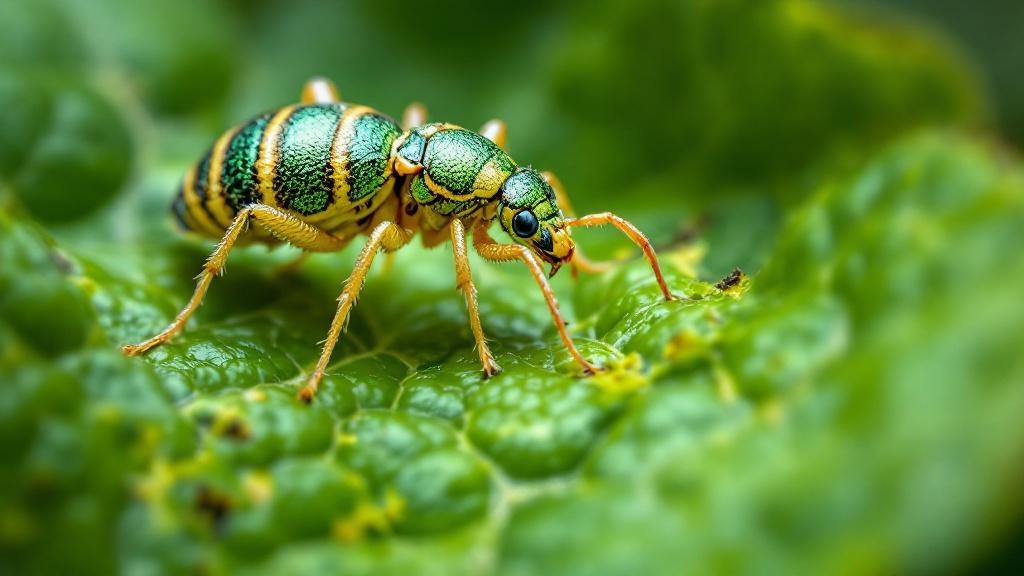
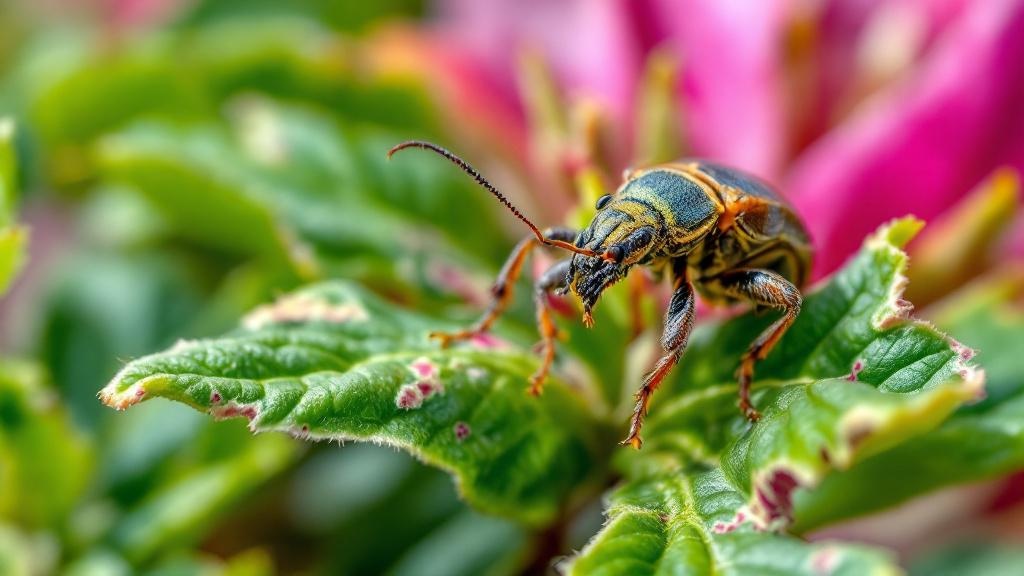
Vine weevil is a persistent garden pest with a two-stage life cycle that damages plants in different ways at different times. Adult weevils are small, dark beetles that emerge in late spring and feed on leaf edges at night, leaving distinctive half-moon or scalloped notches that make foliage look chewed. More damaging are the larvae, which are fat, curved, cream-colored grubs with orange heads that live in the soil and feed voraciously on plant roots from summer through autumn and again in spring. This root damage causes sudden wilting, stunted growth, and plants may collapse or tip over in their pots without warning.
Vine weevil is a serious threat to containerized plants—rhododendrons, azaleas, strawberries, primulas, fuchsias, and cyclamens are especially vulnerable—because the larvae thrive in potting compost and roots have nowhere to escape. In temperate regions, adult weevils appear from May through August, with peak egg-laying in June and July. Root damage typically shows itself in July and August when larvae are most active, but the first visible sign is often notched leaf margins on new growth in late May or early June, which signals adult feeding overhead. This leaf damage is usually the garden's first warning that weevils have arrived.
Vine weevil damage can look like simple slug or sawfly feeding at first glance, but the telltale half-moon notches cut precisely from leaf edges—never holes punched through the leaf—are diagnostic. Slug damage is messier and often comes with slime trails; sawfly damage is more irregular. If you see perfect, evenly spaced scallops along leaf margins on plants like rhododendrons or strawberries, and the plant is mysteriously weakening despite good care, vine weevil is almost certainly the culprit. The pest overwinters in the soil as dormant larvae and pupae, so today's infestation will return next year unless you act now.
🔍 How to identify
A FELNŐTTEK éjszaka rágják a leveleket — a levél SZÉLE félkör-alakban, "csípett" megjelenéssel. A LARVÁK (görnyedt, fehér, narancs fejű) a talajban rágják a gyökereket — a növény hirtelen hervad, gyengén áll, akár ki is dől.
🌿 Common host plants
💊 Treatment
A felnőtteket éjszaka leszedjük villanyfénynél (lassúak). Tálcsapdák a tálcán. Nematoda (Steinernema kraussei vagy Heterorhabditis bacteriophora) — biológiai talaj-locsolás, hatékony a larvák ellen tavasszal/ősszel 10°C+ talajhőm.
Acetamiprid (Provado Vine Weevil Killer) — szakember.
🛡️ Prevention
Új növény vásárlásánál ellenőrzés — kiveszi a cseréből és megnézni a gyökérzónát. Mulcsozás (a felnőttek nem tudnak földig leereszkedni).
Frequently asked questions
How do I know if vine weevil larvae are already in the soil?
The surest sign is a plant that wilts suddenly or topples over despite wet soil, especially in July through September. Gently unpot the plant and inspect the rootball closely—look for cream-colored, C-shaped grubs with orange-brown heads hiding in the compost; even one or two larvae indicate a population. Affected roots will be gnawed and brown rather than firm and white.
Can I save a plant that's already badly infested with vine weevil larvae?
If the root system is severely chewed, the plant may be too weakened to recover, especially if it's already wilting. Your best option is to remove the plant from its pot, scrape away all old compost, wash the roots thoroughly under running water, repot in fresh sterile compost, and treat with beneficial nematodes immediately; even then, recovery takes weeks. For highly valued plants like specimen rhododendrons, this rescue is worth trying; for cheaper bedding plants, disposal is often more practical.
When is the best time to use nematodes against vine weevil?
Apply beneficial nematodes (Steinernema kraussei or Heterorhabditis bacteriophora) in spring from April to May when soil reaches 10°C and stays above it, or again in late August through September when larvae are most active in the soil. Water the compost thoroughly before and after application, and keep it moist for two weeks; nematodes need humidity to search for grubs. Two applications per year—spring and autumn—give the best control.
Will vine weevil spread to my other potted plants?
Adult weevils can crawl from pot to pot and will lay eggs in nearby compost, so yes, the infestation can spread, especially in July. Isolate any infested container away from others, treat it immediately, and inspect neighboring plants weekly for notched leaves or wilting. Potted plants in greenhouses or grouped on patios are at highest risk; plants in open borders are less vulnerable because adults must crawl down from the pot to reach soil.
What's the safest way to control adult weevils without chemicals if I have young children?
Handpicking is tedious but safe—adult weevils are sluggish and active only at night, so search plants with a torch at dusk and drop them into soapy water. Sticky traps placed under pots catch some adults as they climb down to lay eggs. More effective and chemical-free is wrapping the base of pots with a 5-10 cm band of fine mesh or fleece that prevents adults from crawling down into the soil to lay eggs; remove it in October when egg-laying ends. Combine this barrier with nematode applications in spring and autumn for reliable long-term control without any pesticide spray.
Not sure what's wrong? Take a photo!
Plantora's AI Plant Doctor identifies the issue from a single photo in seconds and gives you a tailored treatment guide.
Try AI diagnosis (free) →