Zinc deficiency
📖 Overview
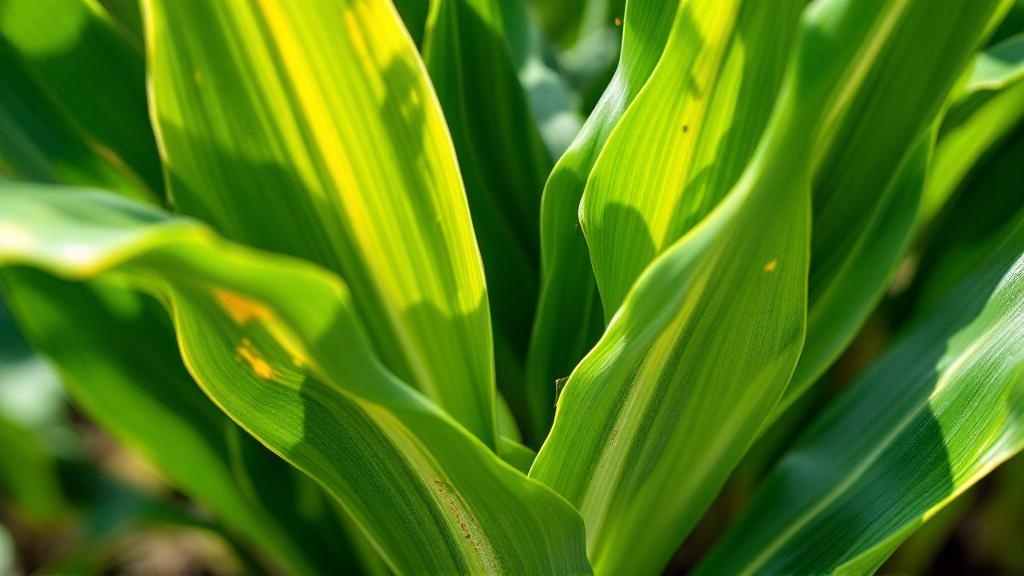
Zinc deficiency is a nutrient problem that makes plants look unnaturally small and stunted, with leaves that fail to reach normal size and internodes (the spaces between leaf joints) that shrink. Instead of a tall, open plant structure, you'll see a compact, rosette-like appearance that looks almost like a miniature version of what your plant should be. This matters because it directly cuts your yield—corn, tomatoes, citrus, and apples all drop significantly in productivity when zinc is locked away from the roots, and affected fruit tends to be smaller and less flavorful.
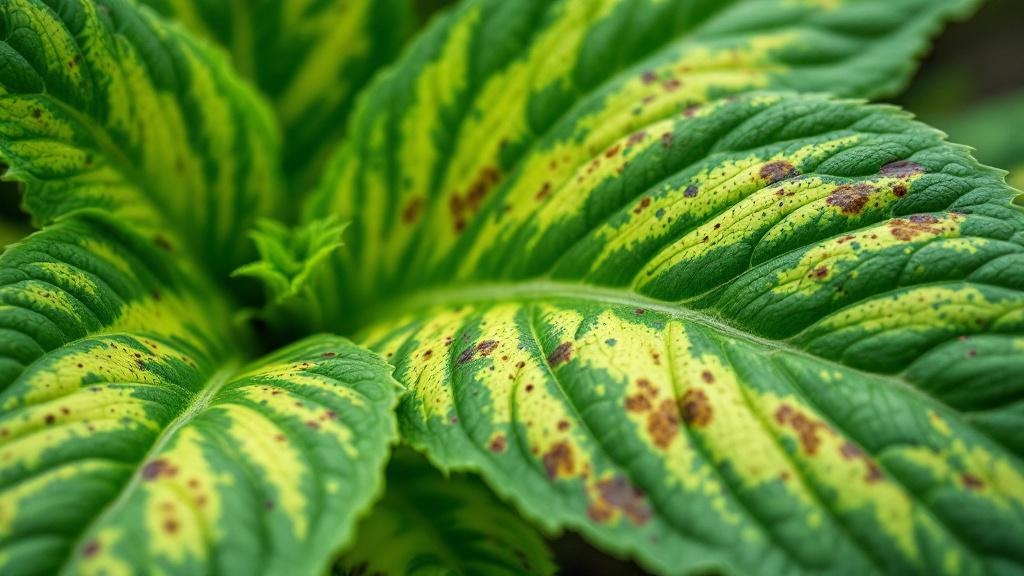
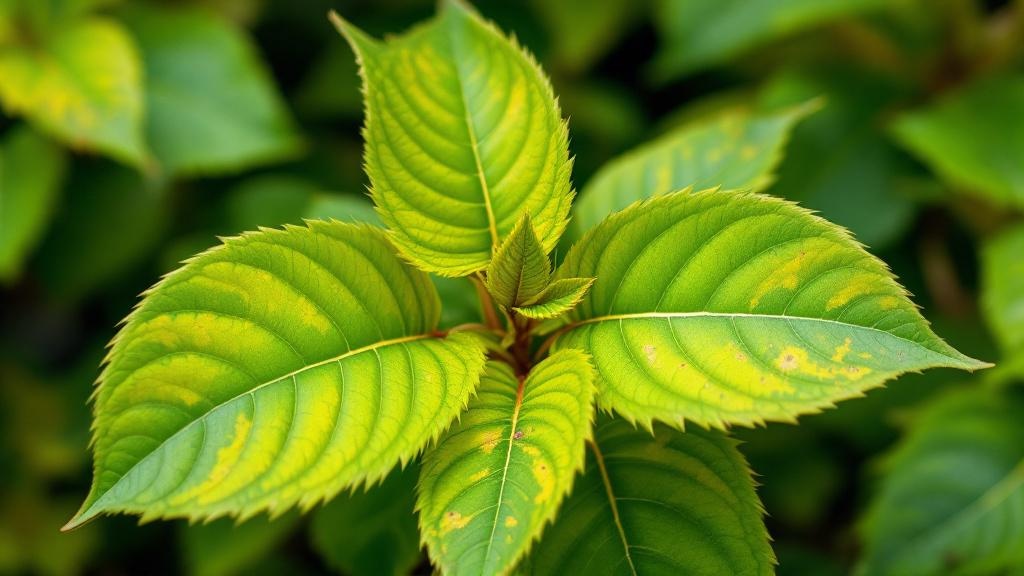
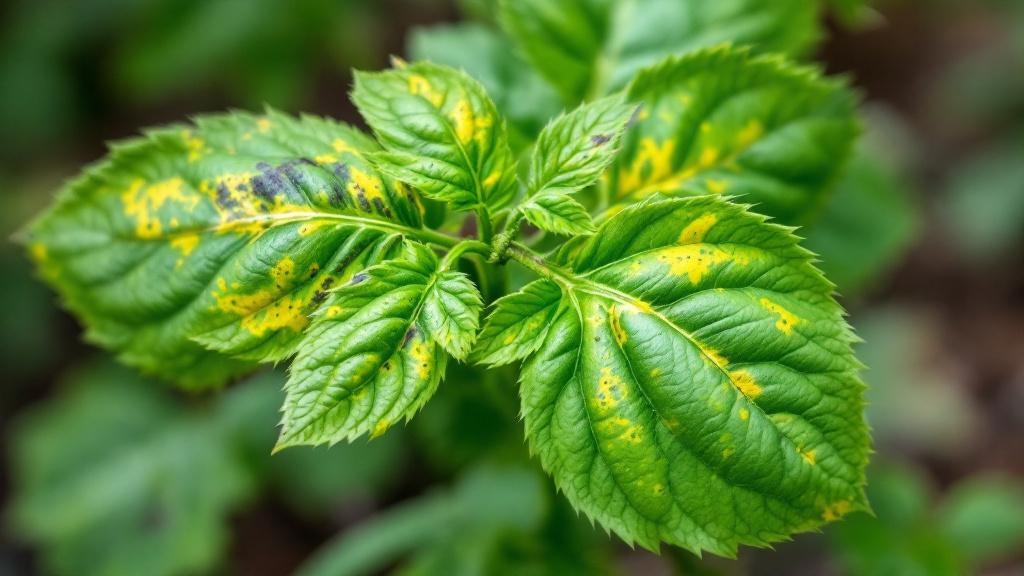
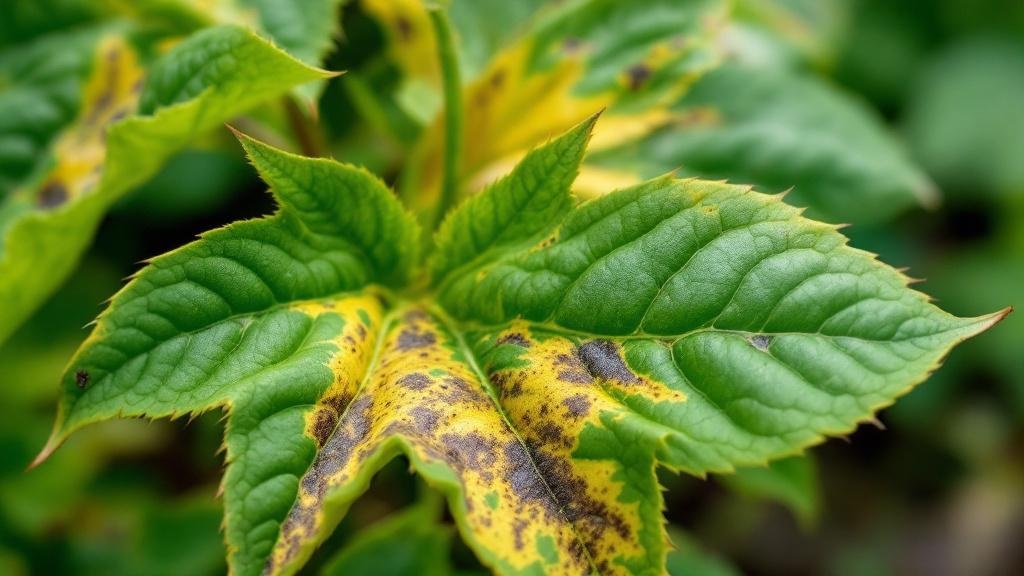
Zinc deficiency typically reveals itself in late spring through midsummer (May to July in temperate regions), when warm soil temperatures accelerate growth but the plant can't keep pace because it's starving for this essential micronutrient. The first sign is usually yellowing or pale spotting on the newest leaves at the shoot tips, and in corn especially, you'll notice pale white stripes running along the leaf veins. This looks different from general nitrogen deficiency because nitrogen shows up as uniform yellowing on older leaves first, whereas zinc deficiency concentrates the color loss on young foliage and creates that tell-tale dwarfing.
The reason zinc becomes unavailable is often not that it's missing from your soil, but that it's chemically locked up and inaccessible to roots. High soil pH (above 7), excess phosphorus (especially from heavy superphosphate applications all at once), and wet, waterlogged conditions all immobilize zinc. Fortunately, once you identify it, zinc deficiency is one of the easiest micronutrient problems to correct, either through direct foliar sprays or by addressing the underlying soil conditions that are hiding the zinc your plants need.
🔍 How to identify
A növény LILIPUT lesz — a levelek apróak, a szártagok rövidek ("rozetta-szerű" megjelenés). A levelek a csúcson sárga foltozott. Kukoricánál fehér csíkok az erezet menti.
🌿 Common host plants
💊 Treatment
Komposztált trágya. Alga-lombpermet.
Cink-szulfát (0.5-1% lombpermet, 1-2× egy szezonban).
🛡️ Prevention
Talaj pH 6.0-6.5. Magas foszfor talajban a Zn lekötődik — kerüld a nagy szuperfoszfát-adást egyszerre.
Frequently asked questions
How can I tell if my plant really has zinc deficiency and not just nitrogen deficiency?
With zinc deficiency, new leaves at the stem tips yellow and become stunted while older leaves often stay green; the whole plant looks like a miniature version of itself. Nitrogen deficiency works the opposite way—older, lower leaves turn yellow first while the top stays green, and the plant grows tall but pale. In corn, zinc shows up as white stripes along the leaf veins, which is almost never seen in nitrogen deficiency.
Does zinc deficiency spread to my other plants, or is it specific to just one?
It is not contagious between plants. Zinc deficiency is a soil or nutrient-uptake problem tied to each plant's individual access to zinc—if your entire garden shows symptoms, it's a soil-wide issue like high pH or excess phosphorus rather than the deficiency spreading plant-to-plant. Fixing the soil chemistry will help all your plants at once.
What's the safest way to treat it if I have kids and pets around?
Composted manure and seaweed foliar spray are your lowest-risk organic options and work well for moderate deficiency. If you need faster results, dilute zinc sulfate to 0.5-1% and spray leaves only in early morning or evening when kids and pets are not in the garden; wash your hands afterward and keep them away until the spray dries. Always avoid letting them contact wet foliage.
How quickly does zinc deficiency show up, and when is the critical window to fix it?
Symptoms typically appear 4-6 weeks after growth starts in spring if zinc is unavailable. The critical window is May through June—if you catch it and spray by mid-June, you can still salvage much of your season's growth. Once mid-July arrives, the plant has already lost weeks of prime growth time, and yield recovery becomes much harder.
Can I just add more phosphorus fertilizer to boost growth, or will that make zinc deficiency worse?
Adding phosphorus will almost certainly worsen zinc deficiency because excess phosphorus chemically binds zinc in the soil, making it invisible to roots. Instead, keep your soil pH between 6.0 and 6.5 (where zinc is most available), avoid large single doses of superphosphate, and address any deficiency through foliar sprays or balanced compost rather than high-phosphorus fertilizers.
Not sure what's wrong? Take a photo!
Plantora's AI Plant Doctor identifies the issue from a single photo in seconds and gives you a tailored treatment guide.
Try AI diagnosis (free) →