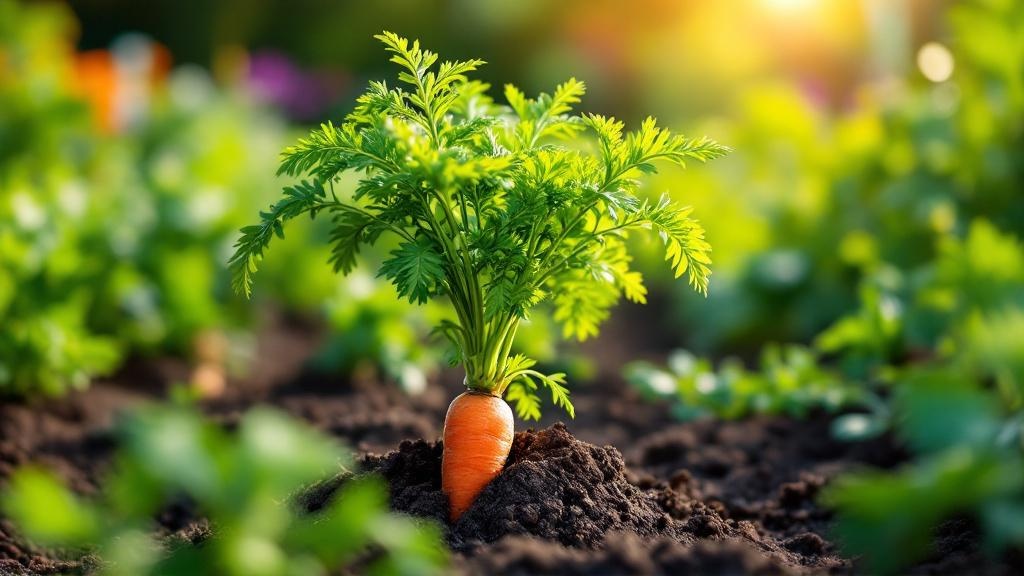
Carrot
Carrots are one of the easiest vegetables to grow in temperate gardens, yet many home gardeners struggle with poor root development, forking, or slow germination. Whether you're planting spring crops in late March or succession planting for autumn harvest, understanding soil preparation, watering depth, and thinning is key to growing straight, sweet carrots. This guide covers everything from seed to storage.
Watering for Straight, Sweet Roots
Carrots need consistent moisture to develop evenly without cracking or forking. Water deeply 1–2 times weekly, providing about 1 inch per week; adjust during heavy rain. Keep soil uniformly moist (not waterlogged) from germination through harvest. Mulch with 2 inches of straw to retain moisture and regulate soil temperature in summer and early autumn.
Light Requirements
Carrots need at least 6 hours of direct sunlight daily for best color and sugar development. They tolerate partial shade (4–5 hours) but will grow slower and less sweet. In spring and early summer in temperate regions, full-sun beds are ideal. For autumn crops sown in late July, afternoon shade helps prevent bolting in hot spells.
Soil Preparation & Spacing
Carrots demand loose, well-draining soil free of stones and compacted clay—rocky soil causes forking and deformity. Amend beds 8–10 inches deep with aged compost or sand to create a friable texture. Sow seeds directly outdoors; thin seedlings to 2–3 inches apart once they reach 2 inches tall (these thinnings are edible). Spacing allows roots to expand without crowding.
Temperature & Seasonal Timing
Carrots prefer cool conditions: 50–75°F is ideal, though they tolerate 40–85°F. Sow spring crops in late March to mid-April for June–July harvest, and succession-plant every 2 weeks until mid-July for autumn crops ready in September–November. In colder zones (5–6), mulch overwintering carrots with 6 inches of straw to harvest fresh through winter.
Feeding & Soil Health
Carrots need moderate fertility; excess nitrogen promotes forking and leafy growth over root development. Mix balanced compost (1–2 inches) into beds before sowing; no additional fertilizer is usually needed for well-amended soil. If soil is poor, apply a balanced vegetable fertilizer (10-10-10) once at midgrowth, or use fish emulsion every 3 weeks.
Common Problems & Solutions
Carrot rust fly (Psila rosae) larvae tunnel into roots—sow in April or August to avoid peak flight, use row covers, or plant beneath shade cloth. Yellow or mottled leaves often signal Alternaria leaf blight, common in wet springs; improve air circulation and water at soil level. Forked, split roots result from irregular watering or rocky soil; maintain consistent moisture and prepare loose, stone-free beds before sowing.
Frequently asked questions
How often should I water carrots?
Water carrots 1–2 times weekly to keep soil consistently moist, aiming for about 1 inch per week. Inconsistent watering causes cracking and poor root shape. Use drip irrigation or soaker hoses to water at soil level and avoid wetting foliage, which invites disease.
How long does it take carrots to grow?
Most carrots reach harvest size in 60–80 days from direct sowing, depending on variety. Early varieties (like 'Nantes') mature in 60 days; main-crop types (like 'Chantenay') take 70–80 days. Check seed packet timing and count from your sowing date.
Can I grow carrots in pots or containers?
Yes, you can grow carrots in deep containers (12 inches minimum depth for short varieties, 18+ for longer types) filled with loose potting mix or compost. Ensure drainage holes and consistent watering, as containers dry faster than garden beds. Short varieties like 'Paris Market' work best in pots.
Why are my carrots forked or misshapen?
Forking happens when roots hit stones, clay, or compacted soil. Prepare beds 8–10 inches deep with loose, amended soil free of debris before sowing. Poor thinning (leaving seedlings too close) also stunts growth and deforms roots—thin to 2–3 inches apart once seedlings emerge.
When should I harvest carrots?
Harvest carrots when they reach desired size, usually 60–80 days after sowing. You can harvest baby carrots at 4–6 weeks, or wait until roots are 0.75 inches in diameter. In autumn, harvest before the first hard frost, though you can mulch and dig through winter in temperate zones.
🩺 Common diseases and pests
These problems commonly affect this plant. Click any to see full symptom descriptions, organic and chemical treatment, and prevention.