Bacterial leaf spot
📖 Overview
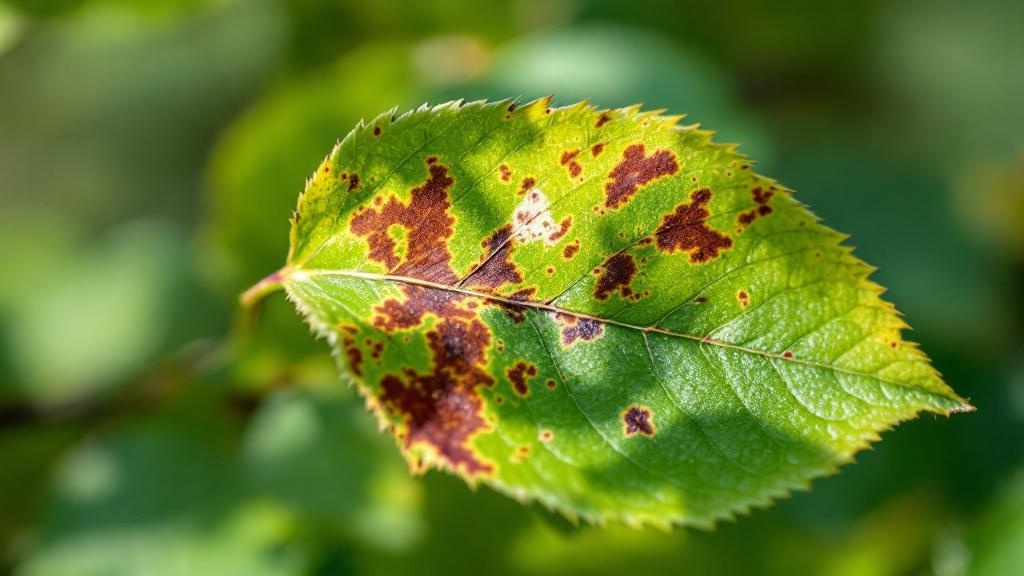
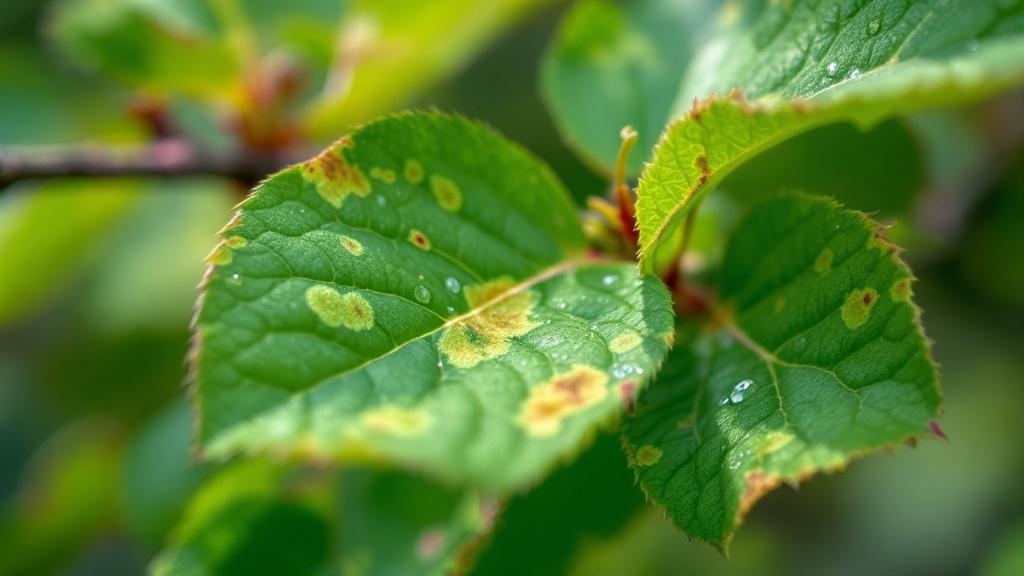
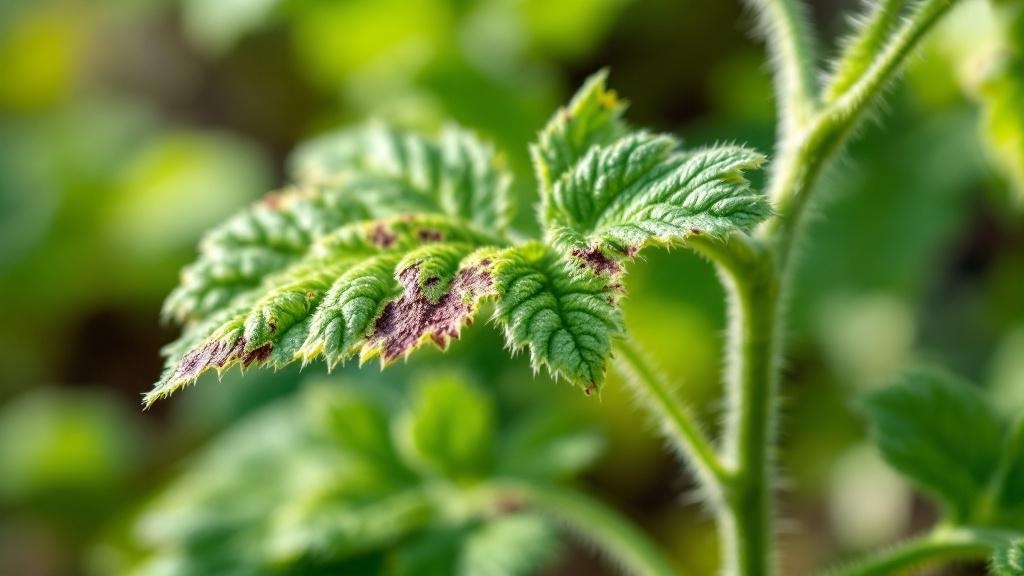
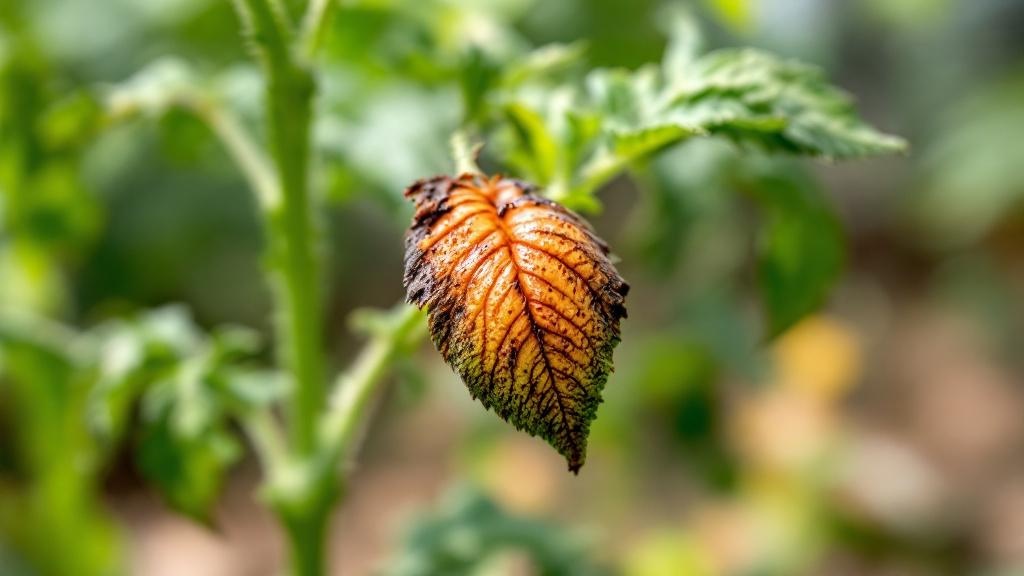
Bacterial leaf spot is a disease caused by Xanthomonas or Pseudomonas bacteria that infects the leaves of tomatoes, peppers, cabbage, lettuce, and stone fruits like cherries and plums. You'll notice small, angular water-soaked spots—usually 2 to 5 millimeters across—that appear translucent at first, then darken to black or brown in the center. The edges of these spots are distinctly straight and follow the leaf's vein pattern, which is the key feature that sets bacterial leaf spot apart from fungal diseases or simple sunscald. This problem matters because once bacteria move in, they can defoliate plants rapidly, weakening them and reducing yield or fruit quality, especially in home gardens where prevention is far easier than cure.
The disease thrives in warm, wet conditions and spreads fastest during rainy spells or when foliage stays damp—typically June through September in temperate regions, though spring transplanting can bring it in early if infected seedlings are used. The first warning sign is those telltale angular, water-soaked spots on the lower or older leaves; if you see them, act immediately because the bacteria spread via water splash and can colonize the entire plant within 7 to 10 days in humid weather. Unlike powdery mildew or early blight, bacterial leaf spot does not have a powdery coating and does not form concentric rings; the spots stay angular and are bounded tightly by the leaf veins, making identification straightforward once you know what to look for.
Prevention is your strongest tool: buy only healthy, disease-free seedlings, use drip irrigation instead of overhead watering to keep foliage dry, and never touch plants when leaves are wet—bacteria travel easily on wet hands and tools. A strict two- to three-year crop rotation and hot-water seed treatment (50 degrees Celsius for 25 minutes) will eliminate the bacteria from seeds before you even plant. Once the disease appears, copper hydroxide sprays and prompt removal of infected leaves slow its spread, but the battle is won or lost before infection ever starts.
🔍 How to identify
Kicsi (2-5 mm), VÍZÁTÁZOTT (transzlucens) szögletes foltok a leveleken, közepe később fekete-barna. A folt SZÉLEI EGYENESEK (a levél erezet határolják). Esős/párás időben gyorsan terjed.
🌿 Common host plants
💊 Treatment
Réz-permet (rézhidroxid). Fertőzött lombozat eltávolítása. NE érintsd a növényeket nedves állapotban.
Streptomycin (csak komoly esetben, szakember).
🛡️ Prevention
Csak egészséges palánta-vásárlás. Csepegtető öntözés. Vetésforgás 2-3 év. Vetőmag forró-vizes csávázás (50°C, 25 perc).
Frequently asked questions
How fast does bacterial leaf spot spread once I see the first spots?
In warm, wet conditions typical of June to August, the disease can spread from lower leaves to the entire plant within 7 to 10 days. Each rain or overhead watering splash spreads bacteria to new leaves, so speed depends entirely on humidity and how quickly you act—early removal of spotted leaves can stop it, but delay allows exponential spread.
Can I save a plant that is already badly infected, or must I destroy it?
If only the lower leaves are affected, you can save the plant by cutting off all spotted foliage, improving air circulation, switching to drip irrigation, and spraying copper hydroxide every 7 to 10 days until new, clean growth appears. If more than half the plant is spotted or the disease is in the stem, destruction and removal of plant material from the garden is safer to prevent it spreading to neighbors or next season's crops.
What is the safest organic treatment for a backyard with children and pets?
Copper hydroxide spray is OMRI-certified organic and poses minimal risk to people or pets when used as directed; apply it in early morning or evening so it dries before children play. The most important step is removing infected leaves by hand and disposing of them in the trash (not compost), washing your hands and pruning tools afterward to avoid spreading bacteria from plant to plant.
Does bacterial leaf spot survive in soil or on fallen leaves over winter?
Yes—the bacteria overwinter on plant debris left in the garden and in soil, which is why a strict two- to three-year rotation (moving tomatoes, peppers, or other susceptible crops to a different bed) is essential in temperate zones. In autumn, remove all infected plant material after harvest and never leave it on the soil surface; bury it deep or dispose of it in the trash rather than composting, since home compost piles rarely reach temperatures high enough to kill the bacteria.
Is the fruit or harvested vegetables from an infected plant safe to eat?
Yes, produce is safe to eat—the bacteria infect leaves, not fruit or root vegetables, and washing under running water removes any surface contamination. The real concern is plant vigor and yield; heavy leaf loss reduces the plant's ability to photosynthesize and ripen fruit, so infected plants produce less and smaller fruit rather than poisonous fruit.
Not sure what's wrong? Take a photo!
Plantora's AI Plant Doctor identifies the issue from a single photo in seconds and gives you a tailored treatment guide.
Try AI diagnosis (free) →