Fusarium wilt
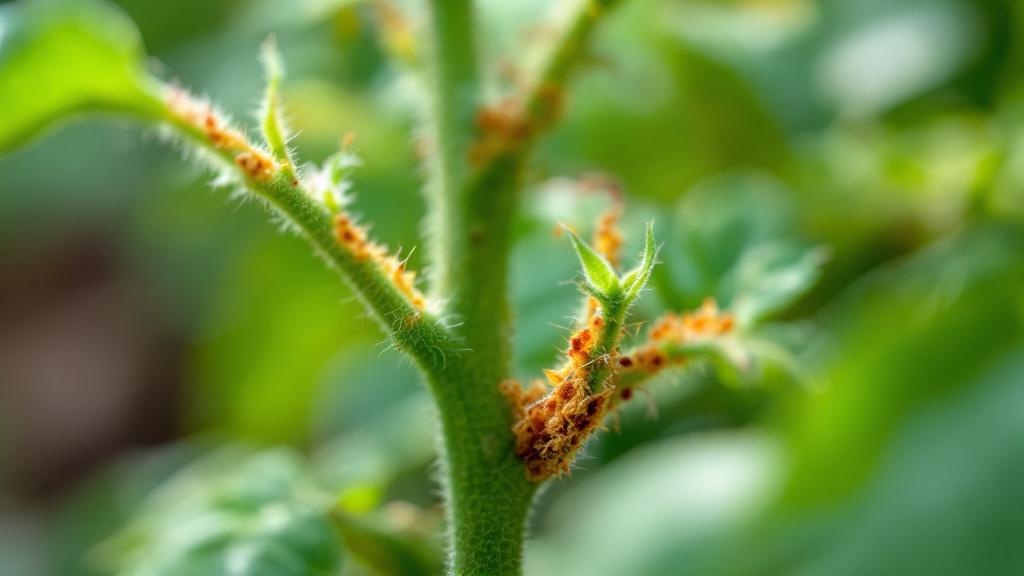
📖 Overview
Fusarium wilt is a soil-borne fungal disease that quietly kills plants from the inside out, even when the soil around them is wet. The fungus clogs the plant's water-conducting vessels (xylem), starving leaves of moisture until they collapse—yet no amount of watering will save them. This disease is devastatingly common in temperate gardens wherever tomatoes, melons, basil, or carnations grow, and once established in your soil, it can remain a threat for years. The danger window typically arrives in mid-to-late summer (July through September), when soil warmth and moisture create ideal conditions for the fungus to spread rapidly through root systems.
The first sign is usually older, lower leaves wilting and yellowing despite adequate soil moisture—often asymmetrically, with one side of the plant collapsing before the other. If you split the stem lengthwise, you'll see the telltale brown or blackish discoloration in the central conducting tissue. This symptom progression creeps upward from the base over weeks. What makes Fusarium wilt particularly insidious is that it looks like a watering problem or heat stress at first glance, tricking gardeners into overwatering and spreading spores further through water splash and contaminated tools.
Unlike powdery mildew or early blight, which show surface damage on leaves, Fusarium wilt begins internally and produces no obvious fungal growth or spots. The plant may still look green and vigorous from a distance until suddenly entire branches collapse. Once you confirm the brown vascular discoloration in the stem, there is no cure—infected plants must be removed entirely and destroyed, never composted. The only long-term solution is preventing reinfection through resistant varieties, strict crop rotation of at least four years, and careful soil management.
🔍 How to identify
A növény hervad, de a talaj NEDVES. Szárat hosszában kettévágva BARNA-fekete elszíneződés látszik a vezetékekben (xilémben). Az idős alsó leveleknél kezdődik, fölfelé halad. Aszimmetrikus is lehet — egyik fél elhal először.
🌿 Common host plants
💊 Treatment
Igazi gyógyszer NINCS. Erősen fertőzött növény megsemmisítése (égetni, NEM komposztba). Talajváltás minimum 3-4 év, vagy szoláris talajkezelés (átlátszó fólia + nyári napsugárzás 6 hét).
Talajfertőtlenítés bázalin-tal vagy Basamid-dal (csak engedélyezett szakember). Otthonra nem ajánlott — az egész talajbiotát elpusztítja.
🛡️ Prevention
Ellenálló F1 hibrid fajták. Vetésforgás (minimum 4 év). Jó vízelvezetés. Talaj pH 6.5-7 (kevésbé aktív bázikus pH-ban). Egészséges palánták (NE vegyél fertőzött szárú palántát).
Frequently asked questions
How fast does Fusarium wilt spread once I see the first wilting?
Once symptoms appear, the disease typically progresses up the plant over 2-4 weeks, especially in warm soil (above 24°C). A seemingly healthy plant can be completely dead by the end of summer if left untouched, and spores spread through the soil to other roots in that timeframe, making immediate removal critical.
Can I save a plant that's showing early wilting, or do I have to destroy it?
Once you confirm Fusarium wilt (by splitting the stem and seeing brown vascular tissue), there is no cure—the plant must be pulled up and destroyed by burning or sealed disposal, never composted. Early removal actually protects your other plants by preventing spore buildup in the soil.
How long does Fusarium stay in the soil, and do I really need to wait 4 years before planting there again?
Fusarium oxysporum spores can survive in soil for 4-7 years even without a host plant. The 4-year crop rotation minimum is a practical compromise; you can shorten this to 2-3 years by using solar soil treatment—covering the bed with clear plastic for 6 weeks during June-July to heat-kill spores—or by planting only resistant F1 varieties.
What weather conditions make Fusarium wilt spread faster?
Warm, moist soil (20-28°C) with humidity above 75% is the fungus's sweet spot, typically hitting in mid-to-late summer. Poorly drained, compacted soil traps moisture and worsens the problem, so improving drainage and avoiding soil temperatures above 28°C through mulching can slow spread.
Can Fusarium wilt spread from one plant to another through my watering can or tools?
Yes, absolutely—spores travel on water splash, contaminated hands, and pruning shears, so disinfect any tools with a 1:10 bleach solution and avoid watering from above once you suspect the disease. Immediately remove infected plants to prevent spore dispersal to healthy neighbors.
Not sure what's wrong? Take a photo!
Plantora's AI Plant Doctor identifies the issue from a single photo in seconds and gives you a tailored treatment guide.
Try AI diagnosis (free) →