Septoria leaf spot
📖 Overview
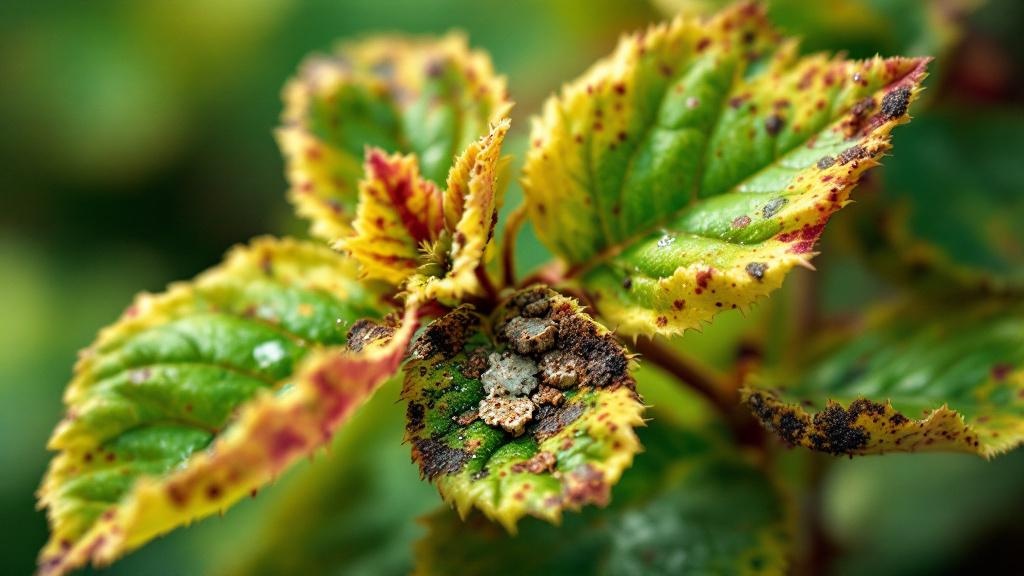
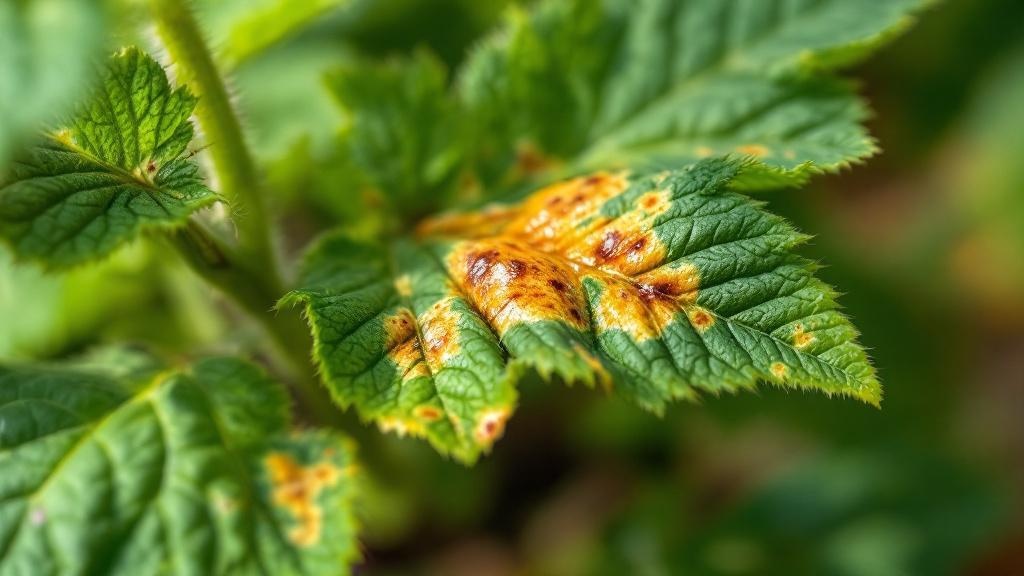
Septoria leaf spot is a fungal disease caused by Septoria species that creates small, circular spots on plant leaves, starting from the bottom of the plant and working upward. You'll recognize it by the distinctive appearance: tan or yellowish spots with dark centers, typically 2-5 millimeters across, and tiny black dots (called pycnidia) visible in the middle of each lesion under close inspection. This disease is particularly troublesome for tomato growers in temperate regions, but also affects celery, wheat, phlox, and dogwood, potentially reducing yields or ornamental value if left unchecked.
The disease matters because it weakens plants by destroying leaf tissue needed for photosynthesis, and in severe cases can defoliate entire plants by midsummer. On tomatoes, early-season infection can lead to fruit loss and reduced productivity. The window of danger runs from late May through September in most temperate zones, with peak activity during warm, wet periods—especially June through July when humidity and rainfall create ideal conditions for the fungus to spread. The first sign you'll typically notice is those characteristic small spots with dark centers appearing on the lowest leaves, often accompanied by yellowing around the affected areas.
Septoria is easy to confuse with early blight (which creates larger, target-shaped rings with concentric patterns) or bacterial speck, but the key distinguishing feature is the presence of those tiny black pycnidia—the fungal fruiting bodies—visible as pinprick dots in the center of Septoria spots. Early blight spots are usually larger and show more prominent concentric rings, whereas Septoria spots remain relatively uniform and small. Once you spot those characteristic lesions on lower leaves, it's time to act, because the disease spreads rapidly in humid conditions and can quickly move up the plant to compromise fruit development.
🔍 How to identify
Kicsi (2-5 mm), kerek foltok sárgás szegéllyel és sötét középponttal. A középben apró fekete piknídiumok (mint pici fekete pontok). Tipikusan az alsó leveleken kezdődik.
🌿 Common host plants
💊 Treatment
Réz-alapú. Mulcsozás, hogy az esővízzel ne fröcsögjön fel a spóra.
Klórtalonil (sok helyen visszavonva), mancozeb.
🛡️ Prevention
Vetésforgó, alsó levelek eltávolítása paradicsomon, mulcsozás.
Frequently asked questions
How fast does Septoria leaf spot spread, and when is the critical window to treat?
In warm, wet conditions, Septoria can spread to new leaves every 7-10 days, making late May through July your most critical window in temperate climates. Once you see spots on the lowest leaves, begin treatment immediately—waiting even 2-3 weeks allows the disease to climb halfway up the plant, making control much harder and potentially compromising your harvest.
Can I save a tomato plant that's already infected, or should I pull it out?
Mild to moderate infections can usually be managed if you catch them early by removing all affected leaves, improving air circulation, and applying copper-based fungicides every 7-10 days. Only completely defoliated or severely weakened plants are worth removing; most plants can recover and still produce fruit if treated promptly and consistently through the growing season.
What's the safest organic treatment for a backyard garden with children and pets?
Copper-based fungicides (like copper sulfate or copper hydroxide) are your first choice—they break down quickly and pose minimal risk to children and pets when applied according to label directions, though they can accumulate in soil with repeated use over years. Remove lower infected leaves by hand, mulch heavily to prevent soil-splashed spores, and ensure good airflow by pruning suckers and spacing plants properly; these cultural methods often prevent severe outbreaks without any sprays.
Does Septoria overwinter in the soil or on fallen leaves, and how should I clean up?
The fungus survives winter in infected plant debris and on dropped leaves in the soil, so removing and destroying (not composting) all diseased foliage in autumn is crucial to breaking the disease cycle. Mulch with fresh material each spring to create a barrier preventing spores from splashing up onto new growth, and practice crop rotation—avoid planting tomatoes or susceptible hosts in the same spot for at least two years.
Which weather conditions trigger a Septoria outbreak, and can I predict when to start preventive sprays?
Warm temperatures (18-25°C / 65-77°F) combined with wet foliage and high humidity trigger rapid spread; watch for outbreaks after rainy spells in June and July. Start preventive copper sprays in late May if your region had Septoria the previous year, and after any extended wet weather—spraying every 7-10 days during humid stretches keeps the disease in check before visible spots appear.
Not sure what's wrong? Take a photo!
Plantora's AI Plant Doctor identifies the issue from a single photo in seconds and gives you a tailored treatment guide.
Try AI diagnosis (free) →