Cutworms
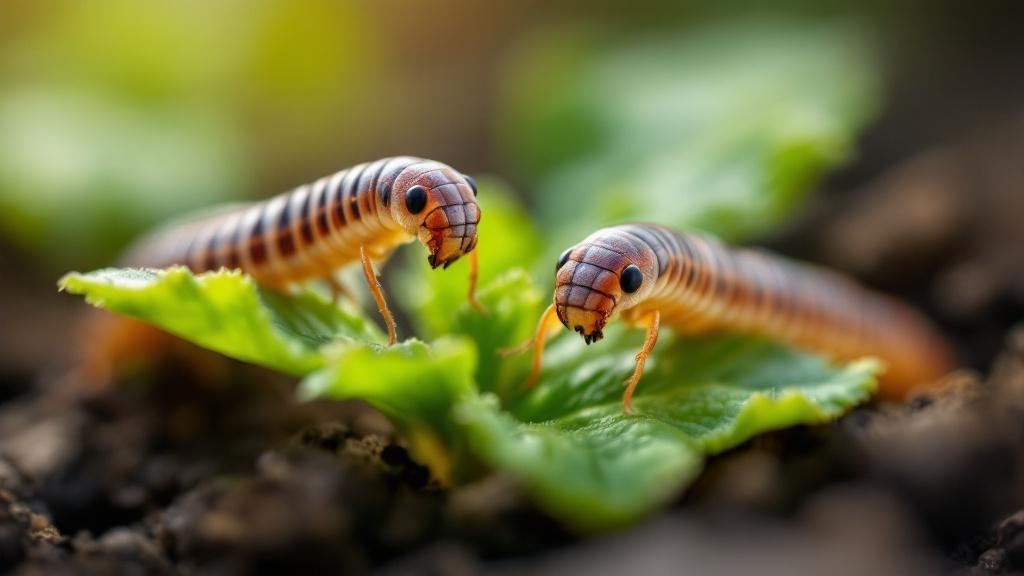
📖 Overview
Cutworms are the gardener's nightmare in spring: you plant a healthy seedling in the evening, and by morning it's lying on the ground, its stem cleanly severed at soil level. These fat, grey-brown caterpillars live hidden 4–5 cm underground during the day and emerge at night to feed on young plants, particularly tomatoes, peppers, cabbage, lettuce, and corn. They're a serious threat because they can wipe out an entire seedbed in just a few nights, and a single larva may attack multiple plants as it moves through the soil.
Cutworms are most destructive during the planting season—roughly late April through June in temperate climates—especially when you're hardening off indoor seedlings or direct-seeding into warm soil. The first sign is always the same: a perfectly healthy young plant toppled overnight with a clean bite wound at the base. Because they work at night and hide by day, many gardeners never see the pest itself, which is why prevention is so much easier than cure.
It's easy to confuse cutworm damage with damping-off (a fungal disease that causes seedlings to wilt gradually), but cutworms leave a distinctive severed stem—almost like a knife cut—whereas damping-off causes a soft rot at the base without cleanly cutting through. Cutworms also tend to attack plants in patches across the bed, whereas damping-off spreads more randomly and affects seedlings of all sizes.
🔍 How to identify
A friss palánta REGGELRE elDŐL — a szárat a TALAJSZINT magasságában HARAPVA elvágta egy szürke-barna hernyó. A hernyó nappal a talajban rejtőzik (4-5 cm mélyen), 2-4 cm hosszú, vastag testű, görnyedt.
🌿 Common host plants
💊 Treatment
A talajt megforgatni este, a hernyók felfedezésére. Diatómaföld a növények köré. Galléraló: kartonpapír-hüvely (2 cm a talajba, 5 cm felé) a palánta köré.
Bacillus thuringiensis kurstaki (Bt-k) — biológiai. Erősebb esetben pyrethrin.
🛡️ Prevention
Talajforgatás tavasz előtt. NE legyen sok gyom a palántázás előtt (a hernyó ott marad). Kiszáradt vagy gáz-csapdás területeken kisebb a populáció.
Frequently asked questions
When exactly are cutworms most dangerous, and how quickly can they destroy a seedbed?
Cutworms are active from late April through June, peaking in May and early June when soil is warm and seedlings are most tender. A single caterpillar can cut down 3–5 plants per night, so an untreated bed can be devastated in just 2–3 nights once the outbreak starts.
Can I save a plant that's already been cut down by a cutworm?
No, once the stem is severed, the plant is dead and should be removed and discarded. Your focus should shift to protecting the remaining healthy plants: inspect the soil around them, apply a collar guard immediately, and consider spraying Bt-k on the soil surface where the larvae will emerge at dusk.
What's the safest way to protect seedlings if I have young children or pets in the garden?
Cardboard or plastic collars are your best bet—push them 2 cm into the soil and extend them 5 cm above, creating a barrier the cutworm cannot climb or chew through. Food-grade diatomaceous earth sprinkled around plants is also safe for kids and pets once dry, though less reliable in wet soil. Both methods work without any chemicals.
Does cutworm damage happen only to seedlings, or can they attack larger transplants too?
Cutworms prefer young, tender seedlings with thin stems, but they can damage transplants up to about 10–15 cm tall if stems are still soft. Once plants are established and stems harden off (usually 3–4 weeks after planting), they become much less vulnerable.
How do I know if cutworms will be a big problem in my garden this year?
Cutworms overwinter as pupae in the soil, so cultivation in spring exposes them and reduces their numbers. If your beds were previously infested, wet soil and dense weeds before planting are warning signs—cutworms hide and feed in weedy areas. Dry, well-cultivated beds have significantly lower populations.
Not sure what's wrong? Take a photo!
Plantora's AI Plant Doctor identifies the issue from a single photo in seconds and gives you a tailored treatment guide.
Try AI diagnosis (free) →