Cytospora canker
📖 Overview
Cytospora canker is a fungal disease that attacks the bark and wood of stone fruit trees and poplars, creating sunken, elongated lesions that weep reddish-orange gum. Once infected, a branch will wither and die back completely, and if the canker girdles the main trunk, it can kill the entire tree. This disease matters because it's one of the most serious threats to backyard peach, apricot, cherry, and plum trees in temperate climates, especially after harsh winters or drought stress when trees are weakened.
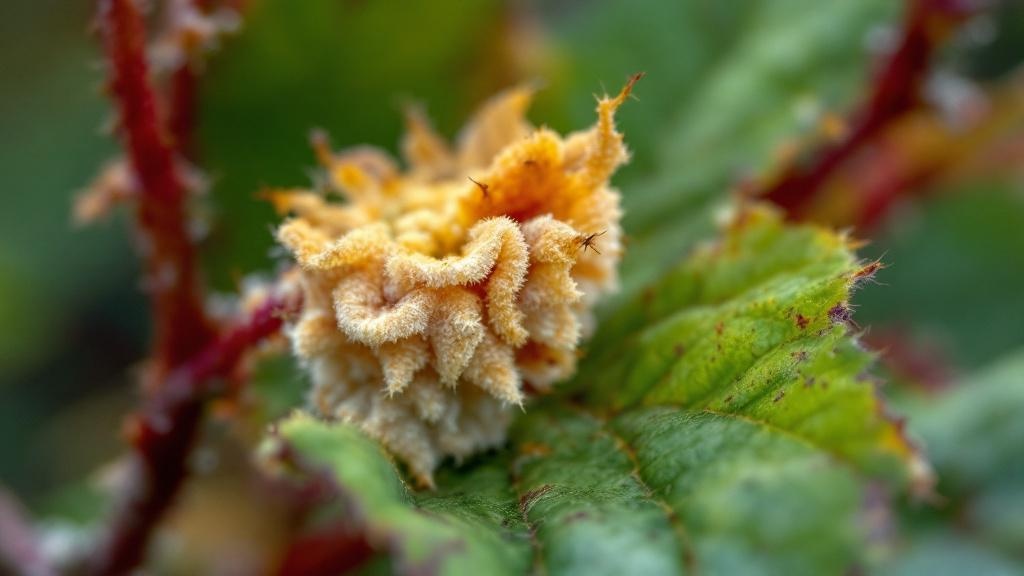
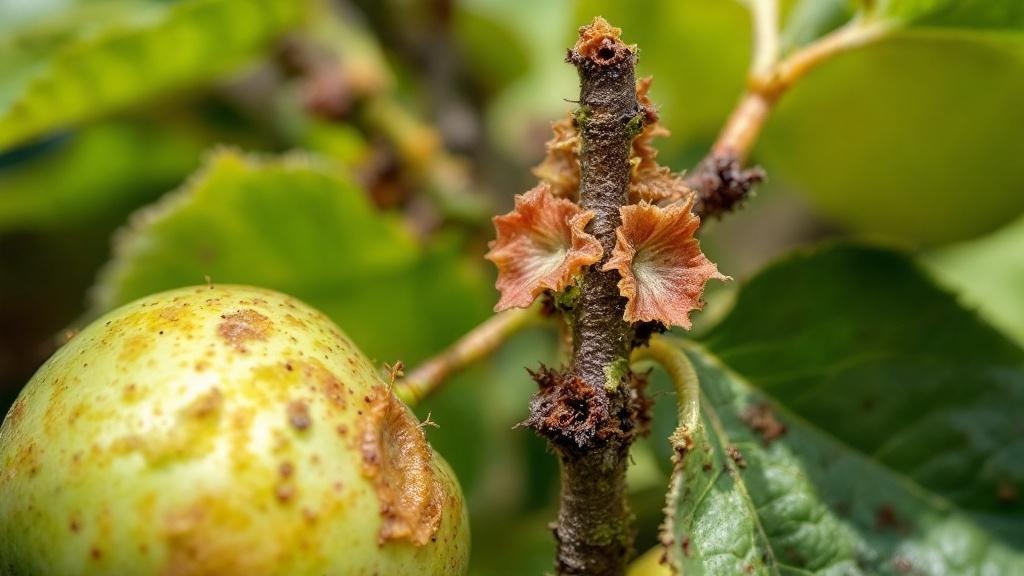
Cytospora strikes most visibly in spring and early summer (April through July), though the fungus actually infects through frost cracks, winter damage, and pruning wounds made in cold months. The first sign you'll notice is a sunken, orange-red spot on a branch or trunk, often with a characteristic gummy weeping at its center. By late spring, you may see bright orange, spiral-shaped spore structures (called cirri) oozing from around the canker margins, which is the fungus's way of spreading to new wounds.
The key to telling Cytospora apart from other cankers is that combination of deeply sunken lesions, the orange-red discoloration, and the copious gum flow. Other cankers tend to be less dramatically depressed or lack the orange hue. Cytospora thrives when trees are stressed by cold, drought, or mechanical injury, so it's really a disease of vulnerability rather than aggressive infection in healthy wood. Once you spot an active canker, time is critical: the fungus spreads fast through the vascular system, so prompt removal of infected branches is your best chance to save the tree.
🔍 How to identify
A vesszőn / törzsön elnyúlt, bemélyedt, narancs-vörös foltok, gyantafolyással. A fertőzött ág hervad, leszárad. Tavasszal a sebek körül narancsos, gyantás "spóra-csigák" (cirrusok). Fagy és metszéssebek után jellemző bejutás.
🌿 Common host plants
💊 Treatment
Fertőzött ág kivágása 30 cm egészséges fába vágva. Sebzárás Trichoderma-tartalmú pasztával. Szerszám fertőtlenítése vágás között (10% Cl-).
NEM gyógyítható szisztémikusan. Rézfertőtlenítés lombhullás után és rügyfakadás előtt megelőzésként.
🛡️ Prevention
NE metssz télen / fagy előtt (a seb nem zár be — kapu a gombának). Tavasszal-nyár elején metsz. Egészséges állapotban tartás (foszfor-tápozás immunerősítés). Mechanikai sérülés kerülése.
💡 Notes
Stresszelt fán pusztító — szárazság, fagy után jelentkezik. Klímaváltozással egyre súlyosabb.
Frequently asked questions
How fast does Cytospora canker spread once I see it?
An active canker can girdle and kill a branch within 1-2 seasons, and if it reaches the main trunk, it may kill the tree within 2-3 years if left untreated. Speed depends on tree stress and weather: a drought-weakened tree loses ground much faster than a vigorous one. This is why removing infected wood as soon as you spot it is so critical.
Can I save a tree with Cytospora canker, or do I have to cut it down?
You can often save the tree if you catch it early and remove the infected branch completely, cutting at least 30 cm into healthy wood and disinfecting your tools between cuts with 10% chlorine solution. If the canker has already girdled the main trunk, unfortunately the tree is doomed and should be removed to prevent spread to nearby stone fruits.
When exactly should I prune to avoid creating infection wounds?
Prune only in spring (April onwards) or early summer when wounds heal quickly and frost risk is past. Never prune in autumn, winter, or just before a hard freeze, because those cold-weather wounds cannot seal properly and become open doors for the fungus. A wound made in February may not close until May, giving Cytospora months to invade.
Does the fungus overwinter in the soil or on fallen branches?
Cytospora overwinters in cankers on living bark and in infected branch tissue, not in soil. However, infected branches that fall to the ground will continue to sporulate and contaminate nearby trees, so always remove and burn (or hot-compost at 65°C+) any pruned or fallen material showing signs of the disease.
What weather conditions trigger a Cytospora outbreak?
Hard frosts, especially late-spring freezes that crack bark or damage new growth, and extended drought stress are the main triggers. Trees weakened by water shortage in summer are far more susceptible to infection through any wound. Keeping trees well-watered in dry spells and using phosphorus-rich fertilizers to boost resilience helps prevent outbreaks.
Not sure what's wrong? Take a photo!
Plantora's AI Plant Doctor identifies the issue from a single photo in seconds and gives you a tailored treatment guide.
Try AI diagnosis (free) →