Verticillium wilt
📖 Overview
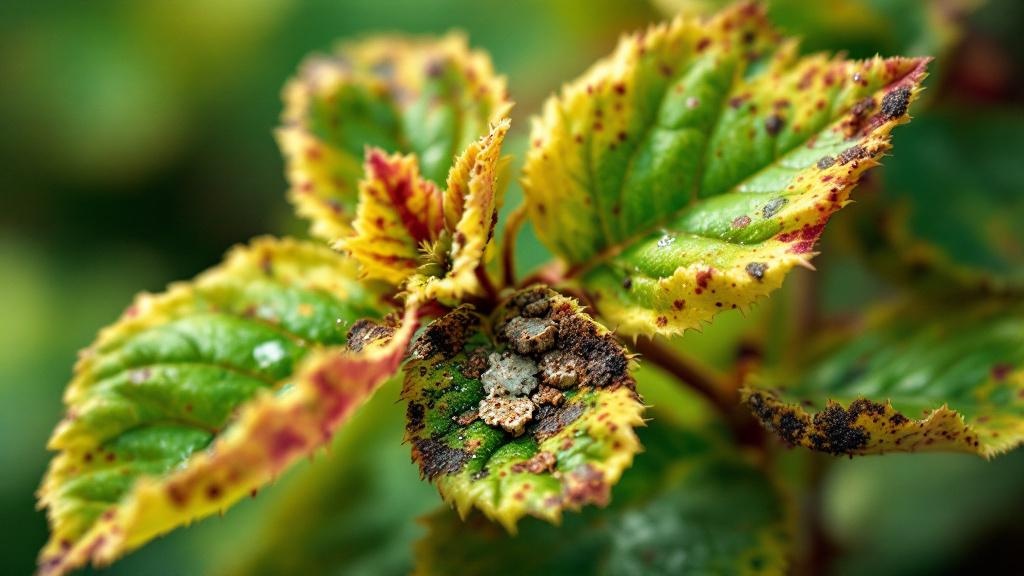
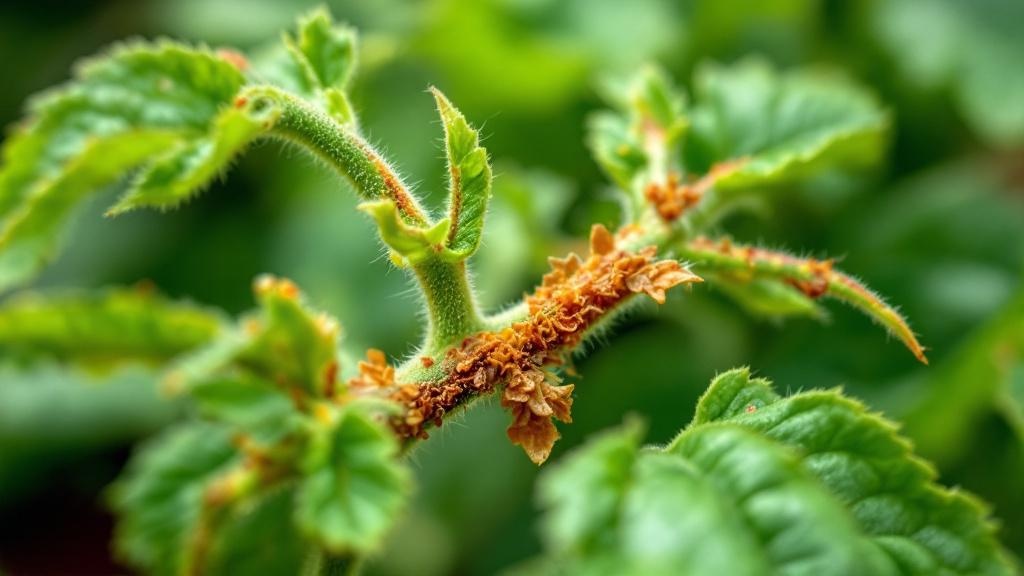
Verticillium wilt is a soil-dwelling fungal disease caused by Verticillium dahliae that blocks water movement inside plant stems, causing leaves and branches to wilt and yellow from the inside out. It's one of the most persistent and damaging diseases in temperate gardens, especially in tomatoes, peppers, potatoes, eggplants, and strawberries, because the fungus can survive in soil for over a decade even without a host plant. The disease typically emerges in mid-to-late summer (July through September) when soil temperatures climb above 21°C, though infection usually began much earlier in spring through the roots. The first sign you'll notice is asymmetrical wilting—yellowing and death on just one side of a leaf or one section of a stem while the opposite side stays healthy, often forming a distinctive V-shaped brown or yellow mark on affected leaves. This one-sided pattern is the key difference from Fusarium wilt, which tends to be more symmetrical; also, Verticillium causes pale tan streaks inside the stem (much lighter than Fusarium's dark brown discoloration), visible if you slice the stem lengthwise. Once established in your soil, this disease is nearly impossible to eliminate completely, which is why prevention and early detection matter far more than any cure.
🔍 How to identify
A Fusariumhoz hasonló, de a tünet ASZIMMETRIKUS: az egyik oldali levelek-szárrész elhal, a másik oldali ép. A V-alak megjelenése (V-alakú sárga foltok a leveleken) tipikus. Vezetékben halvány barna csíkok (kevésbé sötét mint a Fusariumnál).
🌿 Common host plants
💊 Treatment
Erősen fertőzött növény eltávolítása. Talaj-szolarizáció. Brokkoli/karfiol mint biofumigáció — a glükozinolát-tartalom redukálja a talajban.
Hatékony gyógyszer NINCS. Bázalin talajfertőtlenítés mint nagyon utolsó lehetőség.
🛡️ Prevention
Vetésforgás (kerüld 4 évig az ugyanazon a területen a fogékony fajtákat). Ellenálló fajta (V-jelzésű paprika/paradicsom). Talaj pH 7.0-7.5.
Frequently asked questions
How fast does Verticillium wilt spread through my vegetable garden?
The fungus spreads slowly but relentlessly once in the soil—it infects roots gradually over spring and early summer, with visible wilting symptoms appearing suddenly in mid-July onwards when heat stress triggers rapid water loss in the plant. A single infected plant won't infect neighbors quickly through air or water splash, but contaminated soil on tools, boots, or garden equipment can spread spores across your entire plot within days.
Can I save a tomato or pepper plant with Verticillium wilt, or must I destroy it?
If a plant shows the asymmetrical wilting and V-shaped leaf spotting, the fungus is already systemic throughout the vascular system and cannot be cured—you must remove and dispose of it (in household waste, not compost) as soon as symptoms appear. Removing infected plants quickly is your best defense against spores building up in the soil for future seasons.
What's the safest organic option to manage Verticillium in my garden soil?
Soil solarization in summer (covering the bed with clear plastic for 4-6 weeks when soil reaches 40°C at 10 cm depth) kills many fungal spores, and planting brassicas like broccoli or cauliflower as a cover crop releases glucosinolates that suppress the fungus naturally. Both methods work best in combination with strict 4-year crop rotation, avoiding susceptible plants (tomatoes, peppers, potatoes) on the same spot.
Does Verticillium wilt survive in soil and fallen leaves over winter?
Yes, the fungus overwinters as microsclerotia (hard resting spores) deep in soil and can persist for 10-15 years even without a host plant, making it nearly impossible to eradicate once established. Infected plant debris should never go into your compost pile; dispose of it in household waste to prevent spreading spores when you use that compost later.
Are resistant varieties (marked with a V) really worth switching to?
Absolutely—choosing pepper or tomato varieties labeled V (for Verticillium resistance) is one of your best investments if you garden on infested soil, as they significantly reduce wilting severity and allow you to keep growing on the same bed. Resistant varieties won't prevent the fungus from entering the roots, but they resist the internal damage, so the plant stays productive even when spores are present.
Not sure what's wrong? Take a photo!
Plantora's AI Plant Doctor identifies the issue from a single photo in seconds and gives you a tailored treatment guide.
Try AI diagnosis (free) →